 Lynden Siding
 Siding Repair for the Nooksack Area
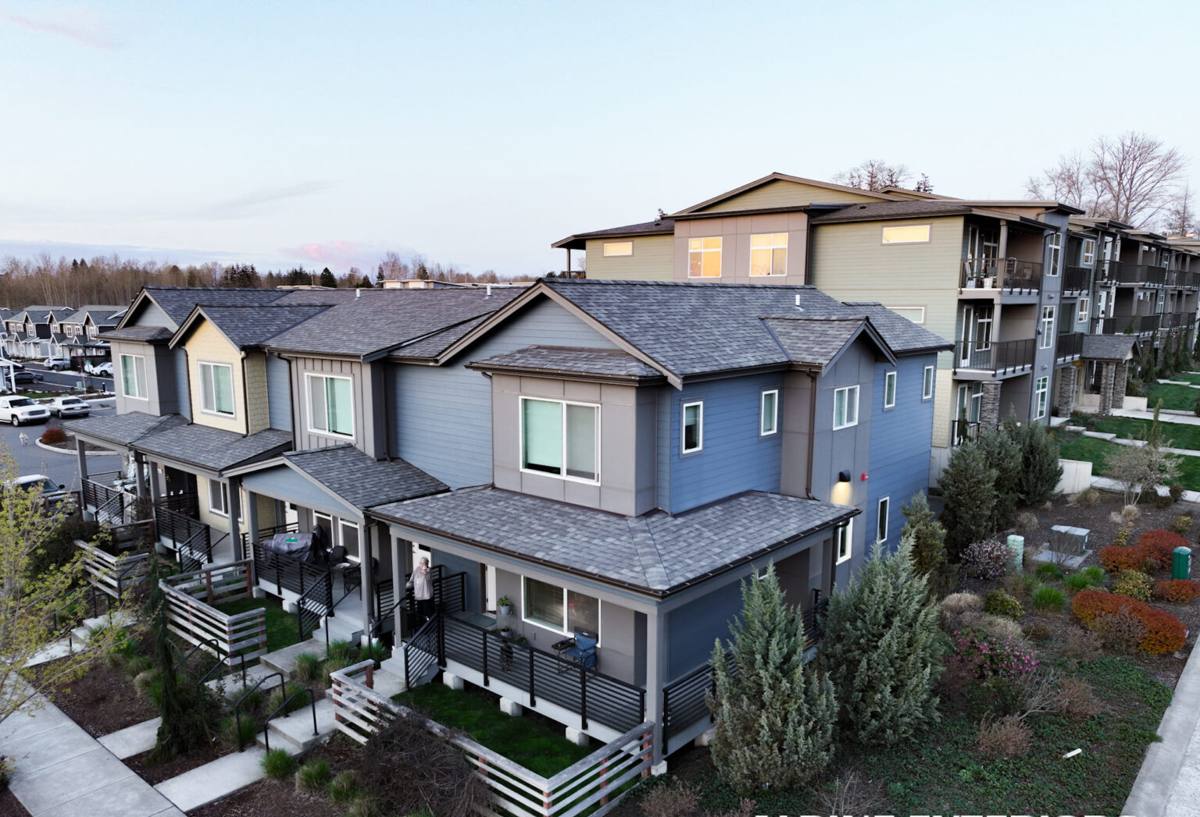
The Nooksack area sits in a part of Whatcom County where weather doesn't let up for long. Homes here take a steady beating from driving winter rain, damp air moving in off the Salish Sea, and a moss season that can run from early fall through late spring. None of that is unusual for northwest Washington, but it does mean siding damage in this area tends to be slow and hidden rather than sudden and obvious. A cracked board or a failing seam doesn't announce itself — it shows up months later as a soft spot, a stain, or a section that just doesn't look right anymore.
We do siding repair work in and around Nooksack and Lynden regularly, and the calls we get generally fall into a few categories: storm-damaged boards that need replacing, moisture intrusion at trim and window returns, moss and algae staining that's gone past a simple wash, and old caulk joints that have failed and let water behind the wall. Each of these has a right way to fix it and a handful of wrong ways that look fine for a season or two and then fail again.
Why This Climate Is Hard on Siding
Whatcom County's combination of persistent moisture, cooler temperatures, and long shaded stretches around trees and north-facing walls creates ideal conditions for moss, algae, and slow-motion water damage. A few specific patterns show up again and again on homes in this area:
Driving Rain and Wind-Driven Moisture
Rain in this region doesn't just fall straight down — wind pushes it sideways into joints, corners, and anywhere two pieces of siding or trim meet. Over time, that wind-driven moisture finds any gap in caulking or flashing and works its way behind the siding, where it can sit against sheathing and framing far longer than anyone notices from the outside.
A Long Moss and Algae Season
Shaded north walls, tree cover, and the region's damp air combine to give moss and algae a long growing window. Left alone, moss holds moisture directly against the siding surface, which accelerates rot on wood-based products and can stain or degrade the finish on almost anything, including fiber cement that isn't factory-coated.
Salt-Influenced Air
Homes in this part of Whatcom County are close enough to the Salish Sea and Puget Sound air currents that salt-laden moisture is part of the picture, especially during winter storm systems. Salt air accelerates corrosion on fasteners, flashing, and any exposed metal trim — which is a common, underappreciated cause of siding failure that has nothing to do with the siding material itself.
What a Correct Siding Repair Actually Involves
A lot of "siding repair" in this trade is really just patching — caulking over a crack, screwing a loose board back down, or painting over a stain. That buys time, but it doesn't address why the damage happened, and it usually means the same spot fails again within a year or two. A repair done right starts with figuring out the actual cause, not just covering the symptom.
- Identify whether the damage is surface-level (cosmetic staining, minor cracking) or structural (soft sheathing, rotted framing, saturated insulation)
- Check for water intrusion at the most common failure points: window and door trim, butt joints, inside corners, and anywhere siding meets a roofline or deck
- Inspect flashing and caulking, since siding failure is very often a flashing or sealant failure wearing a siding costume
- Remove and replace damaged material back to solid, dry substrate — not just the visibly cracked or stained piece
- Match the replacement material's profile, exposure, and finish so the repair doesn't stand out as a patch
- Re-seal and re-flash correctly so the same failure doesn't happen again in the same spot
That last step is where a lot of repairs go wrong. If you don't fix the water path that caused the original damage, a brand-new piece of siding will fail again in the exact same place — just on a delay.
Repair Approach by Siding Material
What "correct repair" looks like depends heavily on what's currently on the house. We install only James Hardie fiber cement siding on new work, but we regularly repair and evaluate homes with other materials already on them, and the right move isn't always the same.
| Existing Material | Common Failure Pattern | Repair Considerations |
|---|---|---|
| James Hardie fiber cement | Caulk joint failure, impact damage, occasional fastener issues | Straightforward board replacement; ColorPlus finish can usually be matched closely by plank and batch |
| Cedar siding | Rot at butt joints, moisture absorption, moss holding water against the surface | Often requires removing more material than expected, since rot spreads under sound-looking boards |
| Vinyl siding | Cracking in cold snaps, warping near heat sources, panels popping loose in wind | Exact color/profile matches get harder to find as products age off the market |
| LP SmartSide or primed spruce | Edge swelling, delamination, and moisture wicking at cut ends | Damage is frequently more extensive under the surface than it appears; sound assessment matters more than patching |
We'll always give you a straight answer about what we're seeing, even if that means telling you a full section — or eventually the whole elevation — makes more sense than a spot repair.
Repair vs. Replacement: How We Help You Decide
Not every repair call ends with a repair. Sometimes the smart move is patching one section and leaving the rest alone; other times, the damage is widespread enough that spending money on repairs just delays a replacement that's coming anyway. A few factors we weigh:
| Factor | Leans Toward Repair | Leans Toward Replacement |
|---|---|---|
| Extent of damage | Isolated to one or two areas | Recurring across multiple walls or elevations |
| Underlying cause | Identifiable and fixable (one bad flashing detail, one impact) | Systemic (original installation issues, material reaching end of life) |
| Material age and condition | Siding is otherwise sound and holding paint/finish well | Siding is brittle, delaminating, or the finish is failing broadly |
| Cost over time | Repair cost is a small fraction of full replacement | Repeated repairs are starting to add up toward replacement cost |
Our job is to give you an honest read on which side of that line your house is on — not to talk every repair call into a full re-side.
Our Process for Nooksack-Area Repair Work
We keep the process straightforward because most homeowners just want to know what's wrong, what it'll take to fix, and what it'll cost.
- On-site inspection. We look at the damaged area and check nearby sections, since siding problems in this climate rarely stay isolated — where there's one moisture issue, there's often a related one nearby.
- Cause diagnosis. We trace the damage back to its source: a flashing gap, a failed caulk joint, an impact, or long-term moss and moisture exposure.
- Written scope and pricing. You get a clear explanation of what needs to happen and why, before any work starts.
- Repair, matched and sealed correctly. Damaged material comes out down to solid substrate, replacement material is fitted and finished to match, and the water path that caused the failure gets properly sealed and flashed.
- Final walk-through. We show you what was done and what to keep an eye on going forward.
Why a Crew That Already Works This Area Matters
Siding repair isn't just a materials question — it's a local-conditions question. A crew that works Lynden and the Nooksack area regularly already knows which wall orientations take the worst weather, how fast moss builds back after a wash, and what kind of caulking and flashing details actually hold up through a Whatcom County winter instead of just passing an initial inspection. That local pattern recognition is the difference between a repair that lasts and one that's back on the schedule in two years.
It also matters for permitting and code awareness. Whatcom County and local jurisdictions have their own requirements around exterior work, and a crew that regularly pulls permits in this area isn't guessing at what's required — they already know the process.
Why We Repair With James Hardie Fiber Cement
When a repair calls for new material — whether it's patching an existing Hardie installation or replacing a damaged section of another material — we use James Hardie fiber cement. It's non-combustible, engineered specifically for wet Pacific Northwest climates through Hardie's HZ10 product line, and the factory-applied ColorPlus finish holds up to years of driving rain and moss exposure far better than field-applied paint. It also gives us a much better chance of matching an existing repair cleanly, since Hardie's color and plank consistency is tightly controlled at the factory. That combination of durability and finish consistency is a big part of why we stopped installing other siding materials in the first place.
Homeowner Maintenance Checklist
Between professional inspections, a few habits go a long way toward catching problems before they become repairs:
- Walk the exterior once or twice a year, paying extra attention to north-facing and shaded walls where moss builds fastest
- Look closely at caulk joints around windows, doors, and trim for cracking or gaps
- Keep gutters clear so overflow isn't running down the siding face
- Trim back vegetation and tree limbs that keep siding shaded and damp
- Address moss with a gentle wash rather than pressure-washing, which can force water behind seams and joints
- Note any soft spots, discoloration, or bubbling and get them looked at before the next wet season
If you're seeing damage, staining, or soft spots on your siding anywhere in the Nooksack or Lynden area, we're glad to take a look. The estimate is free, there's no pressure to do more work than the house actually needs, and you'll get a straight answer about what's causing the problem — just fill out the form below to get started.