 Lynden Siding
 Metal Roofing Built for Sumas's Wet, Mossy Climate
Sumas sits in the northeast corner of Whatcom County, close enough to Lynden that the same weather patterns shape both communities. Long stretches of overcast skies, steady rain through fall and winter, and cool nights that never quite dry out a roof between storms all add up over time. Homes here don't fail because of one bad storm — they fail because a roofing material or installation detail wasn't built for years of accumulated moisture and shade.
Metal roofing has become a common answer for homeowners in this part of Whatcom County precisely because it handles that pattern well, provided it's installed correctly. This page focuses specifically on what metal roofing means for a Sumas property: what the local climate demands, what a correct installation actually looks like, and why the details matter more here than they would in a drier region.
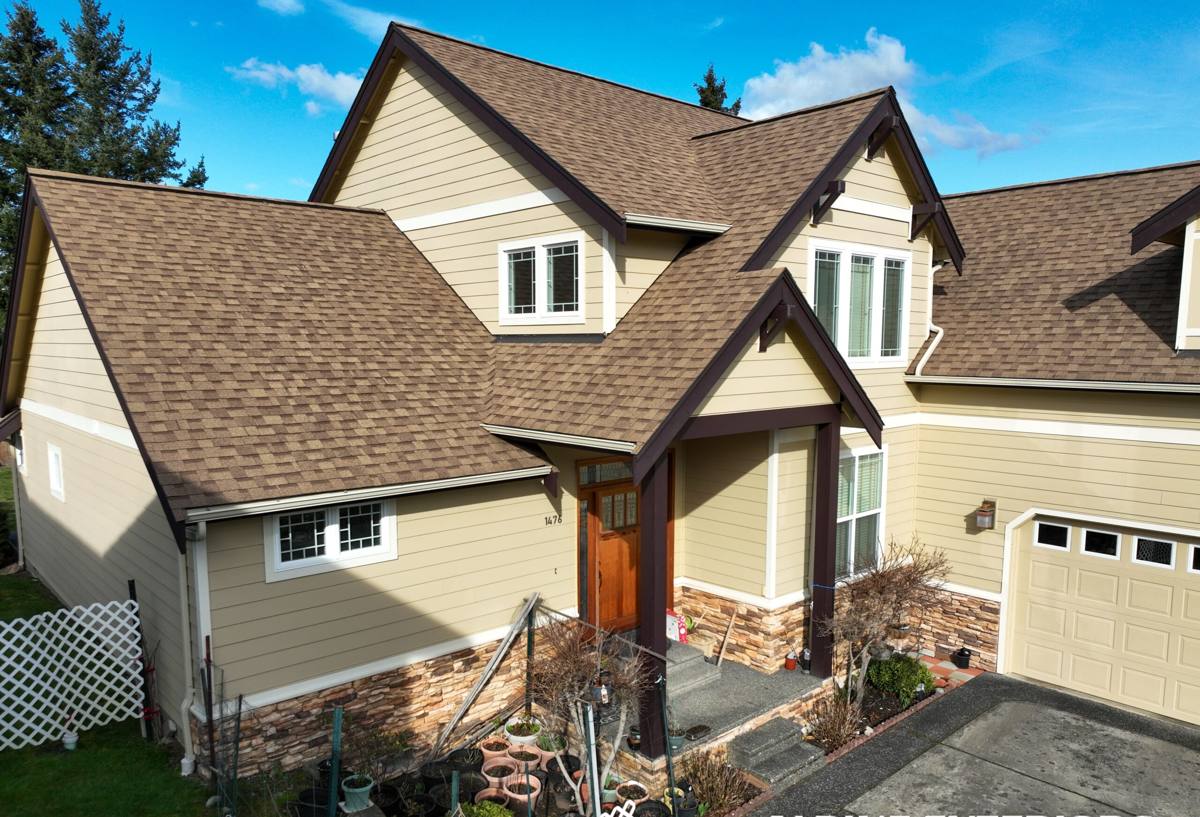
What Driving Rain, Moss, and Cold Snaps Do to a Roof
Driving Rain and Standing Moisture
Wind-driven rain doesn't just fall straight down — it pushes sideways under shingle tabs, around poorly sealed flashing, and into any gap that wasn't sealed with the weather in mind. On a roof that stays damp for days at a time, even small installation shortcuts turn into slow leaks that show up as stains, soft decking, or mold long before anyone sees water dripping indoors.
Moss and Organic Growth
Shaded roof slopes, tree cover, and the persistent dampness common across Whatcom County give moss and algae exactly the conditions they need. On asphalt shingles, moss roots into the granules and lifts them, shortening the roof's life. Metal doesn't give moss the same foothold, but growth can still build up in valleys, around penetrations, or wherever debris collects and holds water against the surface — which is why panel layout and drainage still matter.
Temperature Swings and Freeze-Thaw Cycling
Sumas runs a bit cooler and sees more frost and occasional snow than areas right along the water, since it sits further inland in the valley. That means more freeze-thaw cycling on a roof deck — water gets into a small crack, freezes, expands, and widens it. Materials and fasteners that don't move well with temperature change are more prone to cracking, loosening, or backing out over a Sumas winter than they would be somewhere milder.
What a Correct Metal Roof Installation Actually Involves
Metal roofing has a reputation for lasting decades, but that reputation only holds up when the installation underneath the panels is done right. A metal roof is only as good as what's beneath it.
Underlayment
A synthetic, high-temperature underlayment (or a self-adhering membrane in vulnerable areas like eaves and valleys) creates the actual water barrier beneath the panels. In a climate that sees as much sustained rain as Whatcom County, skipping a quality underlayment — or using one rated for a drier climate — is one of the most common reasons a metal roof leaks despite looking fine from the outside.
Fastening and Panel Overlap
Exposed-fastener panels rely on screws with rubber washers seated correctly and spaced to manufacturer spec; get the torque or spacing wrong and you create hundreds of tiny future leak points. Standing seam systems avoid exposed fasteners entirely by locking panels together, which is one reason they hold up especially well under driving rain.
Flashing at Every Transition
Valleys, chimneys, skylights, vent pipes, and wall-to-roof transitions are where the overwhelming majority of roof leaks originate — on metal roofs as much as any other type. Correct flashing means custom-formed metal at each transition, installed in the right order relative to the underlayment and panels, not caulk used as a substitute for proper metalwork.
Ventilation
A roof deck that can't breathe traps moisture underneath the panels, which leads to condensation, rot, and premature failure of the wood below — regardless of how good the metal on top is. Balanced intake and exhaust ventilation is part of a correct installation, not an optional add-on.
Choosing the Right Metal Panel System
Not every metal roofing system fits every home or every budget. The right choice depends on your roof's pitch, how visible it is, and how long you want to go without maintenance.
| System | How It's Installed | Best For |
|---|---|---|
| Standing Seam | Concealed fasteners, interlocking vertical seams | Homeowners wanting the longest maintenance-free lifespan and a clean, modern look |
| Exposed-Fastener Panels | Screwed through the panel face into the deck or purlins | Budget-conscious projects, outbuildings, and simpler roof shapes |
| Metal Shingles/Shakes | Interlocking stamped panels that mimic traditional shingle or shake profiles | Homeowners who want the look of a traditional roof with metal's durability |
Standing seam tends to perform best in a climate like Sumas's because it has no exposed fasteners that can loosen or leak over time, but exposed-fastener systems are a reasonable, more affordable option when installed correctly and maintained.
How We Approach a Metal Roofing Project in Sumas
- Inspection and assessment — we check the existing roof, decking condition, ventilation, and any signs of trapped moisture before recommending a system.
- Tear-off or overlay decision — we look at what's underneath the current roofing to determine whether a full tear-off is needed or if conditions allow for a direct overlay.
- Deck repair — any soft, rotted, or damaged decking gets replaced before anything goes down on top of it.
- Underlayment installation — including self-adhering membrane at eaves, valleys, and other vulnerable spots.
- Panel installation — installed to manufacturer spec for fastening, spacing, and overlap, matched to your roof's pitch and shape.
- Flashing and detail work — custom flashing at every valley, penetration, and transition.
- Final walkthrough — cleanup and a review of the finished roof with the homeowner.
What Metal Roofing Costs and What Drives the Price
Exact pricing depends on your roof's size, pitch, and complexity, but a few factors consistently move the number up or down more than anything else.
| Factor | Effect on Cost |
|---|---|
| Panel system (standing seam vs. exposed-fastener) | Standing seam typically costs more upfront but requires less long-term maintenance |
| Tear-off vs. overlay | Tear-off adds labor and disposal cost but lets us inspect and repair the deck |
| Roof pitch and complexity | Steep roofs, multiple valleys, and dormers add labor time and material cuts |
| Decking condition | Rot or soft spots found during tear-off mean repair costs before installation continues |
| Ice and water shield coverage | More protected area at eaves and valleys adds material cost but reduces leak risk |
As a very general guide, homeowners in our region typically see metal roofing land somewhere in the mid-to-upper range compared to asphalt shingles, with the gap narrowed by metal's longer lifespan and lower long-term maintenance. A firm number only comes after we've seen the roof in person.
Signs Your Roof May Be Ready for Metal
- Shingles that are curling, cracking, or losing granules, especially on shaded north-facing slopes
- Moss buildup that keeps returning within a season or two of cleaning
- Visible sagging along the roofline or soft spots underfoot in the attic
- Frequent granule buildup in gutters or downspouts
- Interior water stains on ceilings, especially after wind-driven storms
- A roof already past or approaching the end of its expected shingle lifespan
- Rising interest in reducing how often you need to think about roof maintenance
Why a Contractor Who Already Works in Sumas Makes a Difference
Sumas has its own mix of rural properties, older farmhouses, and newer builds, each with different roof framing and access challenges. A crew that already works this area understands how local roof pitches, tree cover, and shaded lots affect moss growth and drainage, and has a working relationship with Whatcom County permitting requirements when they apply. That familiarity translates into fewer surprises mid-project and a crew that shows up already understanding what your roof is up against.
It also means straightforward logistics — material delivery, scheduling around weather windows, and being reachable if a question comes up after the job is done, without the delays that come from a contractor based well outside the area.
Keeping a Metal Roof Performing for Decades
Metal roofing is low-maintenance, not no-maintenance. Keeping gutters and valleys clear of leaves and debris prevents water from pooling against panels and seams. Trimming back overhanging branches reduces both debris buildup and the shade that encourages moss and algae growth nearby. A periodic visual check after major storms — looking for loose flashing, dented panels, or blocked drainage — catches small issues before they become leaks. Beyond that, a correctly installed metal roof in a climate like this one is built to go a long time between service calls.
If you're weighing your options for a Sumas home, we're happy to take a look and walk you through what makes sense for your roof, with no pressure and no obligation — just an honest assessment and a straightforward estimate.