 Lynden Siding
 Why Birch Bay Siding Takes a Different Approach
Birch Bay sits right where Whatcom County's marine weather hits hardest. Homes here face a combination that inland Lynden properties rarely deal with in the same intensity: salt-laden air rolling off the water, wind-driven rain that gets forced sideways into wall assemblies, and a long, damp moss season that can run from October through April. Siding that performs fine a few miles inland can struggle at Birch Bay if it wasn't chosen and installed with that exposure in mind.
This isn't a generic siding page. It's specific to what a fiber cement installation needs to get right in this particular stretch of Whatcom County, and why the crew doing the work matters as much as the product itself.
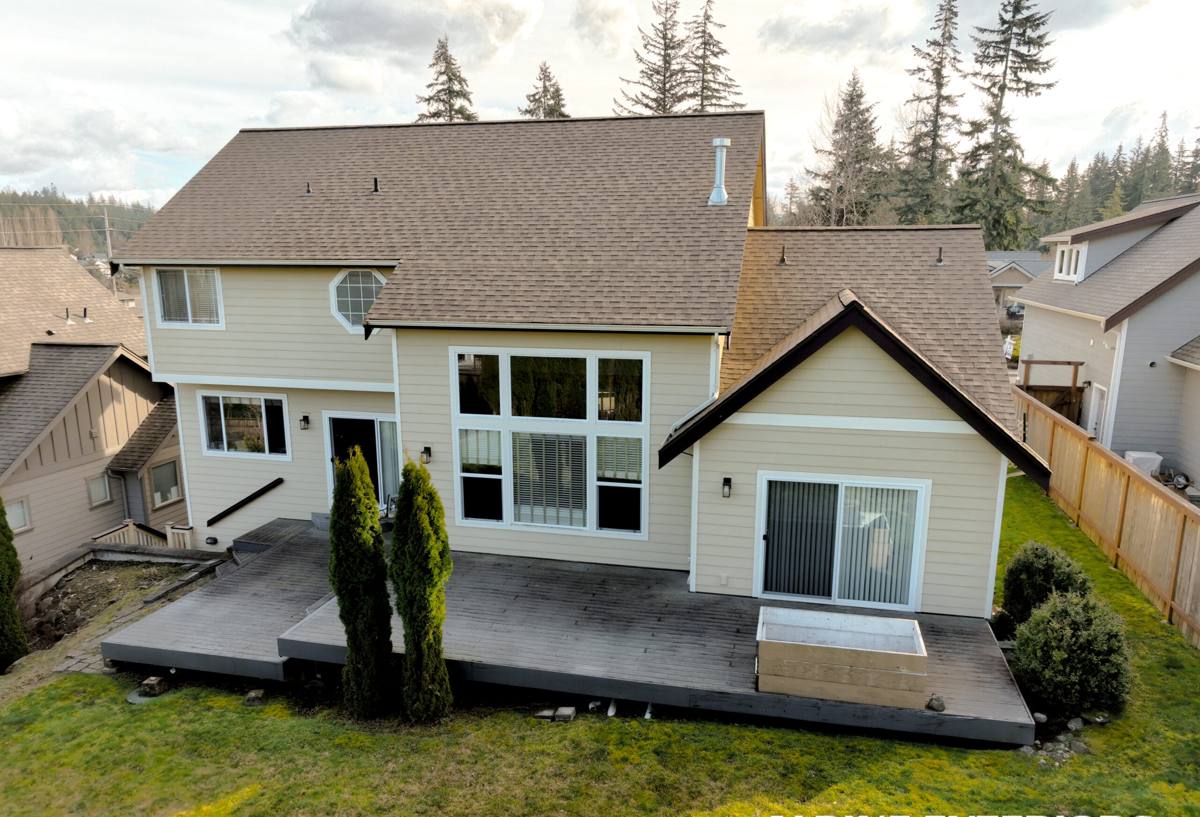
What Salt Air, Driving Rain, and Moss Actually Do to a Wall
Salt Air
Airborne salt is corrosive to exposed metal fasteners, flashing, and trim hardware. Over years, it accelerates rust at any point where a fastener head or cut edge is left uncovered. It also settles into porous or poorly sealed siding surfaces, which is one reason factory-finished, dense fiber cement holds up better here than field-painted wood or softer composite products.
Driving Rain
Birch Bay's exposure to wind off the water means rain doesn't just fall straight down — it's pushed horizontally into siding laps, corner boards, and window trim. If laps, flashing, and caulking aren't detailed correctly, water gets forced behind the cladding instead of shedding off the face of it. That's when sheathing and framing start absorbing moisture nobody can see from the outside.
Moss Season
A long, cool, wet season means moss and algae have months to establish themselves on any siding surface that stays damp and shaded — north-facing walls, areas under trees, and low clearance near grade are the usual spots. Moss holds moisture against the surface far longer than open air would, which matters most for materials that aren't dimensionally stable when wet.
Why Fiber Cement Is the Right Material for This Exposure
Fiber cement is cement, sand, and cellulose fibers formed under pressure — it doesn't swell, rot, or delaminate the way wood-based products can when they take on repeated moisture. That's the core reason it holds up in a marine-influenced climate like Birch Bay's. It's also non-combustible, which matters given how many properties in this area sit near dry brush, wooded lots, or seasonal debris.
We install James Hardie fiber cement exclusively — not LP SmartSide, not vinyl, not Cemplank, not Allura, not primed spruce or cedar. That's a deliberate standard, not a brand preference for its own sake:
- Non-combustible core — doesn't contribute fuel the way wood-based sidings can
- ColorPlus factory finish — baked-on color and sealed edges, rather than field-applied paint that has to hold up against salt air on its own
- HZ5 climate-engineered formulation — Hardie's moisture- and freeze-resistant line built for exactly this kind of Pacific Northwest coastal exposure
- Transferable warranty — backed by the manufacturer, which matters if the home changes hands
- Proven long-term performance — decades of track record in wet coastal climates, not a newer product still building that history
We're not going to tell you competing products are junk — some have real strengths. What we will say is that after weighing moisture behavior, maintenance burden, and long-term warranty support against what Birch Bay's climate demands, Hardie fiber cement is what we're willing to put our name behind and install on homes.
What a Correct Installation Looks Like Here
The product only performs as well as the install. In a high-exposure area like Birch Bay, a handful of details separate siding that lasts from siding that fails early:
Water Management Comes First
Before a single board goes up, the wall needs a continuous weather-resistive barrier, correctly lapped and taped, with flashing integrated at every window, door, and penetration so water is directed out and down — never trapped behind the cladding. This is the step that matters most in wind-driven rain, and it's invisible once the siding is on, which is exactly why it can't be shortcut.
Fastening for Corrosion Resistance
In a salt-air environment, fastener choice isn't a minor detail. We use corrosion-resistant fasteners and follow Hardie's fastening specifications for exposure and spacing, so fastener heads aren't left as a weak point that rusts and stains the face of the siding over time.
Proper Clearance and Ventilation
Siding needs clearance from grade, roofing, decks, and other hard surfaces so water and debris don't sit against the bottom edge. That same clearance also helps limit the shaded, damp conditions moss needs to take hold. Rainscreen or drainage-gap installation adds an additional layer of protection by letting any moisture that does get behind the cladding drain and dry out instead of sitting against the sheathing.
Caulking and Joint Treatment
Butt joints, trim intersections, and penetrations get sealed according to Hardie's specifications — not generic caulk applied wherever it looks like it might need it. Done wrong, joints become the first place wind-driven rain finds its way in.
Fiber Cement vs. Other Siding Options for This Climate
| Factor | James Hardie Fiber Cement | Vinyl | Wood / Primed Spruce / Cedar |
|---|---|---|---|
| Moisture response in driving rain | Dimensionally stable, doesn't swell or warp | Can gap, warp, or crack under wind pressure | Absorbs moisture, prone to swelling and rot over time |
| Salt air exposure | Factory-sealed finish resists surface degradation | Can chalk, fade, and become brittle | Finish breaks down faster, needs more frequent refinishing |
| Moss and algae resistance | Dense surface, less hospitable to growth than porous wood | Can trap moisture at seams | Porous surface holds moisture, feeds growth |
| Fire exposure | Non-combustible core | Combustible, can melt or deform near heat | Combustible |
| Maintenance over time | Occasional wash, no repainting with ColorPlus finish | Low maintenance but limited repair options when damaged | Regular repainting/staining and moisture monitoring |
Our Process for a Birch Bay Project
Because we already work this area regularly, we're familiar with the exposure differences between a shoreline-adjacent lot and one set back with more tree cover. Our process stays consistent regardless:
- On-site assessment — we look at current siding condition, wall assemblies, drainage, grading, and any existing moisture or moss issues before quoting anything.
- Scope and product selection — we walk through Hardie panel, lap, or shingle options and the appropriate HZ line for the home's specific exposure.
- Tear-off and substrate check — old siding comes off and sheathing is inspected for hidden water damage before new material goes up. This step catches problems a re-side-over-existing approach would hide.
- Weather barrier and flashing installation — the unseen work that determines long-term performance.
- Siding installation to Hardie spec — correct fastening, clearance, joint treatment, and ColorPlus-compatible detailing.
- Final walkthrough — trim, caulking, and finish details reviewed with the homeowner before we call the job done.
Signs Birch Bay Homeowners Should Watch For
- Soft or spongy spots when pressing on siding, especially near the bottom courses
- Persistent moss or dark streaking on north-facing or shaded walls
- Rust staining below fasteners or trim hardware
- Paint that's peeling or bubbling rather than just fading
- Visible gaps opening up at butt joints or corner boards
- Warping, cupping, or separation at seams after storms
Any of these are worth a look before they turn into sheathing or framing repairs, which cost considerably more than the siding itself.
Cost Factors Specific to This Area
Every home is different, but a few factors tend to move the estimate for Birch Bay projects specifically: how much of the existing siding and trim needs replacement versus how much sheathing repair is needed underneath, whether a drainage gap or rainscreen system is added for extra moisture protection, the Hardie product line and profile chosen, and access/staging conditions on lots close to the water or with limited driveway space. We'll walk through all of this in a written estimate — no vague ranges, no pressure.
Why the Local Crew Matters
A crew that already works Birch Bay and the broader Lynden and Whatcom County area knows what this specific exposure does to a wall over time, because we've seen it firsthand on other homes nearby. That means fewer surprises during tear-off, better judgment calls on flashing and drainage details, and a finished install matched to the actual climate the home has to survive — not a generic install written for a drier region.
If you're weighing a re-side in Birch Bay, we're happy to take a look, walk the exterior with you, and put together a straightforward, no-pressure estimate using the form below.