 Lynden Siding
 Custom Windows for Aldergrove Homes, Not Big-Box Standard Sizes
A lot of the housing stock around Aldergrove wasn't built to a modern standard window catalog. Older farmhouses, additions built over the decades, acreage properties with odd rooflines, and newer custom builds all tend to have window openings that don't match what you'll find pre-made on a shelf. "Custom" in this context usually means one of three things: a non-standard size or shape, a replacement that has to fit an existing rough opening exactly instead of the other way around, or a design choice — a picture window flanked by casements, an arched transom, a larger opening than what was originally there — that requires the unit to be built or special-ordered to spec.
Getting this right matters more here than in a lot of places, because a poorly fitted custom window doesn't just look off — it becomes the weak point in the wall where water gets in during the wet months. We treat every custom window job as a wall-assembly problem first and a glass-and-frame problem second.
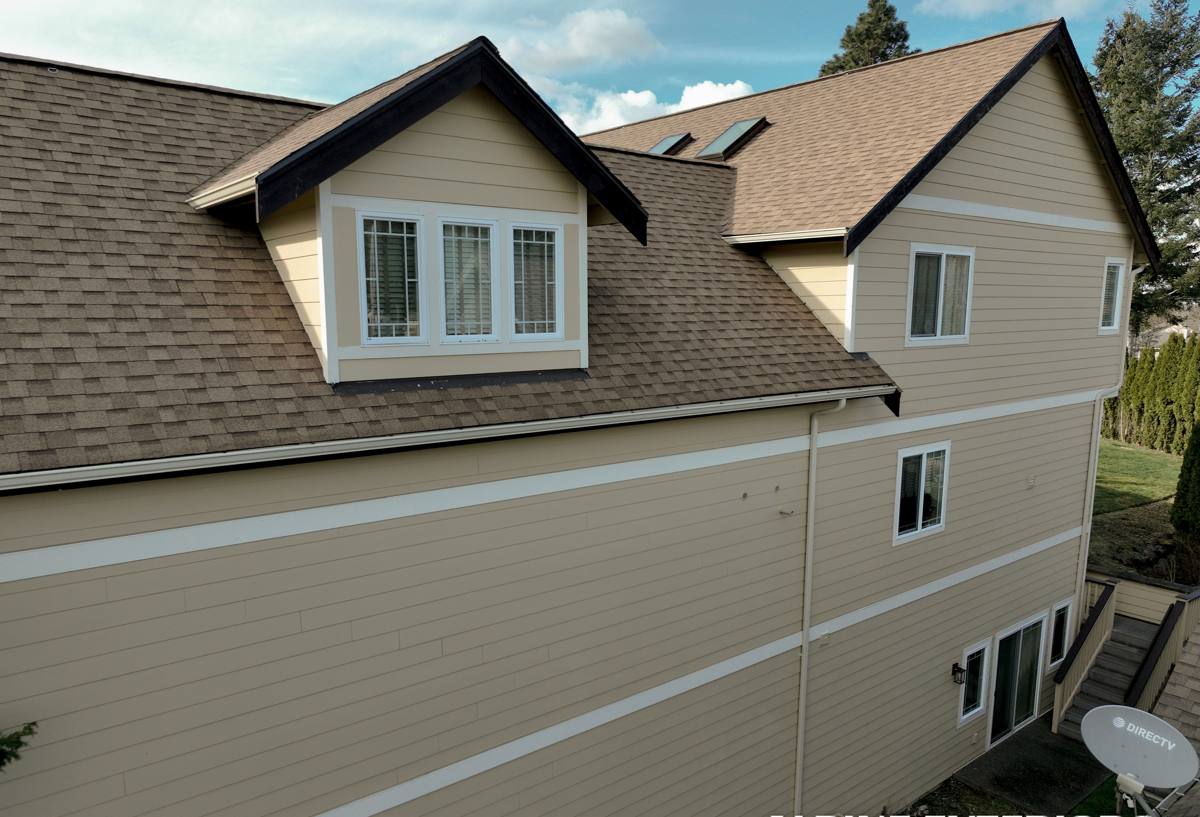
What Fraser Valley Weather Does to Windows Over Time
Aldergrove sits in the Fraser Valley lowland, close enough to the coast that homes here deal with a mix of driving rain off Pacific storm systems and long stretches of damp, low-pressure weather that just sits over the valley. Add in the salt-tinged air that reaches this far inland on stronger weather systems, and you've got conditions that are hard on any exterior opening, window frames included.
The practical effects show up in predictable places. North- and east-facing elevations, and anything shaded by trees or a neighboring roofline, grow moss and algae on sills and lower sashes for a good part of the year. Wind-driven rain finds any gap in flashing or sealant and pushes water sideways and upward, not just down — which is why a window that would be fine in a drier climate can still leak here if it's installed to a lower standard. Winter cold snaps aren't severe, but repeated freeze-thaw cycling on trapped moisture in a frame or sill pocket will crack caulk and loosen trim faster than people expect. And modern, tightly built homes trap indoor humidity against cold glass, so condensation and eventual sash rot are a real issue on top of whatever's happening outside.
What a Correct Custom Window Installation Actually Involves
Opening prep and framing check
Before a custom unit ever goes in, we check the rough opening for square, level, and soundness — not just measure it. On older homes especially, we're often finding soft or water-stained framing under the old window that needs to be addressed before a new one goes in, custom-built or not. Installing a well-made window into a compromised opening just delays the same problem.
Flashing and drainage, not just sealant
A caulk bead is not a moisture management plan. Correct installation builds in a drainage path — sill pan flashing, properly lapped house wrap or building paper integration, and weep points so any water that does get past the exterior finish has somewhere to go besides your wall cavity. This is the single biggest difference between an installation that survives twenty Fraser Valley winters and one that starts leaking in five.
Air sealing and insulation around the frame
The gap between a custom frame and the rough opening needs to be sealed and insulated correctly — not overpacked with expanding foam, which can bow a frame out of square, and not left as a gap that lets in cold, damp air. We use low-expansion foam or backer rod and sealant sized to the actual gap, then finish with proper interior and exterior trim.
Choosing the Right Window for This Climate
Material choice matters as much as installation quality when moss, moisture, and driving rain are part of daily life for a window. Here's how the common options compare for this area specifically:
| Frame Material | Moisture & Moss Resistance | Maintenance | Typical Lifespan |
|---|---|---|---|
| Vinyl | Good — won't rot, but grime and moss film need periodic cleaning | Low — occasional washing, no painting | 20–30 years |
| Fiberglass | Very good — dimensionally stable in wet-dry cycling, resists warping | Low to moderate | 30–40+ years |
| Wood, unclad | Poor to fair without diligent upkeep — vulnerable to rot and moss growth in shaded spots | High — regular painting/staining and sealant checks | Varies widely with maintenance |
| Wood, clad exterior | Good on the exterior face; interior wood still needs normal care | Moderate | 25–35 years |
We don't push one brand or product line as the only answer. What we do insist on is matching the material to the exposure — a north-facing wall under overhanging trees is a different job than a sheltered, sun-facing gable end, even on the same house.
Our Process for Custom Window Jobs in Aldergrove
- On-site assessment. We measure the actual opening, check framing condition, and look at sun and wind exposure for that specific wall.
- Material and style selection. We walk through frame material, glazing options, and how the new window will look with the home's existing trim and siding.
- Ordering. Custom sizes and shapes are built to order, so lead times run longer than stock replacement windows — we set expectations up front rather than promising a date we can't hit.
- Removal and opening prep. Old units come out carefully, and any framing or sheathing issues found underneath get addressed before the new window goes in.
- Installation with proper flashing and sealing. This is where the drainage plane, flashing laps, and air-sealing detail happen — the part that determines whether the job lasts.
- Trim and finish work. Interior and exterior trim gets fitted and finished to match the rest of the house.
- Final walkthrough. We check operation, seal lines, and cleanup before calling it done.
Mistakes We See and Correct
A lot of the repeat and repair calls we get on custom windows trace back to a handful of shortcuts, not bad products. Face-sealing an opening with caulk alone, and no flashing or weep path behind it, works fine until the caulk ages or a storm pushes rain at the wrong angle — then water has no way out and it tracks into the wall. Reusing old trim over framing that was already showing rot is another common one; it hides the problem instead of fixing it. And oversized custom units set into openings that weren't actually reframed to spec put ongoing stress on the corners of the frame, which shows up later as sticking sashes or hairline gaps at the joints. Our standard is to address the opening itself, not just the window going into it — even when that means more prep work than a straight swap.
Keeping Custom Windows Performing Season After Season
Even a correctly installed window benefits from a bit of regular attention in this climate. A short seasonal routine goes a long way toward keeping moss and moisture from becoming bigger problems:
- Rinse sills and lower sashes on shaded, north-facing windows a couple times a year to keep moss and algae from taking hold.
- Check exterior caulk lines each fall before the wet season sets in, and again in spring — hairline cracks are easy to catch early and hard to ignore once water's gotten behind them.
- Clear debris from window wells and any sill drainage or weep points so water has somewhere to go.
- Watch for condensation buildup on interior glass in winter — persistent condensation can point to a ventilation issue worth addressing before it affects the sash or surrounding trim.
- Operate casement and awning hardware periodically so mechanisms don't seize from disuse or corrosion.
Why a Crew That Already Works Aldergrove Matters
Aldergrove sits right at the border, and our crew crosses it regularly to work on both sides. That's not a small detail on a custom window job. Materials, crew, and equipment moving across the Aldergrove–Lynden port of entry need to be planned for, and permitting for a window replacement or opening modification in the Township of Langley follows a different process than what applies on the Washington side. A contractor who only occasionally works this area is learning that process on your job. We're not.
There's also a practical, on-the-ground familiarity that matters: knowing which house styles are common in the area, what kind of framing and siding combinations show up on older Fraser Valley properties, and what this specific stretch of weather does to a window over ten or twenty years rather than guessing from a manufacturer spec sheet written for a different climate.
If you're weighing custom window options for a home in Aldergrove, we're glad to come take a look and give you a straight, no-pressure estimate — just fill out the form below to get started.