 Lynden Siding
 Blaine's Coastline Is Beautiful — and Hard on Siding
Homes in Blaine sit close to the water, and that proximity comes with a trade-off. Salt-laden air off the Salish Sea works its way into every seam, joint, and fastener on a home's exterior. Add driving rain that comes in sideways during winter storms, and a moss season that stretches for months under the region's shade and moisture, and you have one of the more demanding exterior environments in Whatcom County. Siding here doesn't just need to look good — it needs to survive a specific combination of salt exposure, sustained dampness, and organic growth that inland siding jobs never have to deal with.
We're based just up the road in Lynden, and Blaine is a regular part of our service area. That matters because the right siding choice and the right installation details for a coastal Blaine property are not identical to what works on a home twenty minutes inland. This page covers what fiber cement siding needs to do for a Blaine home, what a correct installation actually involves, and why we install James Hardie fiber cement exclusively rather than the vinyl, LP SmartSide, or other engineered wood products you'll see marketed for the same job.
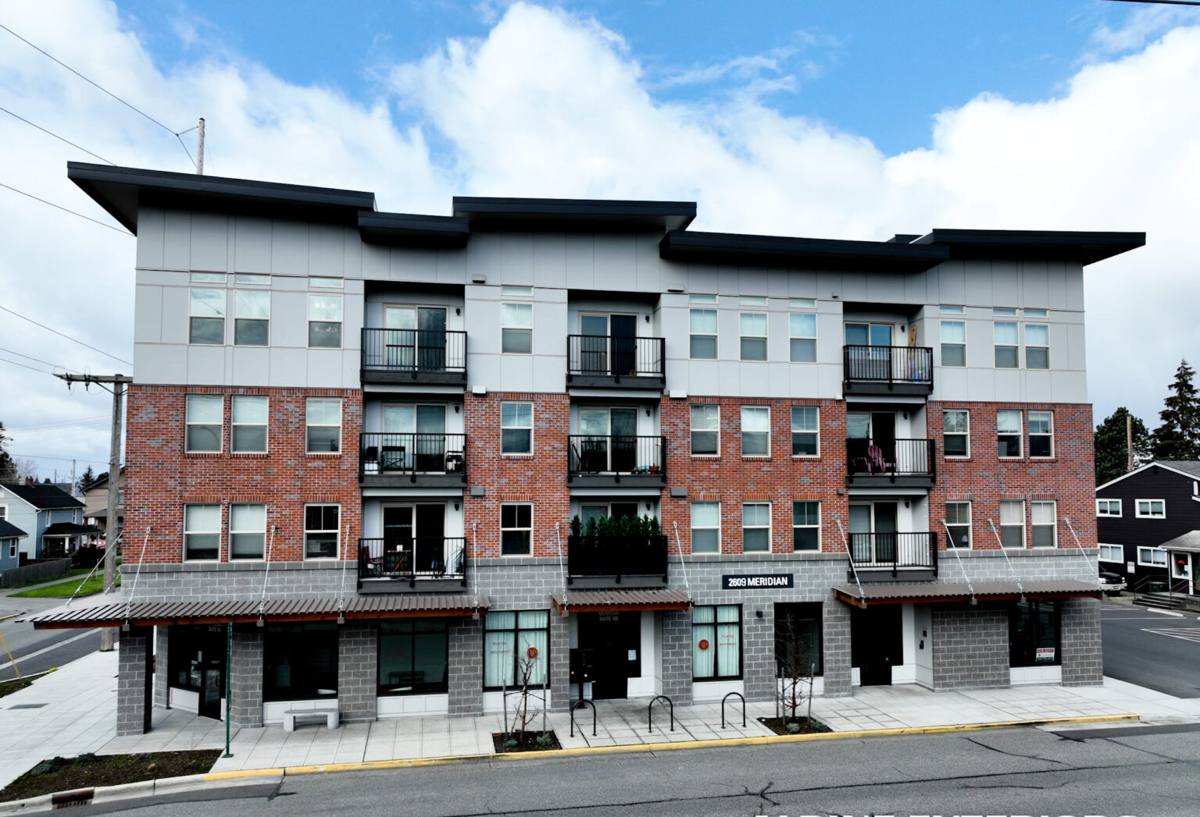
What Salt Air, Rain, and Moss Actually Do to Siding
Salt Air
Airborne salt is corrosive to metal fasteners, flashing, and trim, and it accelerates the breakdown of coatings and caulk. Over years, a siding product with a weak factory finish will chalk, fade, or lose adhesion faster near the coast than it would twenty miles inland. This is why fastener choice and finish quality matter more in Blaine than in most parts of the county.
Driving Rain
Wind-driven rain off the water doesn't just fall on a wall — it gets pushed sideways and upward into laps, corners, and penetrations. Any gap in flashing, any short overlap at a horizontal joint, or any caulk joint asked to do a job that should have been handled by proper water-shedding detail will eventually let water in. On a coastal property, that "eventually" tends to arrive sooner.
Moss and Sustained Moisture
Shaded elevations, north-facing walls, and areas near mature trees stay damp longer here than in drier parts of the state. That prolonged dampness is exactly what moss, algae, and mildew need to take hold on a siding surface. Once organic growth establishes itself on a porous or poorly finished surface, it holds even more moisture against the wall — a cycle that keeps feeding itself unless the siding material and finish resist it in the first place.
What a Correct Fiber Cement Installation Involves
Fiber cement is not vulnerable to rot, and it doesn't feed insects, but none of that matters if it's installed poorly. The material only performs as advertised when it's installed to manufacturer spec, which in a coastal environment like Blaine means paying close attention to a handful of details that get overlooked more often than homeowners realize:
- Correct clearance between the bottom of the siding and grade, decks, roofs, and patios — moisture wicking at these transitions is one of the most common failure points we find on older installations
- Properly lapped and sealed weather-resistive barrier behind the siding, with flashing integrated shingle-style so water is always directed outward and down
- Corrosion-resistant fasteners driven to the correct depth — overdriven or underdriven nails compromise both the weatherproofing and the manufacturer's warranty
- Factory-cut and factory-primed edges used wherever possible, with any field cuts properly sealed before installation
- Adequate gapping at butt joints and penetrations, caulked with a product rated for the movement and exposure involved, not just whatever was on the truck
- Attention to end grain and joint flashing at corners and window and door casings, where wind-driven rain concentrates
None of this is exotic. It's the manufacturer's published installation standard. But it takes more time and more attention than a rushed crew is willing to give it, and it's the difference between siding that performs for decades in a coastal environment and siding that starts showing problems in five or six years.
Our Process for a Blaine Fiber Cement Project
1. On-Site Assessment
We walk the property and look specifically at exposure — which elevations take the most wind-driven rain, which stay shaded and damp longest, and where the existing siding or sheathing shows signs of past moisture problems. This shapes decisions on flashing detail, ventilation, and which James Hardie product line and finish make sense for that particular home.
2. Tear-Off and Substrate Check
Old siding comes off and we inspect the sheathing and framing underneath before anything new goes up. Coastal moisture problems are often invisible from the outside until the old siding is removed — finding and addressing any hidden damage now is far cheaper than discovering it after the new siding is on.
3. Weather Barrier and Flashing
A new weather-resistive barrier goes on with all seams properly lapped, and flashing is installed at every horizontal joint, window, door, and penetration before a single piece of siding is hung. This layer does as much work as the siding itself in a wind-driven-rain climate.
4. Installation to Manufacturer Spec
Siding is installed with correct clearances, fastener placement, and joint treatment, following James Hardie's published installation guide for our climate zone. This is also what keeps the manufacturer's warranty intact — installations that skip these details can void coverage even on a top-tier product.
5. Final Walkthrough
We walk the finished job with the homeowner, checking clearances, caulk lines, and trim details before calling it complete.
James Hardie Product Lines Built for This Climate
We install James Hardie fiber cement exclusively, and for a property like a Blaine home, two things about the Hardie system matter most: the HZ5 formulation engineered for wetter, harsher climates, and the ColorPlus factory-applied finish.
HZ5 Engineered for Moisture Exposure
James Hardie makes region-specific formulations rather than a single one-size-fits-all product. HZ5 is engineered for climates with significant moisture exposure — which describes Blaine and the rest of the Puget Sound region well. It's built to resist moisture-related damage better than a generic formulation designed for a drier climate.
ColorPlus Finish
Rather than relying on field-applied paint, ColorPlus is a factory-applied, baked-on finish that resists fading and chalking substantially better than site-applied paint — and it comes with its own finish warranty separate from the product warranty. In a salt-air environment where UV and airborne salt both attack a coating, starting with a factory finish rather than a job-site paint job is a meaningful advantage.
Why We Don't Install Alternatives
Vinyl siding is inexpensive and low-maintenance, but it can warp or distort in temperature extremes, it isn't as impact-resistant, and it doesn't hold the same crisp architectural profiles that a lot of homeowners want. LP SmartSide and other engineered wood products use a wood-strand core, which means their long-term performance depends heavily on keeping water out of every cut edge and joint — a much less forgiving margin for error in a coastal environment. Cedar and primed spruce require ongoing maintenance to keep ahead of moisture and, in this region, moss and mildew. We standardized on James Hardie fiber cement because it's non-combustible, dimensionally stable, doesn't feed rot or insects, and its factory finish and warranty structure hold up better under exactly the conditions Blaine deals with.
How Fiber Cement Compares in a Coastal Environment
| Factor | James Hardie Fiber Cement | Vinyl | Engineered Wood (LP SmartSide) | Cedar / Primed Spruce |
|---|---|---|---|---|
| Moisture tolerance | Engineered HZ5 formulation for wet climates | Good, but can trap moisture behind panels | Depends on sealed edges and joints | Requires diligent maintenance |
| Moss/algae resistance | Dense, low-porosity surface; factory finish resists growth | Fair; surface can host growth in shaded areas | Fair; wood-based core is vulnerable if finish fails | Poor without regular treatment |
| Salt-air durability | Strong; finish resists chalking and fade | Can become brittle over time in coastal wind | Moderate; sensitive to coating breakdown | Moderate; needs recoating on a regular cycle |
| Fire resistance | Non-combustible | Combustible | Combustible | Combustible |
| Typical maintenance | Occasional wash; repaint only if ever needed | Low, but limited repair options if damaged | Moderate; inspect and reseal joints | Regular repainting/staining |
What Drives Cost on a Blaine Fiber Cement Project
Every home is different, and we won't quote a number without seeing the property, but these are the factors that move the price on a real Blaine estimate:
| Cost Factor | Why It Matters Here |
|---|---|
| Extent of tear-off and substrate repair | Coastal moisture can hide sheathing damage under old siding, especially at low-clearance areas |
| Home size and wall complexity | More corners, dormers, and trim details mean more flashing and cut work |
| Siding profile and accessories | Lap width, trim style, and soffit/fascia work affect both material and labor |
| ColorPlus color selection | Factory-finished colors vary slightly in cost versus field-painted options |
| Access and site conditions | Waterfront lots, steep grades, or tight setbacks can affect staging and labor time |
Living With Fiber Cement Through a Long Moss Season
Even the right product benefits from a little seasonal attention. A yearly rinse-down with a garden hose (not a pressure washer aimed directly at joints) clears off the buildup that a long, damp Blaine season leaves behind before it has a chance to take hold. Keep an eye on gutters and downspouts so water is actually leaving the roof and walls rather than sheeting down the siding face, and trim back vegetation that's shading a wall and keeping it damp longer than it needs to be. None of this is heavy maintenance — it's the kind of upkeep that keeps a correctly installed Hardie system looking and performing the way it's supposed to for the long haul.
Why Hiring a Crew That Already Works Blaine Matters
Siding installation standards don't change from town to town, but judgment calls do. Knowing which elevations on a typical Blaine lot take the worst of the wind-driven rain, how long a shaded wall stays damp into the spring, and how salt air behaves on fasteners and trim over time — that's the kind of thing a crew picks up from doing the work in this specific area, not from a manufacturer's install manual alone. We work Lynden and the surrounding Whatcom County communities, including Blaine, regularly enough that these aren't unknowns walking onto a job site.
Questions Worth Asking Before You Hire
- Do you install James Hardie's HZ5 product line, and can you explain why it's suited to this area?
- What clearance will the siding have above grade, decks, and roofing?
- How will flashing be handled at windows, doors, and horizontal joints?
- What fastener type will be used, and is it rated for coastal/corrosive exposure?
- Will the installation meet the manufacturer's spec closely enough to keep the warranty valid?
- Do you have experience working on homes in Blaine or similar coastal Whatcom County properties?
If a contractor can't answer these clearly, that's worth noting before you sign anything.
If you're weighing a siding project on a Blaine home, we're happy to take a look and walk you through what we'd recommend for your specific property — no pressure, no obligation. Use the form below to request a free estimate.