 Lynden Siding
 Birch Bay's Coastline Puts Extra Stress on Siding
Birch Bay sits right on the water in Whatcom County, and that location changes what a home's exterior has to deal with year-round. Homes here take on salt-laden air blowing straight off the Salish Sea, wind-driven rain that hits siding at an angle instead of just running down it, and a moss season that runs longer than it does even a few miles inland in Lynden. None of that is unique to one house on one street — it's the baseline condition for anything built near this shoreline, and it's why siding choices that hold up fine in a drier, more sheltered part of Whatcom County can struggle here.
We install James Hardie fiber cement siding exclusively, and Birch Bay is a good example of why. The combination of salt exposure, near-constant moisture, and heavy shade from surrounding evergreens is a tough environment for a lot of common siding products. This page focuses specifically on what that environment demands, what a correct James Hardie installation looks like in response, and why local coastal experience matters as much as the product itself.
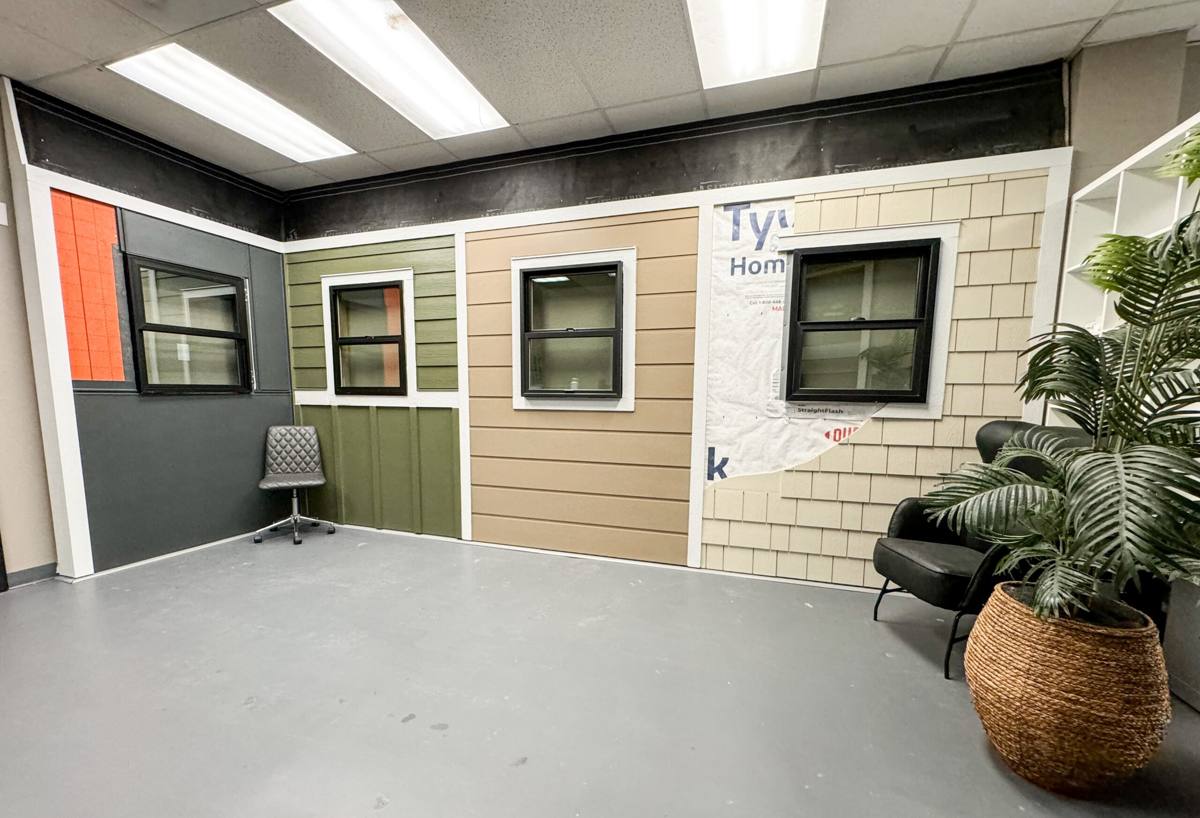
What Salt Air, Rain, and Moss Do to Different Siding Materials
Salt air doesn't just sit on the surface of a house — it works its way into fasteners, seams, and any exposed edge, accelerating corrosion and finish breakdown faster than the same product would age even fifteen or twenty miles inland. Wind-driven rain adds to that by forcing water sideways into laps and joints that were designed assuming rain falls mostly straight down. And the shade and dampness that make Birch Bay attractive also make it an easy place for moss and algae to take hold on any surface that stays wet.
| Material | Salt Air Exposure | Wind-Driven Rain | Moss/Algae Growth |
|---|---|---|---|
| Vinyl siding | Fasteners and trim hardware corrode faster; panels can become brittle | Prone to water intrusion behind panels at seams | Grows readily on textured or shaded panels |
| Cedar/wood siding | Salt accelerates finish breakdown and grain checking | Absorbs moisture, prone to swelling and rot at laps | High — organic material feeds growth directly |
| LP SmartSide (wood-strand) | Engineered wood core is moisture-sensitive; edge exposure is a risk point | Cut edges and exposed panel faces need diligent sealing | Moderate to high without regular upkeep |
| James Hardie fiber cement | Non-combustible, non-organic material resists salt-driven corrosion at the panel itself | Engineered lap profile sheds wind-driven rain when installed to spec | Factory ColorPlus finish resists staining better than field-applied paint |
No material is immune to this climate — including Hardie. The difference is that fiber cement doesn't rot, swell, or feed organic growth the way wood-based products can, and it holds up to repeated wetting and drying cycles without the material itself breaking down. That's a meaningful advantage in a place where a house might stay damp for days at a stretch during a Pacific storm system.
Why We Install James Hardie's HZ5 Line in This Climate
James Hardie doesn't make one universal product — it engineers different formulations for different climate zones through what it calls the HardieZone system. HZ5 is the formulation built for regions with more moisture, more freeze-thaw cycling, and harsher weather exposure, which describes the Pacific Northwest coastline generally and a shoreline community like Birch Bay specifically. The HZ5 formulation is engineered to resist moisture absorption and hold dimensional stability better than a product built for a milder, drier zone.
This matters because siding that's rated for the wrong climate zone can still look fine going up on installation day and still struggle years down the road. Using the version of the product that's actually engineered for coastal Whatcom County conditions isn't an upsell — it's the baseline spec for a house in this location.
Flashing and Water Management
Correct flashing at windows, doors, and any horizontal transition is where most long-term siding failures actually start, regardless of the material on the surface. In a location with wind-driven rain, flashing has to assume water will be pushed sideways and upward at times, not just downward. That means proper head flashing, correctly lapped house wrap, and drainage planes that give any water that does get behind the siding a way back out.
Fastening and Gaps
Hardie's installation instructions specify fastener type, spacing, and the gaps required at butt joints, corners, and around penetrations — and those specs exist for a reason. Undersized gaps or the wrong fastener in a salt-air environment lead to problems faster here than they would inland: corrosion at fastener heads, cracking at joints that can't expand and contract properly, and water paths that shouldn't exist. Coastal installs call for corrosion-resistant fasteners rated for the exposure, not just whatever's fastest to install with.
Caulking and Sealing Joints
Caulking is a maintenance item, not a permanent seal, and that's especially true in a climate that cycles between soaking rain, salt spray, and occasional freezing temperatures. Joints need to be sealed with a product rated for exterior movement and UV exposure, and the installer needs to understand which joints should be caulked and which are designed to be left open as part of the drainage plane. Sealing the wrong joint can trap water instead of shedding it.
The ColorPlus Finish and Moss Resistance
James Hardie's ColorPlus finish is baked on at the factory under controlled conditions, rather than field-applied with a brush or sprayer on site. That gives it a more consistent, durable bond to the fiber cement substrate than a job-site paint job typically achieves, and it holds color better under UV and salt exposure over time. It also gives moss and algae a harder surface to gain a foothold on compared to a rougher, more porous painted finish. It's not a moss-proof coating — nothing is, in a climate this damp and shaded — but it's a meaningfully better starting point than field-painted alternatives.
Our Process for a Birch Bay Siding Project
The process doesn't change dramatically because a home is on the water, but a few steps get extra attention because of it.
- Site assessment: we look specifically at exposure direction — which walls take the most wind-driven rain and salt spray — and at existing moisture or rot damage around windows, trim, and the base of the walls.
- Tear-off and inspection: removing the old siding lets us check the sheathing and house wrap underneath for hidden moisture damage before anything new goes up. In a coastal climate, this step catches problems that surface-level inspection can miss.
- Water management repair: any flashing, house wrap, or sheathing issues get corrected before new siding goes on — installing new siding over a bad water management layer just hides the problem.
- Installation to spec: HZ5 panels installed with correct fastener type, gaps, and flashing detail at every penetration.
- Final inspection and walkthrough: we check joints, caulking, and trim details before calling the job finished, and walk the homeowner through what routine upkeep looks like going forward.
What a Hardie Siding Project Typically Costs — and What Changes the Price
Every home is different, but a few factors consistently move the price on a coastal Whatcom County project more than they would on an inland one.
| Cost Factor | Why It Matters in Birch Bay |
|---|---|
| Existing moisture or rot damage | Coastal homes more often need sheathing or framing repair discovered during tear-off |
| Fastener and hardware upgrades | Corrosion-resistant fasteners and trim hardware cost more than standard-grade options |
| Home size and story height | Larger and taller homes need more material, staging, and labor time |
| Trim, corners, and accessory detail | More architectural detail means more cut edges and joints that need correct sealing |
| Site access | Waterfront lots can have tighter access or landscaping that slows staging and material handling |
We'll walk through these factors specifically for your home during an estimate rather than quoting a number that doesn't account for your actual exposure and condition.
Maintaining Hardie Siding in a Salt-Air, High-Moss Environment
Fiber cement is low-maintenance compared to wood, but "low-maintenance" isn't "no-maintenance" — especially this close to the water. A short annual routine keeps a correctly installed system performing the way it's designed to.
- Rinse salt spray and grime off the siding periodically, especially on walls facing the water directly
- Inspect caulking at joints, windows, and trim once a year and re-seal anything that's cracked or pulled away
- Trim back vegetation and tree limbs that keep siding shaded and damp longer than necessary
- Gently wash off moss or algae growth before it spreads, rather than letting it establish on the finish
- Check flashing and trim at the base of walls where splashback and standing moisture are most common
- Watch for any soft spots, staining, or bubbling at seams, which can signal a water management issue underneath
Why Hiring a Crew That Already Works in Birch Bay Matters
A siding crew that mostly works drier, more sheltered inland jobs isn't necessarily prepared for what a waterfront Whatcom County home actually needs — the right HZ rating, the right fastener spec, and flashing details that assume sideways rain instead of straight-down rain. Experience installing specifically in coastal conditions is what catches those details before they become callbacks. It's also what makes a crew comfortable making the judgment calls a spec sheet can't fully cover — where to add extra flashing, which joints need attention first, and how a specific lot's exposure to the water should change the approach.
If you're weighing a siding replacement on a Birch Bay home, we're happy to walk the property, look at your current exposure and condition, and give you a straightforward, no-pressure estimate for a correctly installed James Hardie system built for this coastline. Use the form below to get started.