 Lynden Siding
 Deck Building for Aldergrove, BC Homes
Aldergrove sits close enough to Lynden, Washington that many homeowners on both sides of the border deal with the exact same weather: long wet stretches, heavy morning dew, salt-tinged air moving in off the Pacific weather systems, and a moss season that seems to start earlier every year. A deck built without that reality in mind will look fine for a season or two, then start showing soft spots, green film, and loose fasteners. A deck built for this climate looks and performs the same way five and ten years out. That's the difference we aim for on every project, whether it's a small platform off a kitchen door or a full multi-level deck with stairs and rail systems.
This page focuses on one service for one area: deck building for homeowners in and around Aldergrove, BC. We're not going to give you a generic national contractor's version of "how to build a deck." We're going to walk through what actually matters for a deck built in this specific corner of the Pacific Northwest.
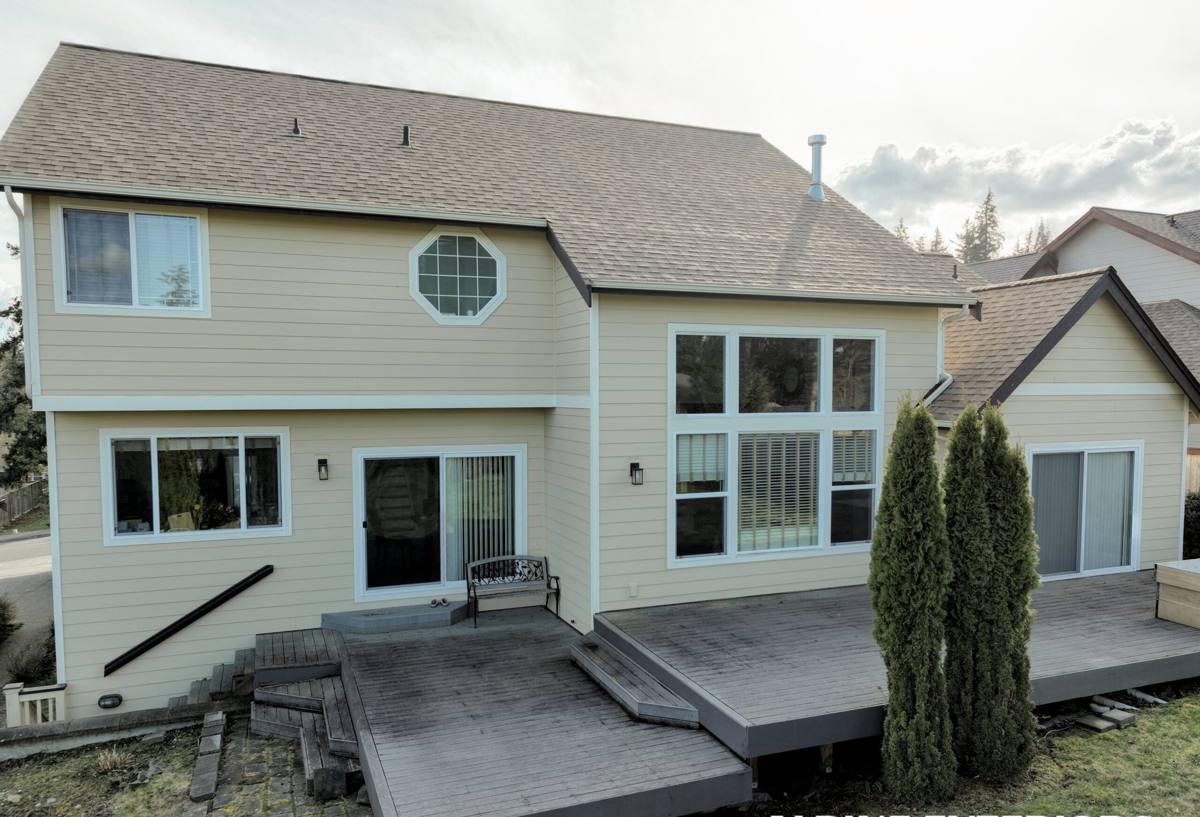
What Aldergrove's Climate Does to a Deck
Whatcom County and the Fraser Valley share a weather pattern that's tough on any outdoor wood or composite structure. A few specific stresses show up again and again on decks we've inspected or rebuilt in this region:
- Driving rain that gets pushed sideways under railings and against ledger boards, finding any gap in flashing or caulking.
- Salt air carried inland from the Strait of Georgia and Puget Sound, which accelerates corrosion on exposed fasteners, hinges, and hardware that isn't rated for it.
- Extended moss and algae season — shaded decks and north-facing surfaces can stay damp for weeks at a time, which feeds moss growth and keeps wood fiber saturated longer than it should be.
- Freeze-thaw cycling in winter, which is hard on footings and fasteners that weren't set below frost depth or properly isolated from moisture.
None of this means a deck can't last. It means the build has to account for moisture movement, not just look good on installation day.
Where Decks Actually Fail Around Here
In our experience, deck failures in this climate almost never start with the decking boards themselves. They start underneath: a ledger board bolted directly to siding without flashing, joists without proper drainage gaps, fasteners that were never rated for treated lumber's chemical makeup, or footings that were poured too shallow and heaved over a few winters. The visible boards are usually the last thing to fail — and often they fail because something underneath them failed first.
Choosing the Right Decking Material
There's no single "best" decking material — there's a best material for your budget, your maintenance appetite, and how exposed your deck is to sun, shade, and moisture. Here's an honest comparison of the main options we work with:
| Material | Upfront Cost | Maintenance | Moisture Behavior |
|---|---|---|---|
| Pressure-treated lumber | Lowest | Needs re-staining or sealing every 1-3 years | Absorbs and releases moisture; prone to cupping and splintering if not maintained |
| Cedar | Moderate | Regular sealing to hold color and resist decay | Naturally decay-resistant but still needs upkeep in constant wet shade |
| Composite decking | Higher | Occasional washing, no staining or sealing | Doesn't rot, but lower-quality composites can hold surface moisture and grow moss in shaded areas without regular cleaning |
| PVC/capped polymer | Highest | Lowest — mostly rinsing | Fully sealed surface resists moisture absorption; best for deep shade or ground-level decks |
For decks that sit in shade for a good part of the day — common under mature trees on Aldergrove-area lots — we lean toward composite or capped polymer boards, or at minimum a cedar deck with a realistic maintenance plan the homeowner is willing to keep up with. For sunnier, open decks, well-maintained wood can perform very well and costs less to start.
Framing, Footings, and the Ledger Board — Getting the Structure Right
The decking surface is what you see; the framing underneath is what actually determines how long the deck lasts. A few things we treat as non-negotiable on every deck we build:
- Footings sized and set to the depth required for frost protection, not just poured to "look deep enough."
- Proper flashing behind and above the ledger board where the deck attaches to the house, so water is directed away from the wall assembly instead of into it.
- Corrosion-resistant, code-rated fasteners and joist hardware — especially important given the salt-air exposure in this region, which eats through mismatched or under-rated hardware faster than most homeowners expect.
- Joist spacing and blocking sized correctly for the decking material chosen, since composite and PVC boards often have different span requirements than solid wood.
- Drainage gaps and airflow underneath the deck so moisture doesn't sit and stagnate against framing members.
Skipping any one of these doesn't show up on day one. It shows up in year three or four, usually as soft framing, a wobbly rail post, or a ledger board pulling away from the house.
Our Deck Building Process
We keep the process straightforward and communicate at each stage, so there are no surprises about scope, timeline, or cost.
1. On-Site Assessment
We walk the property, look at sun and shade exposure, drainage patterns, existing grade, and how the deck will tie into the house. This is also where we talk through how you actually plan to use the space — dining, grilling, a hot tub, quiet mornings — because that shapes size, layout, and material choice.
2. Design and Material Selection
We put together a plan that covers footprint, decking material, railing style, and any stairs or multi-level elements, along with a clear, honest cost estimate broken down by material and labor.
3. Permitting
Deck projects typically require a permit from the local building authority, and requirements can include setbacks, railing height, and structural review depending on deck height and size. We handle the paperwork and coordinate inspections so you're not left chasing that down yourself.
4. Construction
Footings, framing, decking, and railings are installed in sequence, with attention to the flashing, fastener, and drainage details covered above. We keep the site reasonably clean and predictable throughout.
5. Final Walkthrough
We walk the finished deck with you, check every rail, stair, and fastener, and answer any questions about care and maintenance before we consider the job done.
Permits and Local Considerations for Aldergrove Homeowners
Because Aldergrove sits just across the border from our home base in Lynden, we're used to working with homeowners in this area and understanding that permitting and inspection processes follow your local building authority's rules, not Washington State's. We coordinate directly with the relevant local office on permit applications and inspections so the process stays smooth on your end. If you're unsure whether your planned deck needs a permit — often driven by height above grade or total square footage — that's one of the first things we'll confirm during the on-site assessment rather than guessing.
Maintaining Your New Deck Through the Wet Season
A well-built deck still needs some seasonal attention, especially given how long the damp season runs here. A simple annual routine goes a long way:
- Sweep leaves and debris off the deck surface regularly in fall — trapped organic matter is what feeds moss and mildew.
- Rinse the deck surface, especially shaded areas, a few times a year to prevent moss and algae buildup before it takes hold.
- Check railing posts and stair stringers annually for movement or soft spots.
- Re-stain or reseal wood decking on the schedule appropriate to the product — don't wait until it's visibly gray and dry.
- Clear drainage gaps between boards so water isn't pooling on the surface after rain.
- Inspect fasteners and hardware periodically for corrosion, particularly on decks with more direct wind exposure.
None of this is complicated, but skipping it for a few years in this climate ages a deck faster than the material itself ever would.
Why Hire a Crew That Already Works in Aldergrove
A contractor who's built and repaired decks in this specific stretch of the Pacific Northwest already knows how the local weather behaves against a structure over time — not just in theory, but from having seen what holds up and what doesn't after a few wet winters. That means fewer guesses about footing depth, fastener selection, or how much shade a given yard actually gets through the year. It also means a crew that's set up to serve Aldergrove homeowners directly, without treating the job as an unfamiliar one-off across the border.
If you're considering a new deck, or need an honest opinion on whether an existing one is worth repairing or replacing, we're glad to take a look. Reach out for a free, no-pressure estimate using the form below, and we'll walk the site with you and talk through what makes sense for your home and budget.