 Lynden Siding
 Siding Installation Built for Acme's Climate
Acme sits in the wetter, greener stretch of Whatcom County, tucked against the foothills near the South Fork Nooksack River and within reach of the salt air that pushes inland off Bellingham Bay and the Puget Sound during storm systems. That combination — persistent moisture, driving rain off the foothills, and a moss season that can run eight months or more — is hard on exterior materials that weren't built to handle standing damp for weeks at a time. Siding here doesn't just need to look good; it needs to shed water fast, resist the freeze-thaw swings of a foothill winter, and hold up under a fungal and moss load that's heavier than what you'd see on the drier east side of the state.
We install James Hardie fiber cement siding exclusively, and we've fitted it on homes throughout Lynden and the surrounding Whatcom County communities, including Acme. This page walks through what a correct installation looks like for a home in this specific area, not a generic overview of "siding" in the abstract.
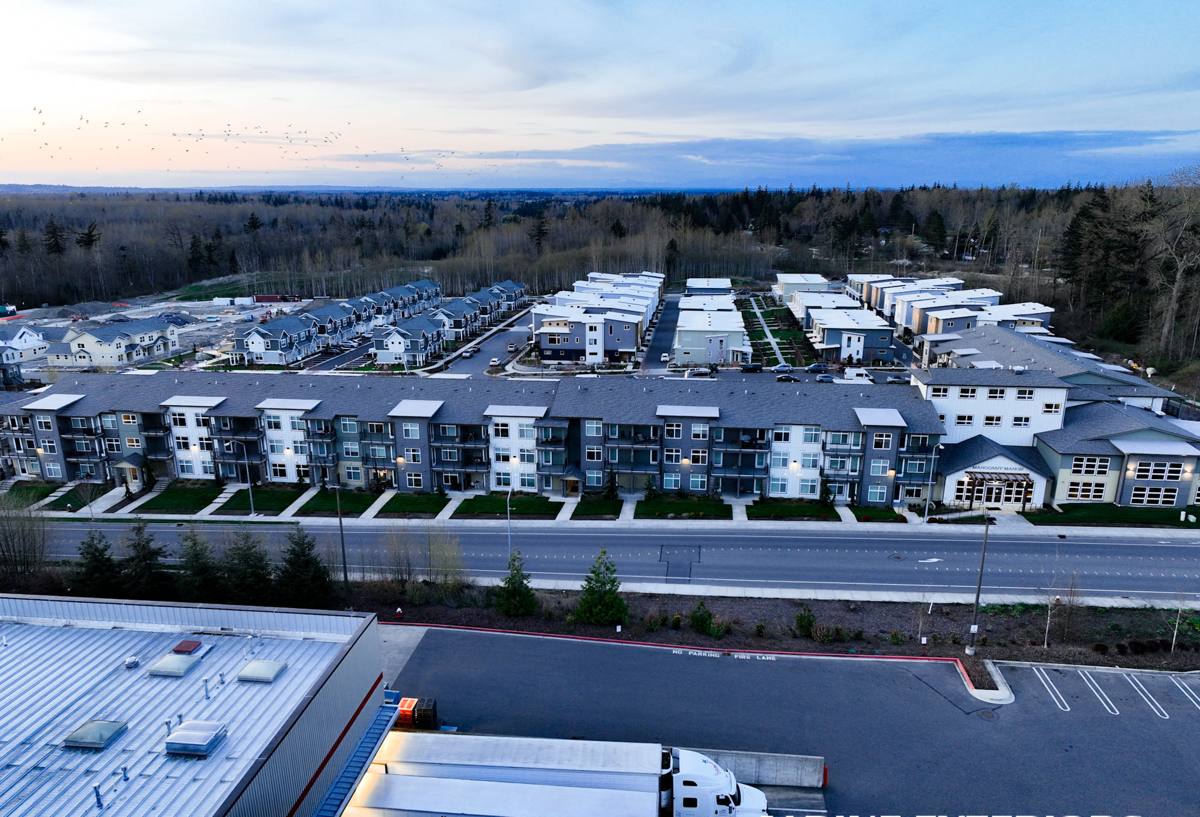
What Acme Homes Are Up Against
Moisture That Doesn't Let Up
Whatcom County gets a long, low-intensity rain season rather than short, heavy downpours, and Acme's proximity to the foothills means fog and dampness can linger in the mornings well after the rest of the valley has dried out. Siding that traps moisture behind it — or that swells and softens when it stays wet — is going to lose the fight over a 10-15 year span, even if it looks fine the first few winters.
Moss and Organic Growth
Shaded lots, mature tree cover, and consistent dampness make Acme prime territory for moss, algae, and mildew staining on north-facing and shaded walls. Some siding materials are essentially wood pulp with a coating, which gives moss and fungus something to root into over time. A non-organic substrate doesn't stop moss from landing on the surface, but it removes the food source that lets it dig in and cause damage underneath.
Wind-Driven Rain and Salt-Tinged Air
During fall and winter storms, wind off the Sound can carry a faint salt load inland across Whatcom County, and combined with driving rain it finds every gap in poorly installed trim, flashing, and butt joints. This is less about corrosion (fiber cement doesn't rust) and more about how much water actually gets pushed behind the cladding at seams, corners, and penetrations — which is where installation quality matters more than the product label on the box.
Why We Only Install James Hardie
We made a decision a while back to stop installing several products that are common in this region — vinyl, LP SmartSide, primed wood, and cement-fiber alternatives to Hardie like Cemplank or Allura — and to install James Hardie fiber cement exclusively. That's not a marketing position; it's a maintenance and longevity call based on what actually holds up in a climate like ours.
- Non-combustible core: Hardie's fiber cement doesn't feed a fire the way wood-based products can, which matters as wildfire smoke and dry-season risk have crept further into western Washington summers.
- Engineered for this climate: Hardie's HZ5 product line is formulated for cold, wet, freeze-thaw climates — which describes the Whatcom County foothills better than a one-size-fits-all national spec.
- Factory-applied ColorPlus finish: the color and top coat are baked on in a controlled factory environment, which resists the fading, chalking, and moisture intrusion that field-applied paint is prone to, especially on a home that gets long stretches of damp weather between recoats.
- No organic substrate for moss to exploit: moss can still land on any surface, but it has nothing to feed on or swell against underneath Hardie's cement-based core.
- Warranty structure: Hardie backs its siding with a long, transferable limited warranty and the ColorPlus finish with its own separate coverage — a structure that reflects confidence in how the product performs over decades, not just years.
We're not going to tell you every other product on the market is worthless — vinyl is inexpensive, LP SmartSide has genuine fans, and cedar has real curb appeal. But we've seen enough call-backs and moisture damage on those materials in this exact climate that we no longer put our name on the installation. If you want one of those products, we're not the right contractor for that job, and we'll tell you that upfront.
What a Correct Installation Actually Involves
Most siding failures we get called out to inspect aren't a material failure — they're an installation failure. Fiber cement is forgiving as a material, but only if the details underneath it are right.
Water Management Comes First
Before a single plank goes up, the wall needs a drainage plane: house wrap or building paper installed shingle-style (upper layers overlapping lower ones), correctly flashed windows and doors, and a rain screen or furring strategy where the wall assembly calls for it. In a climate that stays damp as long as Acme's does, a wall that can't dry out from behind is a wall that will eventually rot, regardless of what's on the outside.
Fastening and Clearances
Hardie has specific nailing patterns, fastener types, and minimum clearances from grade, roofing, and decks that are engineered into the product's warranty terms. Skipping these — over-driving nails, using the wrong fastener, or nailing too close to panel edges — is one of the most common ways installers void coverage without the homeowner ever knowing.
Caulking and Joint Treatment
Butt joints, corners, and trim intersections are where wind-driven rain finds its way in. Hardie's installation specs call for specific joint treatments and paintable, high-quality sealants at these points — not a bead of whatever caulk was left over from the last job.
Cutting and Dust Control
Fiber cement generates silica dust when cut, which is a jobsite safety issue as much as a workmanship one. Proper cutting methods (scoring, shears, or dust-collecting saws) matter both for the crew's health and for keeping cut edges clean and properly sealed before installation.
Our Process for an Acme Installation
- On-site assessment: we walk the exterior, check for existing moisture damage, moss buildup, and any rot in the sheathing or trim that needs to be addressed before new siding goes on.
- Tear-off and inspection: old siding comes off and we inspect the wall assembly underneath — this is often where hidden damage from a previous, poorly-installed material shows up.
- Water-resistive barrier and flashing: house wrap, flashing, and any rain-screen furring get installed to current best practice for our climate, not just to code minimum.
- Hardie installation: panels, lap siding, or trim go up per James Hardie's published installation instructions, with attention to fastening, clearances, and joint sealing.
- Final walk-through: we review the completed work with you, including care and maintenance basics, before we consider the job done.
Cost Factors for Siding Installation
Every home is different, and we don't quote a price without seeing the house, but these are the main factors that move the number for an Acme installation:
| Factor | Why It Matters |
|---|---|
| Home size and wall complexity | More corners, gables, and dormers mean more cuts, trim, and labor hours |
| Existing wall condition | Rot or moisture damage found during tear-off requires repair before new siding goes on |
| Siding profile (lap, panel, shingle-style) | Different Hardie profiles have different material and labor costs |
| Trim and accent work | Detailed trim, fascia, and soffit work adds time but also long-term protection |
| Access and site conditions | Sloped lots, tree cover, or tight setbacks near the foothills can affect staging and scaffolding needs |
| Color and finish selection | Factory ColorPlus finishes vs. field painting affect both cost and long-term maintenance |
Signs Your Acme Home Needs New Siding
- Persistent moss or algae staining that returns quickly after cleaning
- Soft, spongy, or bubbling spots, especially near ground level or under windows
- Visible warping, buckling, or gaps at seams and corners
- Paint that's peeling or bubbling rather than just fading
- Rising energy bills that suggest the wall assembly is no longer sealing properly
- Siding that's original to a home built more than 20-25 years ago, especially in wood-based or older vinyl products
Any one of these is worth a look. A few of them together usually means the wall assembly, not just the surface material, needs attention.
Why Local Experience in This Area Matters
A crew that only shows up in Whatcom County occasionally will size a job the same way they would in a drier or milder climate. A crew that regularly works Lynden and the surrounding communities, including Acme, already knows how much drainage detailing this region actually needs, how long moss season really runs here, and which parts of a wall assembly tend to fail first when they're cut corners. That familiarity shows up in fewer surprises during tear-off and fewer callbacks after the job is done.
If your home in Acme needs new siding — or you're just trying to figure out whether it does — we're happy to take a look and give you an honest, no-pressure estimate. There's no obligation, and we'll tell you straight if now's the time or if you've got a few more years left in what's already on the wall.