 Lynden Siding
 Replacing a Deck in Acme's Climate
Acme sits in the Whatcom County countryside outside Lynden, and like most of this part of the county, it gets a steady dose of salt-tinged marine air, driving rain that doesn't fall straight down, and a moss season that runs longer than most homeowners expect when they first move in. A deck takes the full brunt of all three, sitting outside year-round with no roofline or wall to shield it. When a deck starts failing here, it's rarely one single problem — it's usually years of that combination working on the boards, the fasteners, and the framing underneath.
Deck replacement is a different job from deck repair, and it's worth being clear about that difference up front. Repair patches specific failures on a structure that's otherwise sound. Replacement means the deck as a whole — or at minimum the decking surface and possibly the substructure — has reached the point where patching individual problems no longer makes sense, either because the failures are spread across the whole deck or because the underlying framing can't be trusted anymore. This page covers how to tell which one you actually need, what a correct replacement involves in this climate, and how our process works for a deck replacement in the Acme area.
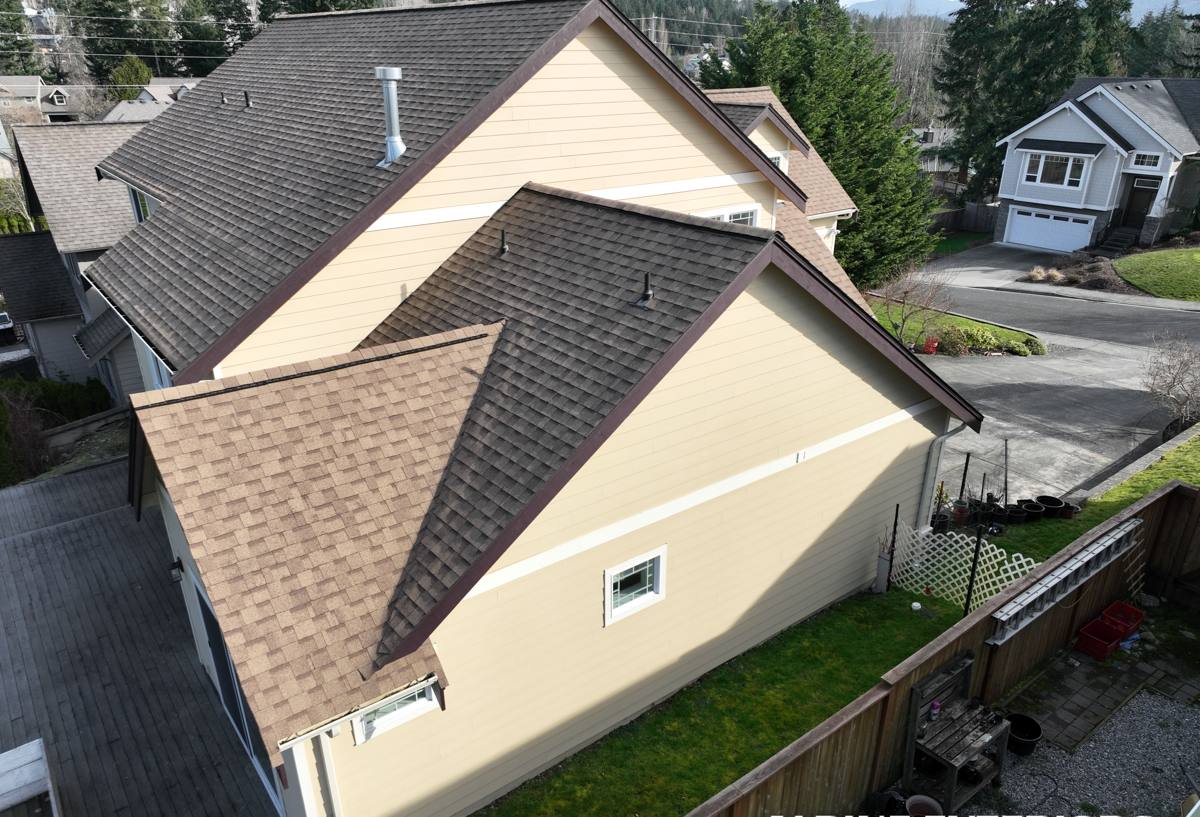
What Whatcom County's Climate Does to an Aging Deck
Salt Air and Sustained Moisture
Even away from the immediate coastline, this part of Whatcom County gets enough salt-laden marine air moving through that exposed metal on an older deck — fasteners, brackets, post hardware — corrodes faster than it would in a drier inland climate. A corroding fastener loses holding strength well before it looks obviously bad, which is part of why a deck that looks structurally fine from a few feet away can have real problems underneath.
Driving Rain, Not Just Rainfall
Rain in this area often comes in sideways rather than straight down, which matters more than it sounds like it should. Wind-driven rain gets pushed up under railings, into ledger connections at the house, and between deck boards that were gapped for a calmer climate. An older deck built without that in mind tends to trap moisture at exactly those points — the ledger, the railing posts, the board gaps — long before the surface itself looks worn.
A Moss Season That Runs Most of the Year
Mild, wet conditions give moss and mildew a long growing season here, and a horizontal deck surface is one of the first places it takes hold, since it holds water longer than a vertical wall and stays damp between storms. On an aging deck, moss buildup isn't just cosmetic — it holds moisture against the board surface and accelerates whatever wear is already underway underneath.
Signs Your Deck Needs Replacement, Not Repair
It's not always obvious from the surface which category a deck falls into. A few signs point toward replacement rather than a round of repairs:
| Sign | Usually Means |
|---|---|
| Soft or spongy spots in multiple areas, not just one board | Moisture has reached the framing in more than one place — replacement territory |
| Railing posts that wiggle at the base | Post attachment or the framing it ties into has weakened — worth a structural look before deciding |
| Ledger board showing staining, gaps, or soft wood where it meets the house | A compromised ledger connection is a structural issue, not cosmetic, and often points to replacement |
| Boards cupping, splitting, or graying unevenly across most of the deck | Surface-level wear that repair can sometimes address if the framing underneath is still sound |
| Persistent moss or mildew that returns within weeks of cleaning | Could be surface only, or could mean the deck isn't draining and drying the way it should |
| Deck is 15-20+ years old and has had multiple past repairs | At some point repeated patching costs more over time than a full replacement |
The honest answer is that a proper read on which category your deck falls into takes an actual look at the framing, not just the visible surface. That's part of what we walk through on a site visit before recommending either path.
Choosing Decking Material for a Replacement
A replacement is a chance to move away from whatever material struggled last time, and in this climate the gap between well-suited and poorly-suited decking shows up faster than it would somewhere drier and more sheltered. The main categories homeowners weigh are wood, capped composite, and cellular PVC.
Wood
Pressure-treated lumber and cedar remain popular for their upfront cost and traditional look, but both need regular sealing or staining to hold up against sustained moisture, and both are more vulnerable to fastener corrosion over time in this air. If the old deck being replaced was unsealed or under-maintained wood, that's often a large part of why it's being replaced.
Capped Composite
Capped composite boards have a plastic shell around a wood-fiber composite core, which resists moisture absorption, staining, and UV fade far better than uncapped composite or bare wood. In a climate with this much sustained moisture and moss pressure, that cap layer does real work — it's the difference between a deck that needs occasional washing and one that needs ongoing sealing to hold up.
Cellular PVC
PVC decking has no wood fiber at all, so it doesn't absorb moisture the way even capped composite can at cut edges or fastener holes. It costs more than composite and can flex more under heavy point loads, but for a shaded, high-moisture spot where the old deck struggled with moss and moisture, some homeowners find the added cost worth the trade-off.
What a Correct Deck Replacement Involves
A replacement is more than pulling up old boards and laying down new ones. Done correctly for this climate, it includes:
- Full removal of old decking and inspection of the substructure underneath, since that's the only way to know for certain whether framing needs replacing too
- Framing material rated for sustained moisture exposure, sized correctly for the deck's actual span and load
- Stainless steel or coastal-grade corrosion-resistant fasteners throughout, replacing whatever standard hardware may have contributed to the original deck's failure
- Correct board gapping for drainage and material movement, so wind-driven rain can actually drain and dry between boards instead of pooling
- New ledger board flashing where the deck ties into the house — this connection point is one of the most common failure spots on an old deck, and reusing a compromised ledger defeats the purpose of replacing everything else
- Joist spacing matched to the new decking product's specific span rating rather than the old deck's original layout
- Railing and post attachment rebuilt to current standards, not just re-secured to whatever the old posts were doing
- Grading and ventilation underneath addressed if drainage was part of why the old deck failed
Skipping the substructure inspection is the most common shortcut on a "replacement" that's really just a resurfacing. New boards on old, compromised framing looks fine for a season or two, then the same problems that took out the last deck show up again underneath the new one.
How Our Process Works
We start with a site visit to assess the existing deck — how far the damage has spread, whether the framing underneath is salvageable or needs full replacement, and what the site's actual sun, wind, and moisture exposure look like. That assessment is what determines whether you're looking at a full tear-out and rebuild or a more limited scope, and we'll tell you honestly which one applies rather than defaulting to the larger job.
From there we talk through decking material options that fit the budget and how the space gets used. Permitting for deck replacement in Acme and the surrounding Whatcom County area generally follows standard setback, structural, and elevation requirements, and we handle that as part of the job. Once permitted, work follows the sequence above: demolition and disposal of the old deck, framing inspection and any necessary structural work, then the new decking surface, railing, and stairs. We finish with a walkthrough covering what your specific material needs going forward.
What to Expect After Installation
Even a correctly built replacement deck needs some routine attention in this climate to reach its full lifespan. A short list worth keeping in mind:
- Rinse or wash the deck surface periodically to clear salt residue, pollen, and organic buildup before it works into the surface or cap layer
- Keep gaps between boards clear of debris so water and airflow can move through the way the design intends
- Check railing posts and hardware once a year for early corrosion or loosening, especially heading into the wet season
- Trim back overhanging branches or plants that hold moisture against the deck or block sun and airflow
- Address any soft framing or standing water right away if it shows up — that's structural, not cosmetic, and it won't improve on its own
Why It Matters That We Already Work This Area
A crew that mostly works elsewhere can still replace a deck competently, but a job in Acme and the rest of the Lynden area comes with variables that don't come up everywhere — corrosion-grade fastener requirements from sustained salt exposure, wind-driven rain patterns that push moisture into places a drier climate's building details don't account for, and a moss season long enough that drainage and material choice matter more here than in a lot of the country. Working this part of Whatcom County regularly means we're not guessing at those requirements on your project. We've seen which decking materials actually hold up to this specific combination of conditions, and which shortcuts on an old deck are usually what caused it to need replacing in the first place.
That familiarity also shows up in smaller judgment calls — recognizing when a ledger connection is the real problem versus just the most visible symptom, or being straightforward about whether your deck genuinely needs full replacement or whether a more limited repair would hold up fine.
Get a Straight Answer About Your Deck
Whether your deck in Acme is showing soft spots, failing railings, or has just reached the end of its useful life, we're happy to take a look and give you an honest read on what it actually needs. Reach out below for a free, no-pressure estimate.