 Lynden Siding
 Windows Built for Wiser Lake's Weather
Homes around Wiser Lake sit in a pocket of Whatcom County that stays damp longer than most people expect. The lake keeps humidity close to the ground, tree cover holds moisture against siding and trim, and the marine-influenced weather that moves through this part of the county brings driving rain more often than a straight-down shower. Add in a moss season that can stretch from late fall through spring, and you've got conditions that are hard on any window that wasn't installed with real attention to flashing, sealing, and drainage.
Energy-efficient windows are marketed everywhere, but "efficient" on a spec sheet and "efficient in a Wiser Lake winter" are two different things. A window can carry a good U-factor rating and still perform poorly if it's not sealed and flashed correctly for wind-driven rain. We install and replace windows for homes in this area regularly, and most of the problems we get called out to fix aren't glass problems — they're installation problems that show up as drafts, fogging, or soft trim months or years later.
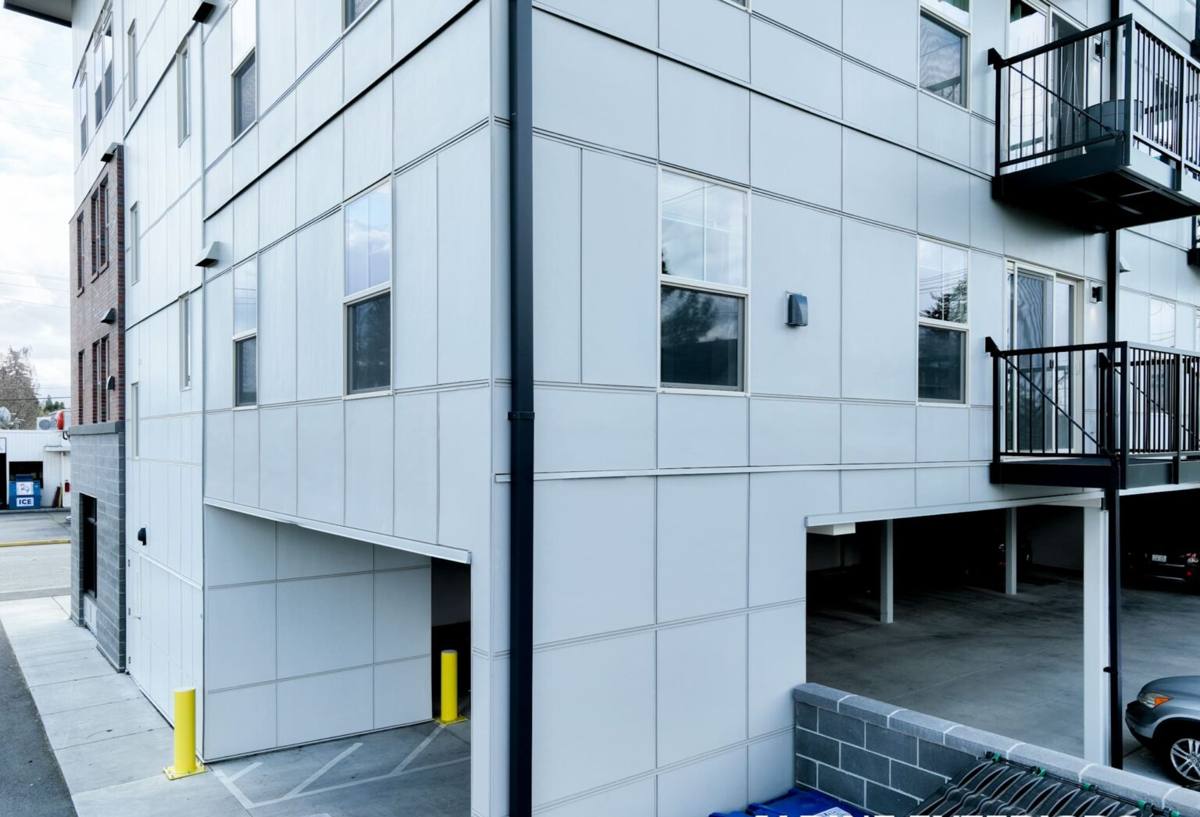
What Local Conditions Do to the Wrong Window (or the Wrong Install)
A few patterns show up again and again on homes near the lake and throughout the surrounding Lynden area:
- Wind-driven rain finds gaps. Rain here doesn't just fall straight down — storms push it sideways into window frames, especially on exposed walls facing open water or fields. A window with a weak flashing detail will let water behind the trim long before anyone sees a leak indoors.
- Constant humidity feeds condensation and rot. Older single-pane or poorly sealed double-pane windows fog up on the inside during cold, damp mornings. That condensation runs down into the sill and framing, and over a few seasons it softens wood that was never designed to stay wet.
- Moss and organic growth trap moisture against the frame. The same conditions that grow moss on a roof will grow it in window tracks and along exterior trim if drainage paths are blocked or undersized.
- Temperature swings stress seals. Whatcom County isn't extreme, but the daily damp-cold-to-mild cycle still works insulated glass seals over time. Cheap spacer systems fail here faster than they would in a drier climate.
None of this means Wiser Lake is a uniquely brutal environment — it just means the margin for a sloppy install is smaller than it looks.
What "Energy-Efficient" Actually Means for This Climate
Efficiency comes down to three things working together: the glass package, the frame material, and the installation. Get one wrong and the other two can't fully compensate.
Glass and Gas Fill
Most efficient replacement windows now use double-pane glass with a low-E coating and an inert gas fill (usually argon) between the panes. The low-E coating reflects heat back into the room in winter and blocks solar heat gain in summer. For homes with a lot of west or south glass near the lake, that solar control matters as much as the winter insulation value.
Frame Material
Frame choice affects both energy performance and how the window holds up to sustained damp weather:
| Frame Type | Energy Performance | How It Handles Local Moisture |
|---|---|---|
| Vinyl | Good insulator, no thermal bridging | Won't rot; seams and welds need to be well-made to stay watertight long-term |
| Fiberglass | Excellent, very stable dimensionally | Handles wet/dry cycling with minimal expansion; higher upfront cost |
| Wood (clad exterior) | Good, warm interior feel | Needs a properly detailed exterior clad and careful sealing to keep moisture off bare wood |
| Aluminum | Poor without thermal breaks | Conducts cold and can condense heavily in this climate unless thermally broken |
Installation Details That Actually Matter
This is the part that separates a window that performs for 20+ years from one that starts failing in five:
- Proper flashing tape and pan flashing at the sill, lapped correctly so water sheds outward, not into the wall cavity
- Backer rod and quality sealant at the perimeter, not just caulk smeared over a gap
- Correct shimming so the window isn't racked, which stresses the frame and the seal over time
- Weep holes and drainage paths left clear, not caulked shut
- Interior air sealing with low-expansion foam so warm, moist indoor air isn't pushing into the wall cavity
Signs a Wiser Lake Home Needs New Windows
Not every drafty window needs full replacement, but a few signs point toward it rather than a repair:
- Fogging or a milky haze between the panes — the seal has failed and the gas fill is gone
- Visible softness, staining, or paint failure on the interior or exterior sill and trim
- A noticeable draft you can feel with your hand near the frame, especially during wind-driven rain
- Windows that are difficult to open, close, or lock, often from frame swelling or warping
- Rooms that feel cold or clammy near the glass even when the heat is running
- Moss or dark green growth building up in the window track or along the exterior sill
If you're only seeing one or two of these on a single window, a repair may be worth exploring first. If it's spread across several windows on the same wall, that usually points to an installation or flashing issue that will keep recurring until it's addressed properly.
How Our Process Works
1. On-Site Assessment
We look at each window individually — frame condition, flashing, sill pitch, and how exposed that wall is to prevailing wind and rain. Wiser Lake homes often have a mix of exposures depending on tree cover and which direction a wall faces, so we don't treat every window the same.
2. Honest Product Recommendation
We'll walk you through frame and glass options based on your budget and how that particular wall is exposed, not push a single product line regardless of fit. A shaded, protected window doesn't need the same spec as one taking direct wind-driven rain.
3. Careful Removal and Prep
Old windows come out cleanly, and we inspect the framing underneath for any existing rot or moisture damage before anything new goes in. Hidden problems get addressed now, not sealed over.
4. Correct Flashing and Sealing
This is where most of the long-term performance is decided. We flash, shim, seal, and foam every window to the same standard, whether it's one window or a full-house replacement.
5. Final Check and Cleanup
We test operation, check the seal by feel and by eye, and leave the site clean.
Cost Factors for Wiser Lake Homeowners
Every project is different, but the main things that move the price are consistent:
| Factor | Why It Matters |
|---|---|
| Frame material | Vinyl generally costs less upfront; fiberglass and clad wood cost more but offer different durability and appearance tradeoffs |
| Number of windows | Full-house replacements typically bring a lower per-window cost than one-off replacements |
| Existing damage | Rotted framing or sill damage found during removal adds repair scope before the new window can go in |
| Window size and style | Larger openings, custom shapes, or specialty operating styles (casement, awning, sliders) vary in labor and material |
| Exposure | Walls facing prevailing wind and rain may warrant a higher-spec flashing detail or glass package |
Why a Crew That Already Works Wiser Lake Matters
Window performance in this area isn't just about the product — it's about understanding how wind, rain direction, and humidity actually move across a given lot. A crew that regularly works around the lake and through Lynden has already seen which wall exposures give homes the most trouble and which installation shortcuts fail first in this climate. That's not something you get from a manufacturer's spec sheet.
We're a local crew, not a national franchise cycling through the area on a sales route. That means straightforward answers about what your home actually needs, no pressure to upsell a package that doesn't fit your situation, and a crew that's still around locally if a question comes up after the install.
Before You Hire: A Quick Checklist
- Ask how they flash and seal the sill, not just what glass they use
- Confirm whether they inspect and repair any hidden rot found during removal, and how that's priced
- Get the frame material and glass package specifics in writing, not just "energy-efficient"
- Ask about warranty coverage on both the product and the labor/installation
- Check that they're licensed and insured to work in Washington
- Ask how they'd handle a wall with heavy wind or rain exposure differently from a sheltered one
If your windows are fogging, drafting, or just getting harder to deal with every wet season, we're happy to take a look and give you a straightforward, no-pressure estimate — just fill out the form below and we'll get in touch.