 Lynden Siding
 Roofing in Sumas Isn't the Same Job as Roofing Somewhere Dry
Sumas sits at the north end of Whatcom County, tucked against farmland, the foothills, and a climate that stays damp for most of the year. Homes here don't fail because of one big storm. They fail slowly, from months of standing moisture, wind-driven rain finding its way under improperly lapped shingles, and moss that quietly works its way into every gap it can find. A roof that would hold up fine in a drier part of the state can start showing real problems here within a decade if it wasn't built for this specific climate.
That's the core difference between a generic shingle job and one done right for Sumas: it's not just about nailing shingles to a deck. It's about managing water and moisture over the entire life of the roof, in a place where the roof rarely gets a long stretch to fully dry out.
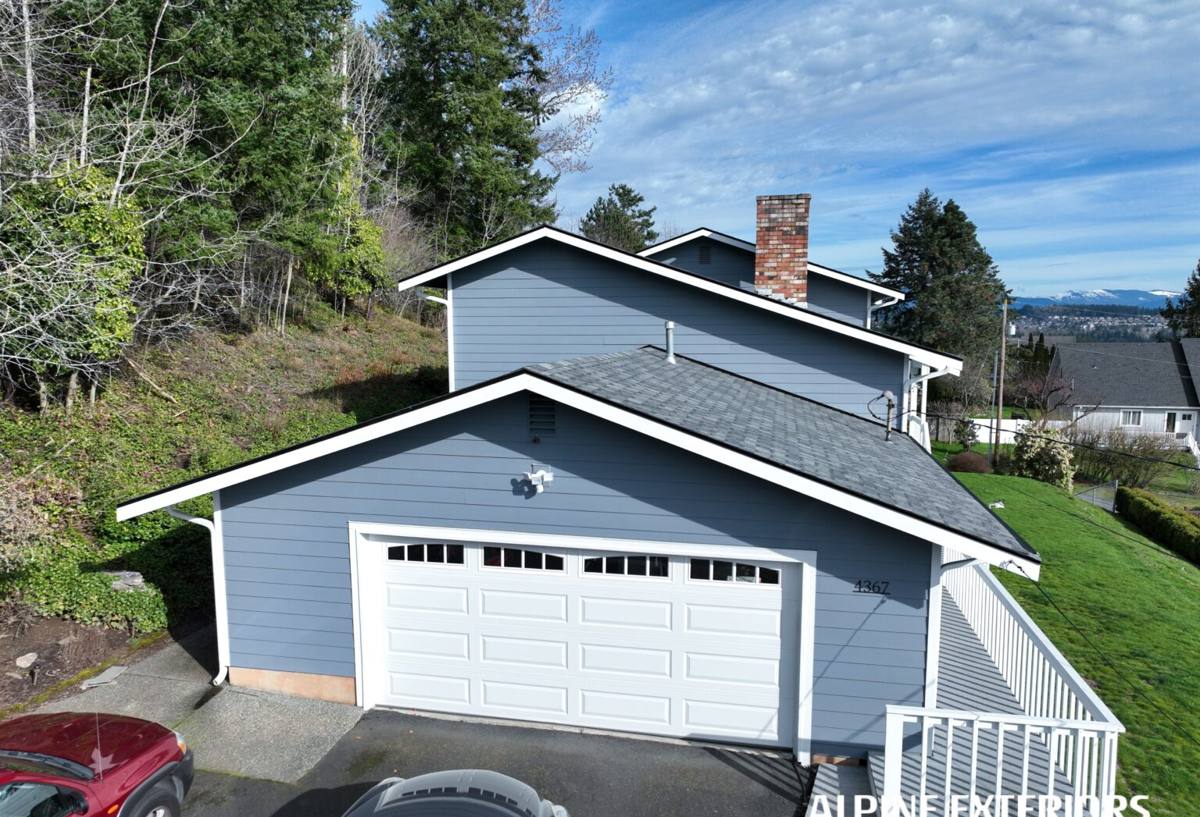
What the Local Climate Actually Does to a Roof
Driving Rain
Whatcom County storms often come in sideways, pushed by wind off the Sound and funneled through the valley. Rain that hits a roof at an angle doesn't just run down and off — it gets forced up under shingle edges and around flashing if those details weren't installed with enough overlap and sealant. Roofs that look fine from the ground can be taking on water at the ridge, the valleys, or around any penetration (vents, chimneys, skylights) for years before a homeowner ever sees a stain on the ceiling.
Moss and Prolonged Moisture
Sumas gets a long stretch of the year where shaded sections of a roof simply don't dry out between rains. That's exactly the environment moss needs. Once moss establishes, it holds water against the shingle surface, lifts shingle edges as it grows, and slowly breaks down the granule layer that protects the shingle from UV and weather. A roof with moss isn't just unattractive — it's aging faster than it should.
Salt and Marine Air Influence
Being this close to the Sound and the broader Pacific Northwest weather system means the air carrying rain into Whatcom County also carries salt and moisture that accelerates corrosion on exposed metal — flashing, fasteners, vent caps, and gutter hardware. Cheap or under-spec metal components corrode faster here than they would inland, which is one of the most overlooked reasons roofs develop leaks around penetrations before the shingles themselves are actually worn out.
What a Correctly Installed Asphalt Shingle Roof Actually Includes
The shingles are the part everyone sees, but they're only one layer of a system. For a Sumas home, every layer underneath matters just as much:
- Deck inspection and repair — any soft, delaminated, or water-damaged sheathing gets replaced before anything new goes down, not covered over
- Ice and water shield at eaves, valleys, and around penetrations — the backup layer that catches water when wind-driven rain gets past the shingles
- Synthetic underlayment across the full deck for a secondary water barrier that also resists moisture absorption better than older felt products
- Properly lapped flashing at chimneys, walls, skylights, and roof-to-wall transitions, using corrosion-resistant metal suited to this climate
- Balanced ventilation — intake at the eaves and exhaust at the ridge, sized to the attic, so moisture doesn't get trapped under the deck
- Correct nailing pattern and shingle exposure per manufacturer specification, not shortcut spacing that voids warranty coverage
Skip any one of these and the shingles on top can be brand new while the roof is still failing underneath. This is where a lot of budget roof jobs go wrong — the visible layer looks good, but the layers that actually keep water out were rushed or skipped.
Signs a Sumas Roof Needs Attention
Most roof problems in this area show up gradually. Homeowners who catch these signs early save money, because a repair now is almost always cheaper than a repair after the deck underneath has water damage:
- Dark streaking or green-black patches, especially on north-facing or shaded slopes — early moss and algae growth
- Granules collecting in gutters or at the base of downspouts — a sign the shingle surface is wearing down
- Curling, cupping, or lifted shingle edges, particularly on older sections of roof
- Rust staining around vent pipes, chimney flashing, or metal valleys
- Any daylight visible through the attic decking, or damp insulation after a storm
- Ceiling stains that appear after wind-driven rain specifically, rather than after every rain — often a flashing issue, not a shingle issue
Choosing the Right Shingle for This Climate
Not every asphalt shingle is built the same, and the differences matter more in a wet, moss-prone climate than they do somewhere dry. We walk homeowners through the trade-offs honestly rather than pushing whatever has the best margin.
| Shingle Type | Typical Lifespan | Wind Rating | Best Fit For |
|---|---|---|---|
| 3-tab | 15–20 years | Lower | Budget-conscious projects, secondary structures |
| Architectural (laminate) | 25–30 years | Higher | Most Sumas homes — better wind and moisture resistance |
| Algae-resistant (AR) architectural | 25–30 years | Higher | Shaded roofs or north-facing slopes prone to moss/algae |
| Premium/designer laminate | 30+ years | Highest | Homeowners prioritizing longevity and curb appeal |
For most homes in this area, we lean toward algae-resistant architectural shingles. The copper or zinc granule blend built into AR shingles slows moss and algae regrowth, which directly addresses the biggest long-term maintenance issue local roofs face. It costs a bit more up front than standard architectural shingles, but it reduces how often the roof needs cleaning and extends the time before moss starts undermining the shingle surface.
Our Process, Start to Finish
Inspection and Estimate
We walk the roof (not just the ground), check the attic for ventilation and moisture issues, and look at flashing condition before quoting anything. The estimate reflects what your roof actually needs, not a generic per-square number.
Tear-Off and Deck Check
Full tear-off to the deck so we can see the actual condition of the sheathing. Any damaged sections get replaced and documented — nothing gets covered up.
Underlayment, Flashing, and Shingles
Ice and water shield at vulnerable areas, underlayment across the field, new flashing where needed, then shingles installed to manufacturer spec for nailing pattern and exposure — the details that keep a warranty valid and keep wind-driven rain out.
Ventilation Check
We confirm intake and exhaust ventilation is balanced for the attic size. This is a small step that has an outsized effect on how long the new roof lasts in a climate like this one.
Cleanup and Final Walkthrough
Magnetic sweep for nails, full site cleanup, and a walkthrough so you know exactly what was done and what to expect going forward.
Why Hiring a Crew That Already Works Sumas Matters
A roofing crew that mostly works drier regions doesn't think about moss prevention, salt-air corrosion on flashing, or how far up the wall wind-driven rain can push under siding-roof transitions — because it's not what they deal with day to day. A crew that regularly works Whatcom County knows which details actually cause callbacks here, because we've seen what happens when they're skipped. That's not a sales pitch, it's just what shows up over years of working the same climate.
Local familiarity also means we're not guessing at permitting or typical construction in older Sumas and Lynden-area homes — many of which have roof framing and ventilation setups that need a specific approach rather than a one-size-fits-all install.
Timeline and What to Expect
Most single-family asphalt shingle roof replacements in this area take one to three days depending on roof size, complexity, and weather. We plan installs around Whatcom County's rain patterns whenever possible, since shingles and underlayment need dry conditions to install correctly — rushing an install in wet weather is one of the fastest ways to build in a future leak.
Costs vary by roof size, pitch, shingle tier, and how much deck repair is needed, so we always inspect before quoting rather than pricing over the phone. What we can say honestly: the cheapest bid is rarely the cheapest roof over ten years, once you factor in premature moss damage, flashing corrosion, or a redo from skipped underlayment.
Ready for an Honest Look at Your Roof?
If you're in Sumas or the surrounding Lynden area and dealing with moss, a roof that's due for replacement, or you just want an honest assessment of what shape your roof is really in, we're happy to take a look. Estimates are free, there's no pressure, and we'll tell you straight if a repair will hold you a few more years or if replacement is the smarter move. Reach out using the form below to get started.