 Lynden Siding
 Storm Damage Roofing in Abbotsford's Coastal-Valley Climate
Abbotsford sits in a stretch of the Fraser Valley that takes weather seriously. Roofs here deal with a combination that's tougher than it looks from the ground: salt-tinged air drifting in from the Strait, long stretches of driving rain off Pacific frontal systems, and a moss season that can run most of the year in shaded, north-facing sections of a roof. None of these on their own destroys a roof overnight. Together, over years, they open the door to storm damage that shows up suddenly during a windstorm or heavy rain event but was actually years in the making.
Salt air accelerates corrosion on exposed metal — flashing, fasteners, gutter hardware — long before most homeowners notice pitting or rust streaks. Driving, wind-driven rain finds any gap in flashing or shingle lap and pushes water sideways and upward, not just straight down, which is why storm leaks often appear far from where the actual opening is. And moss doesn't just look bad — it lifts shingle edges, holds moisture against the roof deck, and gives wind something to grab onto during a storm, which is a common reason older, moss-covered roofs lose shingles in weather that a clean roof would shrug off.
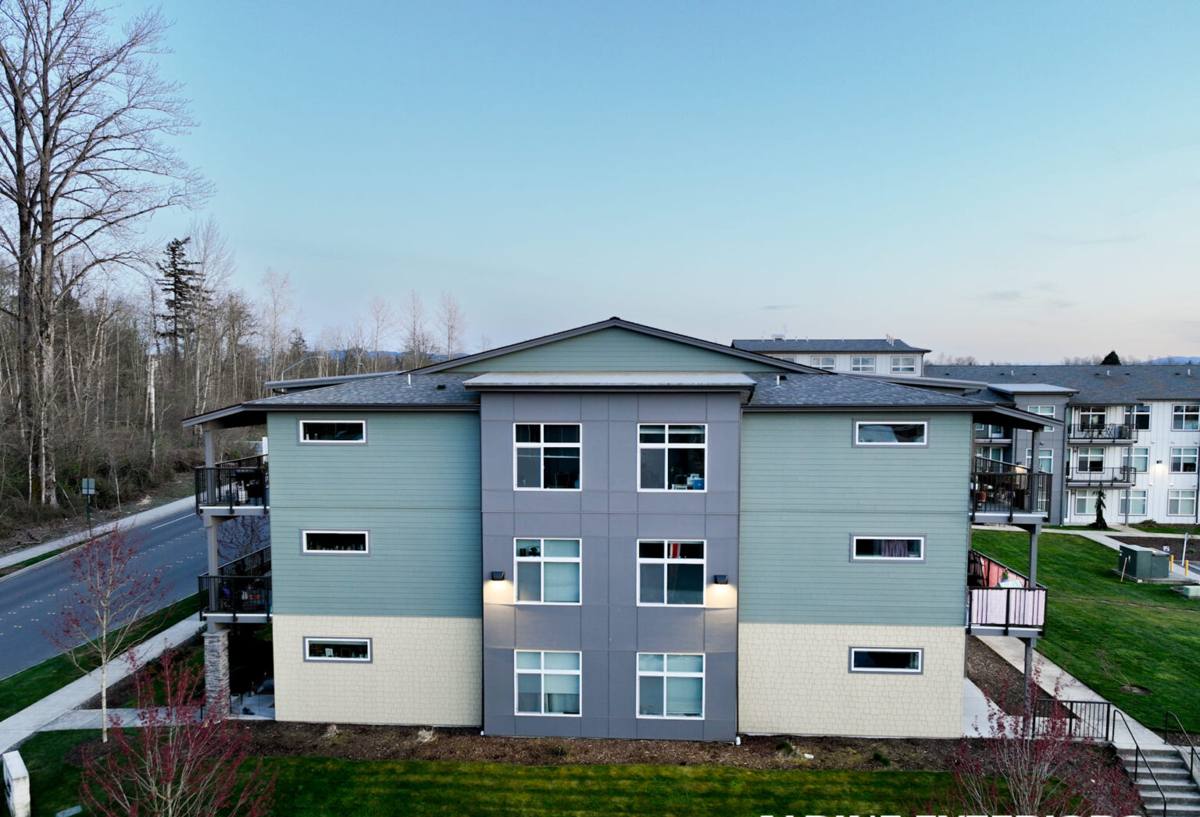
Signs a Storm Has Actually Damaged Your Roof
Not every gust or downpour causes damage worth repairing, but some signs are worth walking outside for right after a storm passes, and some are only visible from inside the attic or ceiling.
- Shingles that are cracked, curled, creased, or missing entirely, especially near ridges, edges, and valleys
- Granules collecting in gutters or at downspout outlets — a sign of shingle wear accelerated by wind abrasion
- Bent, lifted, or missing flashing around chimneys, vents, or skylights
- Dents or bruising on shingles, vents, or gutters from hail or wind-driven debris
- New water stains on ceilings or upper walls, especially after a heavy rain event
- Soft or spongy spots on the roof deck when walked, which usually means water has already reached the sheathing
- Debris — branches, moss clumps, gravel from an old roof — collected in valleys or around vent penetrations
A storm doesn't need to be dramatic to cause real damage. A steady 60 km/h wind combined with saturating rain can do more cumulative harm to an aging roof than a single short, intense squall.
Why Some Damage Isn't Visible From the Ground
Wind can lift a shingle just enough to break its seal without tearing it off, so the roof looks intact from the driveway but is no longer watertight. That's one reason we recommend a close-up inspection after any significant wind or rain event rather than relying on a visual check from the ground.
What a Correct Storm Damage Repair Actually Involves
A proper storm repair isn't just replacing whatever shingles are obviously missing. It starts with figuring out how far the damage extends beneath the surface, because storm damage on an older roof rarely stays contained to the spot that failed first.
Inspection Before Any Repair Work
We check the full roof plane, not just the damaged section — surrounding shingles are often compromised even if they haven't failed yet. We also check the attic side for moisture staining, which tells us whether water has already reached the decking, and we check flashing at every penetration, since flashing failure is one of the most common causes of a "mystery leak" after a storm.
Matching Materials, Not Just Patching
Shingle color and profile change over time with sun exposure, so a patch using new shingles next to weathered ones can look mismatched even when it's done correctly. We're upfront with homeowners about this trade-off: a small patch is often the most economical option, but a full section replacement or slope replacement gives a more uniform, longer-lasting result when damage is spread out.
Decking and Structural Checks
If water has been getting into the roof system for a while, the plywood or OSB decking underneath can be softened or delaminated. Replacing shingles over compromised decking is a shortcut that fails — new shingles need a solid, dry substrate to seal and perform, so decking repair comes first whenever we find it.
Our Repair Process, Step by Step
Homeowners dealing with storm damage are usually stressed and often dealing with an insurance claim at the same time, so we keep the process straightforward and documented at every stage.
- Initial inspection and photo documentation — we walk the roof, check the attic, and photograph existing damage before touching anything, which matters for insurance purposes.
- Written scope and estimate — a clear breakdown of what needs repair versus what's cosmetic, so you're not paying for work the roof doesn't need.
- Insurance coordination if applicable — we can meet an adjuster on site and speak to the scope of damage from a contractor's perspective.
- Tear-off of damaged materials — removing compromised shingles, underlayment, and flashing down to sound decking.
- Deck repair as needed — replacing any soft or delaminated sheathing before new material goes down.
- Underlayment and flashing installation — proper flashing detail matters more to long-term performance than shingle brand.
- Shingle installation matched to existing roof — following manufacturer nailing patterns and exposure specs, not shortcuts.
- Final walkthrough and cleanup — magnetic sweep for nails, gutter check, and a final look with the homeowner before we call it done.
Materials: What We Use and Why
Product choice for a storm repair depends on what's already on the roof, how old it is, and how much of the roof needs work. Here's how the common options compare for this climate.
| Material | Best For | Climate Trade-Offs in Abbotsford's Conditions |
|---|---|---|
| Standard 3-tab asphalt shingle | Budget-conscious patch repairs on older roofs | Lower wind rating; more prone to lifting in sustained wind events |
| Architectural (laminate) asphalt shingle | Full slope or full roof replacement | Higher wind rating, better granule adhesion, better match to modern roof aesthetics |
| Metal flashing (galvanized vs. aluminum) | Chimney, valley, and vent details | Aluminum resists salt-air corrosion better long-term than galvanized in coastal-influenced air |
| Synthetic underlayment | Any tear-off repair | Better wind and moisture resistance during driving rain than older felt underlayment |
We don't push a specific shingle brand as a fix-all. Our standard is to match wind rating and underlayment quality to what the roof's exposure actually demands — a north slope holding moss and shade needs different attention than a south slope taking direct sun and wind.
What Drives the Cost of a Storm Damage Repair
Costs for storm repair vary more than for a straightforward re-roof, because the real driver isn't square footage — it's how much hidden damage the storm caused underneath the visible layer.
| Factor | Why It Matters |
|---|---|
| Extent of decking damage | Rotten or delaminated sheathing adds material and labor beyond the shingle repair itself |
| Roof pitch and access | Steeper roofs and difficult access add time and safety equipment requirements |
| Age and condition of surrounding shingles | Brittle, older shingles nearby may need replacement even if not storm-damaged, to avoid future callbacks |
| Flashing complexity | Roofs with multiple chimneys, skylights, or valleys take more time to detail correctly |
| Insurance scope vs. actual scope | Sometimes the adjuster's initial scope doesn't match what we find once we open the roof up |
We give a written estimate before starting work and flag it immediately if we uncover something once the roof is open that changes the scope — no surprise invoices.
Storm Damage and Insurance Claims
Wind and storm damage is one of the more commonly covered roofing claims, but coverage and process vary by policy and insurer. We're not in a position to guarantee claim outcomes, but we can help make sure the documentation supports your claim fairly.
What Helps a Claim
Clear, dated photos of the damage taken as close to the storm event as possible, a written contractor scope that separates storm-caused damage from pre-existing wear, and being present (or having your contractor present) when the adjuster inspects the roof, so questions about scope get answered on the spot rather than after the fact.
Why Hiring a Crew That Already Works Abbotsford Matters
Abbotsford's roofs age differently than roofs thirty minutes inland, because the combination of salt-influenced air, sustained rain events, and shaded moss-prone slopes is a specific regional pattern, not a generic "wet coastal climate" issue. A crew that regularly works this area recognizes the difference between cosmetic weathering and a storm-compromised roof, knows which flashing details tend to fail first in driving rain, and isn't guessing at how a roof this age, in this exposure, is likely to behave. That local pattern-recognition is often the difference between a repair that holds and one that needs revisiting after the next storm.
Keeping a Repaired Roof Storm-Ready
Once a storm repair is done, a few habits go a long way toward keeping the next storm from causing the same problem again.
- Clear moss buildup on shaded slopes before it lifts shingle edges — don't wait for a full moss treatment cycle if buildup is heavy
- Keep gutters and downspouts clear so wind-driven rain has somewhere to go instead of backing up under the roof edge
- Trim back overhanging branches that can drop debris or abrade shingles during wind events
- Have flashing and exposed fasteners checked periodically, since salt-air corrosion is gradual and easy to miss until it fails
- Walk the attic after major storms to check for new staining, even if the roof looks fine from outside
If your roof has been through a recent windstorm or heavy rain event and you're not sure whether what you're seeing is cosmetic or something that needs attention, we're happy to take a look. Fill out the form below for a free, no-pressure estimate — we'll tell you honestly what we find, whether that's a small repair or something more.