 Lynden Siding
 Siding Repair for Laurel Homes Near Lynden
Laurel sits in the stretch of Whatcom County just outside Lynden, where farmland, tree cover, and proximity to the Nooksack River all shape how a house's exterior ages. Siding out here doesn't fail because homeowners neglect it — it fails because Whatcom County weather is genuinely hard on wall systems. Cool, wet air moves through this area for much of the year, and homes tucked near trees or drainage ditches hold onto moisture longer than homes in more open, sun-exposed spots. When we get a call for siding repair in Laurel, the damage almost always traces back to water finding a way in and staying there.
This page is about siding repair specifically — not full replacement — for homes in and around Laurel. If your siding has a few problem areas but the rest is sound, repair is usually the right call. Our job is to fix what's actually wrong, match it cleanly, and leave you with a wall system that will hold up through the next several wet seasons, not just look patched for a year.
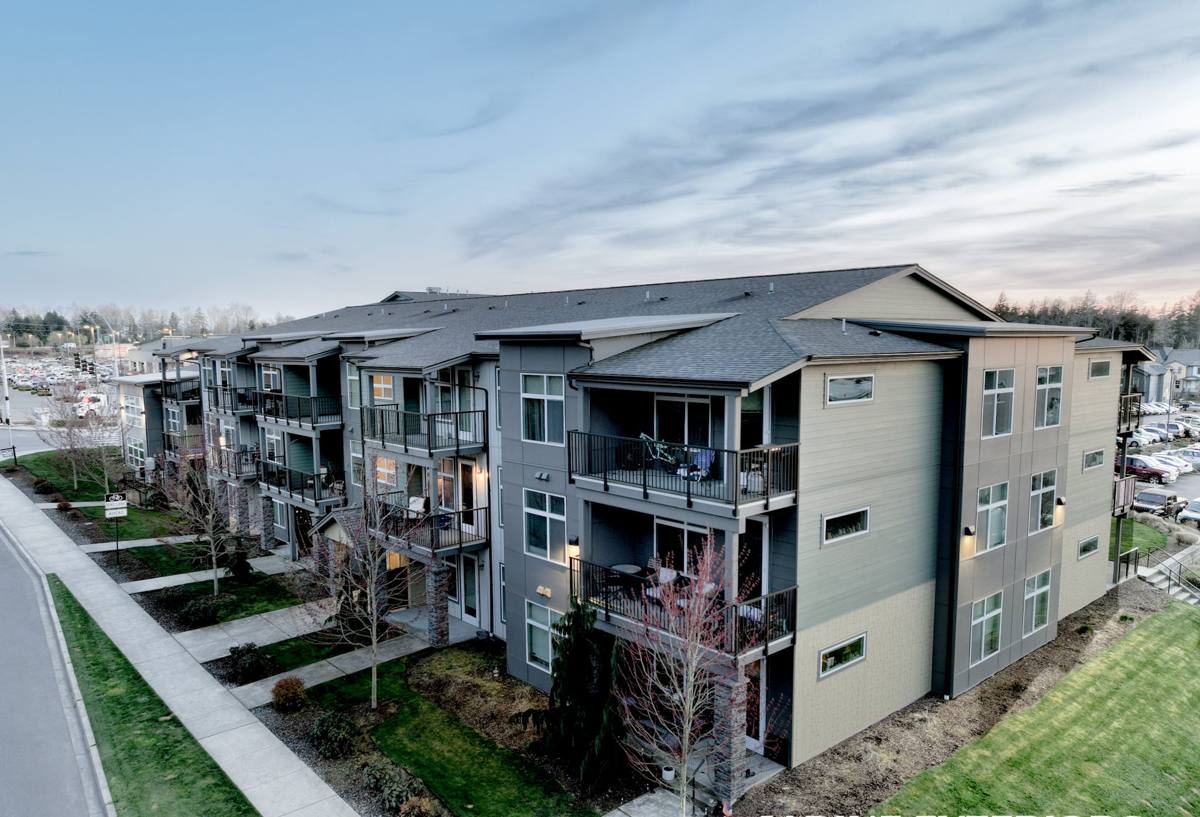
Why Laurel's Climate Is Tough on Siding
Whatcom County doesn't get hurricane-force storms, but it gets something arguably harder on siding over time: long stretches of low-intensity moisture combined with limited drying windows. A few specific factors matter for Laurel specifically.
Driving Rain and Wind-Driven Moisture
Rain in this part of Washington rarely falls straight down. Wind off the Strait and through the valley pushes it sideways, which means it hits vertical wall surfaces, laps, and butt joints directly instead of just running off a roof. Any gap, unsealed seam, or failed caulk joint becomes an entry point. Once water gets behind the siding, it can travel and cause damage well away from the original opening — which is why a small stain near a window can mean rot several feet away.
A Long Moss and Algae Season
The combination of shade, moisture, and mild temperatures in this area supports moss and algae growth for a large part of the year, not just a few weeks. On siding, moss isn't just a cosmetic problem — it holds water against the surface, keeps that surface from drying out between rain events, and accelerates whatever's already going wrong underneath. North-facing walls and sections shaded by trees or fences are usually the first places we see it take hold.
Salt Air Influence
Whatcom County's proximity to Puget Sound and the Strait of Georgia means many inland communities, Laurel included, still get some salt-laden air on windier days. Salt exposure speeds up corrosion on fasteners, flashing, and any exposed metal trim, and it can accelerate finish breakdown on lower-quality or unfinished siding materials over time.
Freeze-Thaw Cycling
Whatcom County winters aren't extreme, but they do dip below freezing regularly while staying wet. Water that's absorbed into a porous or damaged siding material and then freezes expands, which stresses the material and widens existing cracks or delamination. Over a few winters, a minor issue can turn into a repair that involves replacing whole boards instead of just resealing a joint.
Common Siding Repair Issues We See in Laurel
| Issue | What's Usually Happening | Typical Fix |
|---|---|---|
| Soft or swollen boards | Moisture absorption into wood-based siding or trim, often near grade or under gutters | Remove and replace affected boards, correct the water source, reinstall with proper flashing |
| Moss and algae staining | Shaded, damp wall sections with limited airflow | Clean surface, address the moisture/shade cause, treat and repaint or replace if the substrate is compromised |
| Cracked or split panels | Impact damage, freeze-thaw stress, or aging caulk allowing movement | Panel-by-panel replacement matched to existing profile and color |
| Rust streaking at fasteners | Non-corrosion-resistant fasteners exposed to moist, salt-influenced air | Replace with corrosion-resistant fasteners appropriate for fiber cement |
| Gaps at trim and window returns | Failed caulk joints, original installation shortcuts | Re-flash and re-seal with correct materials, not just cosmetic caulk |
| Buckling or waviness | Improper original fastening, moisture cycling, or missing expansion gaps | Reset or replace affected sections with correct fastening spec |
What a Correct Siding Repair Actually Involves
A lot of "siding repair" in this region is really just cosmetic patchwork — caulk over a crack, a quick coat of paint over a stain — that looks fine for a season and then fails again because the underlying moisture problem was never addressed. We approach repair differently.
1. Find the Real Cause, Not Just the Symptom
Before we touch a single board, we trace the damage back to its source. A stain three feet up a wall might be caused by a clogged gutter overflowing above it, a flashing gap at a window head, or grading that pushes water back toward the foundation. Repairing the visible siding without fixing the water source means the same damage comes back.
2. Check What's Behind the Siding
Once we remove damaged material, we look at the sheathing, house wrap, and framing underneath. If moisture has gotten past the siding for any length of time, there's a real chance the layers behind it need attention too. Patching over compromised sheathing is how small repairs turn into much bigger problems a couple of years down the road.
3. Match Material and Profile
Repairs should be close to invisible once painted. That means matching the plank width, exposure, and texture of the existing siding as closely as possible. For homes already on James Hardie products, this is straightforward since Hardie's product lines and ColorPlus finishes are consistent and well documented. For homes with other siding types, matching gets harder, and it's worth discussing whether a targeted repair or a broader replacement plan makes more sense long-term.
4. Flash and Seal Correctly
Every seam, joint, and penetration is a potential water entry point. Correct repair work means proper flashing at horizontal joints and window/door returns, and sealant used only where it belongs — sealant is not a substitute for flashing, and over-reliance on caulk is one of the most common reasons repairs fail early in a climate like this one.
5. Fasten to Spec
Fastener type, spacing, and placement matter more than most homeowners realize. Incorrect fastening is a leading cause of buckling, cracking, and premature failure in fiber cement siding specifically. We fasten to the manufacturer's specification, not to whatever's fastest.
Our Process for Laurel-Area Repair Calls
- Inspection and diagnosis — We walk the exterior, identify every problem area (not just the one you called about), and trace each back to its cause.
- Written scope and estimate — You get a clear explanation of what needs to happen, why, and what it will cost, before any work starts.
- Moisture and structural check — Where damage suggests water has been getting in for a while, we check the sheathing and framing before closing anything back up.
- Repair and replacement — Matched materials, correct flashing, correct fastening.
- Finish and cleanup — Paint or finish matched as closely as possible, site cleaned, debris hauled.
- Walkthrough — We show you what was found and what was done, including anything worth keeping an eye on going forward.
Repair vs. Replacement: How We Help You Decide
Not every problem area means the whole wall — or the whole house — needs new siding. But repair isn't always the more economical choice either, especially if the underlying material is failing broadly rather than in isolated spots. A few honest questions guide that decision:
- Is the damage isolated to a few boards or spread across multiple elevations?
- Is the siding material itself reaching the end of its useful life, or is this an installation or maintenance issue on otherwise sound material?
- Has water been getting behind the siding long enough to affect the sheathing, and if so, how widespread is that?
- Will a patch realistically match the existing siding, or will it always be visible?
- What's the cost of repairing now versus the likelihood of needing the same repair again in a few years?
We'll give you a straight answer on this rather than steering you toward the bigger job by default. Plenty of Laurel-area homes genuinely just need targeted repair, done right, to be in good shape for years.
Why We Only Work With James Hardie Fiber Cement
When repair does mean replacing sections of siding, or when a homeowner decides it's time to redo an elevation rather than patch it, we install James Hardie fiber cement exclusively. We don't install vinyl, LP SmartSide, or other fiber cement brands, and that's a deliberate standard, not a sales preference.
In a climate like Whatcom County's — sustained moisture, a long moss season, freeze-thaw cycling, and periodic salt air — the material behind your siding matters as much as the installation. James Hardie's HZ5 product line is engineered for this kind of climate zone, the fiber cement itself is non-combustible and dimensionally stable in ways wood-based and vinyl products aren't, and the factory-applied ColorPlus finish holds up to UV and moisture exposure far better than field-applied paint on repaired wood trim. It also gives us a consistent, well-documented product to match against when we're doing repair work on an existing Hardie installation, which keeps future repairs cleaner and less visible.
That doesn't mean every material we encounter on Laurel homes is a bad product — plenty of existing siding, whatever the brand, can be repaired competently and will keep performing if the underlying causes of damage are addressed. But when the choice is ours to make, on new sections or full replacements, Hardie is what we put on the wall.
Signs You Should Get a Repair Inspection Now
- Soft spots when you press on siding near the ground, under windows, or below gutters
- Visible moss or algae that keeps coming back after cleaning
- Paint that's peeling, bubbling, or flaking in a specific area rather than uniformly
- Cracks or gaps at seams and corners that weren't there a year or two ago
- Rust streaks running down from fastener heads or trim
- Any musty smell or visible staining on interior walls that back up to exterior siding
None of these mean you need to replace an entire house's siding. Most of them mean it's worth a look before the next wet season makes the problem bigger.
Why Hire a Crew That Already Works in the Laurel Area
Siding repair done by someone unfamiliar with this specific stretch of Whatcom County often misses the local pattern of damage — the specific wall orientations that hold moisture longest, how far moss problems tend to spread before they're noticed, and what correct flashing looks like against this region's rain patterns. A crew that regularly works Laurel and the surrounding Lynden area brings that pattern recognition to your inspection, which usually means catching real problems faster and avoiding repairs that look fine but fail again in a year or two.
If you're seeing siding issues on a Laurel-area home, we're happy to take a look, tell you honestly what's going on, and give you a straightforward, no-pressure estimate for fixing it right. Fill out the form below to get started.