 Lynden Siding
 Maple Falls Sits in One of Whatcom County's Toughest Microclimates for Siding
Maple Falls is tucked into the forested foothills along the Mount Baker Highway corridor, and that setting cuts both ways. The tree cover that makes the area beautiful also means many homes here get far less direct sun and airflow than a house sitting out in the open. Less sun and less wind adds up to one thing for siding: it stays damp longer after every rain. In a county that already sees a long, wet stretch of weather from fall through spring, that extra shade and stillness turns an ordinary siding job into a moisture-management problem.
Homeowners who've lived in Maple Falls for any length of time already know the signs — the north side of the house holding a green tint longer into the year, gutters and trim staying wet for days after a storm passes, wood fascia going soft before the rest of the house shows its age. None of that is unusual for this part of Whatcom County. It's just what happens when a home sits in the shade of second-growth timber and gets hit with driving rain off and on for months at a time. The right siding, installed the right way, is what keeps that moisture from ever becoming the house's problem.
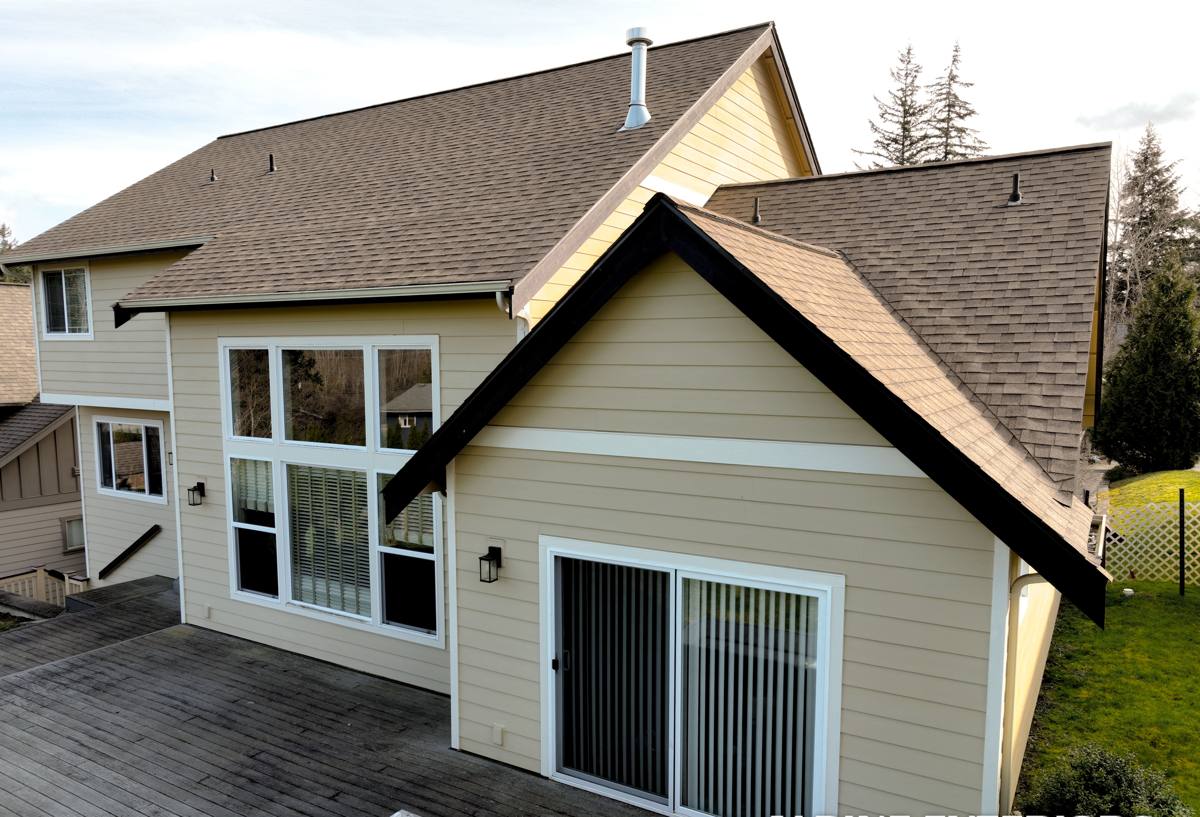
What This Climate Actually Does to Siding Over Time
It's worth being specific about the mechanism, because it explains almost every siding failure we see in this area:
- Extended dampness. Shaded walls and slow-drying siding stay wet longer after rain, which is exactly the condition moss, algae, and mold need to take hold.
- Driving rain. Wind-driven rain doesn't just fall on siding, it pushes against it and works into any gap, lap, or fastener hole that isn't sealed and flashed correctly.
- Freeze-thaw swings. Whatcom County's foothill areas see colder overnight temperatures than the lowlands, and materials that absorb moisture are more prone to cracking and swelling when that moisture freezes.
- UV starvation, then UV shock. Shaded siding gets little sun for most of the year, then takes a harder hit during summer breaks in the canopy — a cycle that's harder on some finishes than a steady, even sun exposure would be.
None of these are exotic problems. They're the normal cost of owning a home in a wooded, rainy part of the Pacific Northwest. The difference between a siding job that holds up and one that doesn't almost always comes down to material choice and installation detail, not luck.
Why We Install Only James Hardie Fiber Cement
We don't install vinyl, LP SmartSide, primed wood, cedar, or off-brand fiber cement. That's a deliberate standard, not a sales pitch, and it matters most in a climate like Maple Falls':
Fiber cement is made from cement, sand, and cellulose fiber — it doesn't rot, it isn't a food source for moss and mold the way wood is, and it's non-combustible, which is a real consideration for homes near timber and brush. James Hardie's siding is engineered by climate zone, and Western Washington falls in the HZ5 zone profile — built around the moisture and moderate-cold conditions our region actually sees, rather than a generic national spec. The ColorPlus factory finish is baked on under controlled conditions rather than sprayed on-site, which gives it more consistent coverage and better resistance to the fading and peeling that field-applied paint eventually shows, especially on a wall that only gets uneven sun.
Vinyl can warp and gap over time and relies entirely on a good underlying weather barrier since the panels themselves aren't a true water seal. LP SmartSide is a wood-strand product — better engineered than old-style hardboard, but still an engineered wood product that depends on flawless caulking and painting discipline to keep water out over the long run, which is a harder standard to hold on a shaded wall that dries slowly. Primed spruce and cedar are honest, attractive materials, but they're wood, and wood in a shaded, high-moisture setting like Maple Falls needs a maintenance commitment — regular re-staining or repainting, caulk checks, moss removal — that most homeowners underestimate until the first signs of rot show up at a butt joint or window sill. We'd rather put a homeowner in a material engineered to shrug off that environment than sell a product that needs a perfect maintenance record to perform.
How the Materials Actually Compare in This Climate
| Material | Moisture Behavior | Moss/Algae Resistance | Typical Maintenance |
|---|---|---|---|
| James Hardie Fiber Cement | Does not rot or swell; engineered for wet climates | Not an organic food source; finish resists staining | Occasional rinse; no repainting for the life of the ColorPlus finish |
| Vinyl | Doesn't absorb water, but can warp/gap, exposing the wall behind it | Moderate; grime and algae can build in shaded areas | Periodic cleaning; panels can't be spot-repainted |
| LP SmartSide | Engineered wood; needs intact caulk/paint to resist moisture | Moderate to low if coating is neglected | Regular caulk and paint inspection, especially on shaded walls |
| Cedar / Primed Wood | Absorbs moisture readily; prone to rot without upkeep | Low in shaded, damp settings without regular treatment | Re-stain or repaint on a recurring cycle; ongoing rot checks |
What a Correct Installation Involves
The siding material matters, but installation detail is what actually keeps water out of the wall. On every Maple Falls project, this means:
- A continuous, properly lapped weather-resistant barrier behind the siding, with every seam and penetration sealed before the first board goes up.
- Correct flashing at windows, doors, and any roof-to-wall intersection — the spots where water is most likely to find a way in.
- Manufacturer-specified clearances at the foundation, roofline, and any deck or porch attachment, so siding isn't sitting in standing water or trapped moisture.
- Proper fastener placement and spacing, following James Hardie's installation instructions rather than generic carpentry habits — this is a common shortcut on rushed jobs and one of the most frequent causes of early siding failure.
- Factory-caulked and painted cut edges on any field cuts, since an unsealed cut edge is a direct entry point for moisture.
- Adequate rain-screen or drainage detailing on walls that see the most direct, driving rain and the least drying sun.
Skip any one of these and the siding can look fine for a year or two while moisture quietly works into the sheathing behind it — which is a far more expensive repair than the siding itself.
Our Process for a Maple Falls Siding Installation
- On-site assessment. We walk the exterior, check the condition of the existing wall assembly, note shaded and high-exposure sides, and look for any existing moisture damage that needs addressing before new siding goes up.
- Written estimate. A clear scope covering material, prep work, flashing and barrier details, and timeline — no vague allowances.
- Prep and tear-off. Removal of old siding, inspection of sheathing, and repair of any rot or damage found before it gets covered up again.
- Weather barrier and flashing. Installed to manufacturer spec at every penetration and transition, since this layer does most of the real work keeping water out.
- Hardie installation. Panels, planks, or shingle siding installed to James Hardie's fastening and clearance requirements, with attention to the shaded walls that need it most.
- Final walkthrough. We review the finished work with the homeowner and confirm trim, caulking, and touch-up details before calling the job complete.
Signs a Maple Falls Home Needs New Siding
Because of the shade and moisture here, siding problems often show up earlier and in different spots than they would on a home out in the open. Watch for:
- Persistent green or black staining on north-facing or heavily shaded walls that returns soon after cleaning
- Soft or spongy spots, especially near the bottom courses, window sills, or roofline
- Visible gaps, warping, or buckling in existing siding panels
- Peeling or bubbling paint, particularly on the shadiest side of the house
- A musty smell or visible staining on interior walls that share an exterior wall with a shaded, damp-prone section
Why Local Experience in This Area Matters
A crew that mostly works open, sunny lots in town isn't necessarily thinking about rain-screen detailing or extra flashing at a shaded wall — because most of their jobs don't need it. Working regularly in and around Maple Falls and the surrounding Whatcom County foothills means we plan for that from the estimate stage, not as an afterthought once a problem shows up. It also means we're familiar with the pace this weather sets for a project — when to schedule around wet stretches, how to sequence tear-off and barrier work so a wall isn't left exposed longer than it has to be, and which sides of a house need the most careful attention before the siding ever goes on.
What Correct Siding Costs to Get Right
Every home is different, and final pricing depends on square footage, the condition of what's being removed, trim complexity, and access. In general terms, fiber cement siding costs more upfront than vinyl and is in a similar range to quality engineered wood products, but it carries a stronger warranty and a lower long-term maintenance burden — no repainting cycle, no recurring caulk-and-patch routine. We're glad to walk through the real cost factors for a specific home during an estimate rather than quote a number that doesn't reflect the actual job.
If you're weighing a siding project for a home in Maple Falls, we're happy to take a look and talk through what your walls actually need. The estimate is free, there's no pressure attached to it, and you'll get a straight answer about what correct installation looks like for your specific home — just fill out the short form below to get started.