 Lynden Siding
 Roof Repair in Custer: Built for What This Coastline Does to a Roof
Custer sits close enough to the water that homes here deal with a combination most inland roofs never see: salt-laden air drifting in off the Salish Sea, wind-driven rain that finds every weak seam, and a moss season that can run eight months out of the year in a wet stretch. None of that is dramatic on its own. What it does is slow, cumulative, and easy to ignore until a ceiling stain shows up or shingles start lifting at the edges. Roof repair out here isn't just patching a leak — it's understanding why that leak happened and fixing the actual cause, not just the symptom.
We work throughout Whatcom County, and Custer roofs get a specific kind of attention because the conditions are specific. Salt air accelerates corrosion on fasteners, flashing, and any exposed metal. Driving rain doesn't fall straight down here — it comes in sideways during winter storms, which means water finds its way under shingles and around penetrations that would stay dry in a calmer climate. And moss doesn't just look bad; it holds moisture against the roof surface for months at a time, which is exactly what shortens a roof's life.
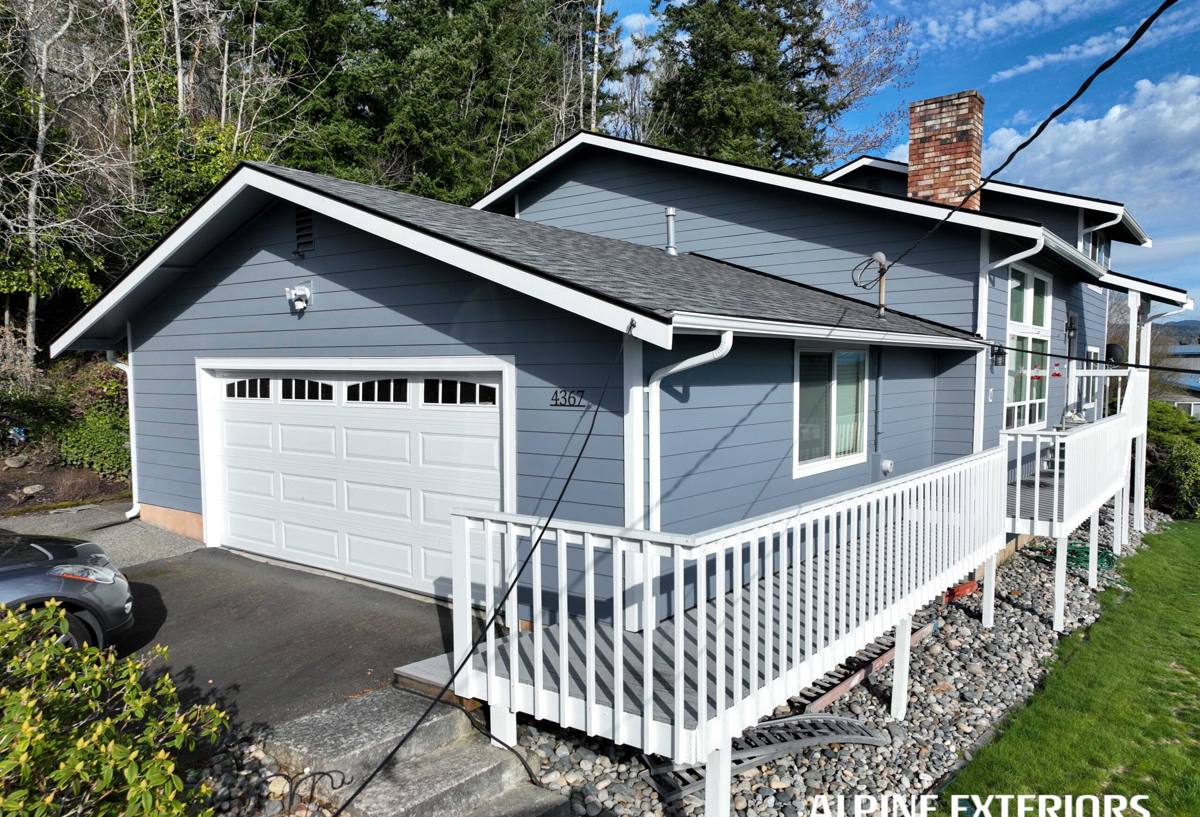
What Custer's Climate Actually Does to a Roof
Salt Air and Metal Fatigue
Proximity to open water means airborne salt settles on roofing metal — flashing, drip edge, valley metal, nail heads — and speeds up oxidation. Galvanized fasteners that would last decades further inland can start showing rust streaks and weakening sooner near the coast. We check exposed metal closely on every Custer inspection because that's usually where the first real trouble starts.
Driving Rain and Wind-Driven Water Intrusion
Northwest storms in this part of Whatcom County frequently bring sustained wind alongside rain, which pushes water uphill under shingle edges and sideways into vents, chimneys, and skylights. A roof can pass a casual visual check and still be letting water in during a real storm, because the failure only shows up under wind pressure, not under a garden hose test.
Moss, Shade, and Standing Moisture
Custer's tree cover and marine humidity are a good combination for moss and algae growth, especially on north-facing slopes and anywhere debris collects. Moss roots work into shingle granules and lift tabs, which opens the door for water to get underneath. Left alone through a wet winter, a light moss dusting turns into a mat that's holding water against the roof deck around the clock.
Signs a Custer Roof Needs Repair
- Granules collecting in gutters or at downspout outlets — a sign shingles are wearing thin
- Curling, cupping, or lifted shingle edges, especially on south and west-facing slopes
- Dark streaking or thick moss growth, particularly on shaded sections
- Rust staining around flashing, vent boots, or nail heads
- Soft or discolored spots on interior ceilings, especially after a windy rainstorm
- Daylight visible through the attic decking or roof sheathing
- Cracked or missing pipe boots and worn caulking around penetrations
- Sagging in the roofline between rafters, which points to deck or structural moisture damage
Any one of these on its own might be minor. Two or three together usually means water has been getting in longer than the homeowner realizes.
Repair or Replace? What Actually Decides It
Homeowners often ask us this before we've even looked at the roof, and the honest answer is that it depends on how much of the roof's remaining life is intact versus compromised. A roof with isolated damage — a cracked boot, a section of storm-lifted shingles, a flashing failure around a chimney — is usually a straightforward repair. A roof where moss has been established for years, where multiple slopes show granule loss, or where the deck itself has soft spots is a different conversation.
| Factor | Favors Repair | Favors Replacement |
|---|---|---|
| Roof age | Under 12–15 years | Nearing or past manufacturer's expected lifespan |
| Damage extent | Localized to one area or slope | Spread across multiple slopes or the whole roof |
| Deck condition | Solid, dry sheathing under the damage | Soft, spongy, or water-stained decking |
| Moss/algae history | Recent or lightly established | Long-term, deeply rooted in multiple areas |
| Underlying leaks | Single, identifiable source | Recurring leaks in different spots over time |
| Cost over time | Lower upfront, targeted fix | Higher upfront, resets the clock on the whole roof |
We won't push a full replacement on a roof that just needs a real repair, and we won't patch a roof that's telling us it's done. We'll show you what we find and explain which category your roof falls into.
What a Correct Repair Actually Involves
A repair that holds up in Custer's weather isn't just swapping a few shingles and calling it done. The steps that matter:
- Full inspection, not a spot check. We look at the whole roof plane, not just the area where the leak showed up inside, because water travels before it drips.
- Deck check at every repair point. If the sheathing underneath is soft or delaminated, replacing shingles over it just hides the problem for another season.
- Correct flashing detail. Most leaks near chimneys, skylights, and valleys trace back to flashing that was reused, undersized, or improperly lapped. We rebuild the flashing correctly rather than caulking over old metal.
- Matched materials. We match shingle type, weight, and where possible color/lot so a repair doesn't stand out as a patch or create a mismatched wear pattern down the road.
- Ventilation check. Poor attic ventilation traps moisture and speeds up deck rot from the inside — a repair that ignores this can fail again even with new shingles.
- Cleanup. Old nails, torn underlayment, and debris get cleared — a roof job that leaves a mess behind is a roof job done in a hurry.
Our Process for Custer Roof Repairs
We keep it straightforward because homeowners are usually dealing with an active leak or a worry that's been sitting in the back of their mind for a while.
- Inspection and honest assessment — we walk the roof (weather permitting) and check the attic from inside when access allows, then explain exactly what we found in plain terms
- Written estimate — a clear scope of what's being repaired and why, no vague line items
- Scheduled repair work — done around weather windows, since roof work in the rain is neither safe nor effective
- Final walk-through — we show you what was done and what to watch for going forward
Moss and Algae Management: A Practical Checklist
Moss control is part of roof repair out here, not a separate service. A repair that ignores moss is a repair that gets undone by the next wet winter.
- Trim back overhanging branches to reduce shade and let the roof dry between rains
- Keep gutters and valleys clear so water isn't sitting against the shingle edge
- Have moss physically removed rather than power-washed, which can strip granules and shorten shingle life
- Consider zinc or copper strips near the ridge on shaded slopes to slow regrowth between cleanings
- Schedule a moss check every year or two on north-facing and heavily shaded slopes
Materials: What We Use and Why
For repairs, we match existing materials wherever the roof condition allows, since mixing incompatible products or weights creates its own leak risk. For flashing and fasteners, we favor corrosion-resistant metal given the salt air in this area — standard galvanized components hold up fine further inland, but near the coast the extra step matters over the long run. We're upfront when a cheaper fix would technically "work" for a season but isn't the right call for a roof that needs to handle another decade of Whatcom County winters.
Why Hire a Crew That Already Works in Custer
Roofing companies that mostly work drier, inland areas sometimes underestimate how hard wind-driven rain and sustained salt exposure are on a roof system. A crew that regularly works Custer and the surrounding Lynden area already knows which details tend to fail first in this climate — where moss builds up fastest, which flashing details take the most abuse in a winter storm, and how much ventilation a roof actually needs to stay dry from the inside out. That local pattern recognition is the difference between a repair that lasts and one that reopens the next time the wind picks up off the water.
If your roof in Custer has a leak, visible moss buildup, or damage from a recent storm, we're happy to take a look and give you a straightforward assessment — no pressure, no upsell, just what the roof actually needs. Reach out using the form below to schedule a free estimate.