 Lynden Siding
 Roof Repair for Nooksack Homes, Not a Generic Patch Job
Nooksack sits in the Nooksack River valley just east of Lynden, in the northern reach of Whatcom County near the Canadian border. It's an inland community, but it still sits inside the same marine-influenced weather system that shapes exterior work across this whole part of the county. Moist air moves up the valley off the Sound, rain through fall and winter tends to arrive sideways on the wind rather than straight down, and mild, damp conditions give moss and algae a growing season that runs far longer here than most homeowners expect. A roof repair that doesn't account for those specific conditions tends to fail again within a season or two.
Lynden Siding Contractor handles siding, roofing, windows, and decks across this part of Whatcom County, and Nooksack is an area we already work in regularly — not a stretch assignment we bid on once and never see again. This page covers what roof repair actually means for a Nooksack home given the local climate, what a correct repair job involves, how our process works, and why it matters to hire a crew that already knows this valley.
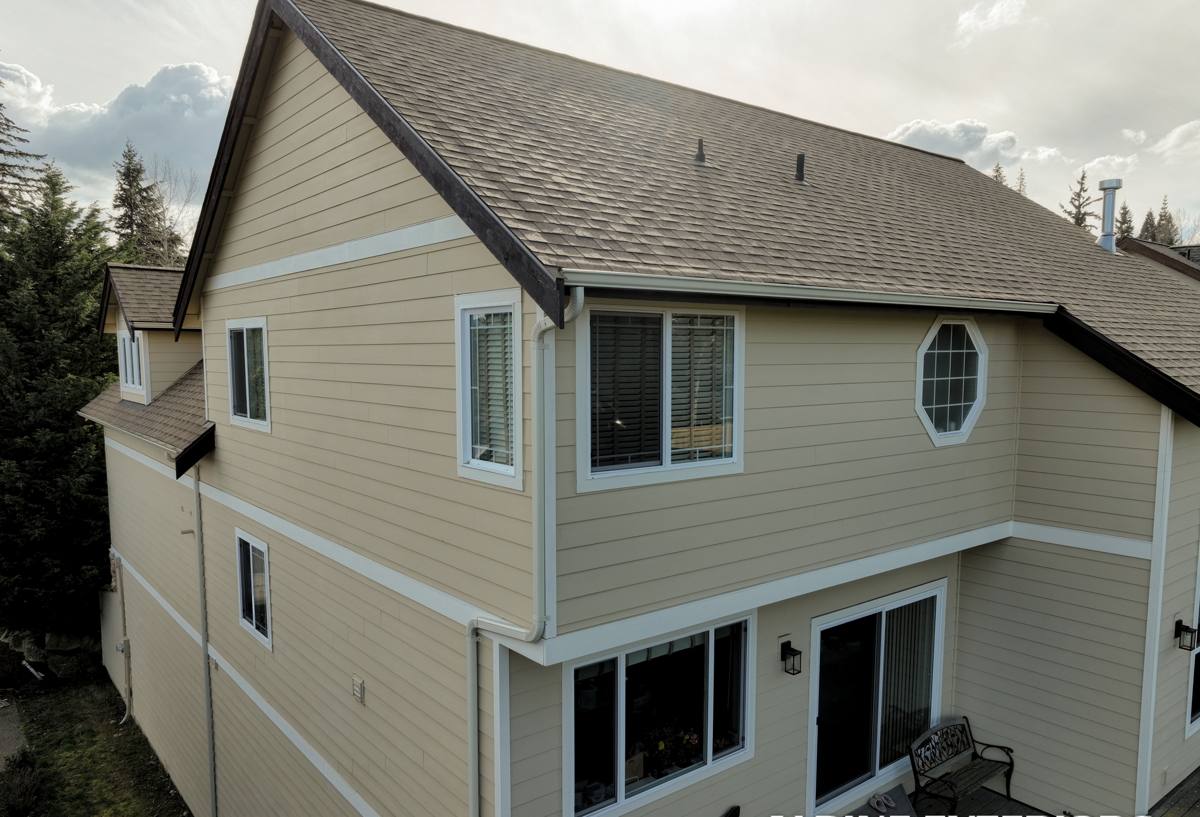
What This Climate Actually Does to a Nooksack Roof
Wind-Driven Rain in the Valley
Rain in the Nooksack valley rarely falls straight down for long. Wind pushes it sideways into roof valleys, around chimneys and vent pipes, and up under shingle edges and flashing that isn't lapped correctly. That sideways load is exactly why so many roof leaks trace back to flashing details rather than the shingles or metal panels themselves — the roofing material can be in fine shape while the transition points around it are letting water in.
A Long Moss and Algae Season
Shaded roof planes and north-facing slopes hold moisture far longer than sun-exposed sections, and in a valley with this much cloud cover and rainfall, that adds up to moss that can grow nearly year-round on the wrong roof section. Moss isn't just cosmetic — it holds water against the roofing surface, works into shingle laps and seams, and can lift material enough to open a path for leaks that wouldn't exist on a moss-free roof.
Salt-Tinged Air, Even This Far Inland
Nooksack isn't a coastal community, but marine air still reaches this far up the valley, and over years it has a real effect on exposed fasteners, flashing, and lower-grade metal components. It's a slower process than at the immediate shoreline, but it's part of why fastener and flashing material choice matters on every repair we do here, not just on jobs closer to the water.
Temperature Swings and Material Fatigue
Whatcom County doesn't see extreme heat or deep cold most winters, but the repeated cycle of damp, mild days punctuated by the occasional hard freeze still stresses roofing materials over time. Asphalt shingles that stay saturated more often than they fully dry age faster here than the same product would in a drier inland climate, and repairs that don't account for that cycle tend to come back sooner than they should.
Signs a Nooksack Roof Needs Repair
Most roof problems give some warning before they turn into an active leak inside the house. Worth checking for, especially heading into the wetter months:
- Moss or algae buildup on shaded or north-facing roof sections
- Granules collecting in gutters or at downspout outlets, a sign of shingle wear
- Curling, cracked, or missing shingles, especially after a windstorm
- Rust streaks, gaps, or lifted edges at flashing around chimneys, vents, and skylights
- Dark stains or sagging on interior ceilings, particularly near exterior walls
- Daylight visible through the roof deck from inside an attic space
- Water pooling or slow drainage in roof valleys after a rain event
Any one of these is worth a look before the wet season sets in. None of them mean the whole roof is finished, but ignoring them usually turns a repair into a much larger project.
What a Correct Roof Repair Actually Involves
Diagnosis Before Patching
A repair that just covers the spot where water is showing up inside the house often misses the actual entry point, since water travels along the roof deck and framing before it drips somewhere visible. We start by tracing the leak back to its source — usually a flashing detail, a valley, or a section of failed underlayment — rather than assuming the nearest shingle is the problem.
Flashing and Transition Points
Given how much of this valley's water damage starts at flashing rather than at the field of the roof, repair work around chimneys, vent pipes, skylights, and roof-to-wall transitions gets re-flashed properly rather than resealed with caulk and left alone. Caulk is a short-term fix at best in a climate this wet; proper flashing lapped and sealed correctly is what actually stops the leak.
Matching Materials and Aesthetics
Where shingles or panels need replacing, we work to match the existing roofing as closely as the market allows, factoring in sun-fading on older roof sections so a repair doesn't stand out as an obvious patch. On older roofs where an exact match isn't available, we'll walk through the realistic options rather than leaving a homeowner surprised by a mismatched section.
Ventilation and Moisture Escape
A repair that fixes a leak but ignores poor attic or roof deck ventilation is treating a symptom. Where a repair area shows signs of trapped moisture — sheathing damage, mold, or heavy condensation — we address the ventilation issue as part of the job, not as an upsell tacked on afterward.
Repair or Replacement? How We Make That Call
Not every roof problem calls for a full replacement, and not every repair is worth doing on a roof that's genuinely at the end of its life. The honest answer depends on a few factors:
| Factor | Leans Toward Repair | Leans Toward Replacement |
|---|---|---|
| Roof age | Under roughly two-thirds of expected material lifespan | At or past expected lifespan for the material |
| Damage extent | Isolated to one section, flashing point, or valley | Widespread across multiple roof planes |
| Underlayment condition | Sound underlayment, surface-level damage only | Underlayment failing or original to an older roof |
| Moss and moisture history | First real issue after years of normal upkeep | Recurring leaks despite prior repairs |
| Homeowner timeline | Planning to stay, wants to extend current roof's life | Planning ahead for a longer-term, lower-maintenance roof |
We'll give a straight answer either way. If a repair is the honest call, we won't push a replacement, and if a roof is genuinely past the point where repair makes financial sense, we'll say that too and explain why.
When It's Storm Damage: Documentation and Insurance
Wind and heavy rain events in this valley sometimes cause damage that's covered under a homeowner's insurance policy — lifted shingles from a windstorm, a limb strike, or sudden leaking after a heavy rain event are the most common examples. If storm damage is a possibility, it's worth photographing visible damage before any repair begins and asking whoever inspects the roof to document what they find in writing, including probable cause and approximate timing. That documentation is what an insurance adjuster will actually look at, and it's much harder to reconstruct after a repair is already done than to gather at the time.
We'll give a straightforward opinion on whether damage looks storm-related versus gradual wear, but we don't work for the insurance company and won't inflate or downplay a claim either direction. If a repair isn't storm-related, that's fine too — plenty of roof repair in this climate is simply due to age and moisture exposure over time, and it doesn't need to be dressed up as something else to be worth doing right.
Our Roof Repair Process for Nooksack Homes
- Inspection and diagnosis: We look at the whole roof system, not just the area where the leak is showing, including attic access where possible.
- Honest assessment: A clear explanation of what's actually wrong, what caused it, and whether repair or replacement makes sense for this roof and this timeline.
- Scope and estimate: A written scope covering exactly what will be repaired, what materials will be used, and a realistic cost range before any work starts.
- The repair itself: Proper flashing, matched materials, and underlayment work where needed — done to hold up through valley weather, not just to pass a quick visual check.
- Cleanup and walkthrough: Debris removed, and a walkthrough of the completed work so the homeowner can see exactly what was done and why.
What Roof Repair Typically Costs, and Why It Varies
Roof repair costs in this area typically run from a few hundred dollars for a small, isolated flashing or shingle fix up to a few thousand dollars for larger sectional repairs involving underlayment or structural sheathing work. A few things drive that range:
| Cost Driver | Why It Matters |
|---|---|
| Roof pitch and accessibility | Steep or high roofs take longer and require more safety setup |
| Extent of hidden damage | Sheathing or underlayment damage found once shingles come off adds scope |
| Material match availability | Discontinued or faded shingle colors can require broader replacement |
| Number of penetrations involved | Each chimney, vent, or skylight needing re-flashing adds labor |
| Moss and debris removal needed | Heavier buildup adds cleanup time before repair work can start |
We won't know the real number until we've actually looked at the roof, which is why every estimate starts with an in-person inspection rather than a phone quote.
Why Hiring a Crew That Already Works Nooksack Matters
Working this part of Whatcom County regularly means we already know which roof orientations in this valley hold moss longest, which flashing details fail first under wind-driven rain, and which repairs actually hold up through a full wet season rather than needing a second visit. That's not something a crew driving in from outside the area picks up on a single job. It also means that if a question comes up after the repair — a follow-up on workmanship, a maintenance question, anything — it's a call to a crew still working in this same valley, not a company that's moved on to a different region entirely.
Before hiring anyone for roof repair in Nooksack, it's worth checking a few basics:
- Current Washington state contractor license and liability insurance, verifiable independently
- A written estimate that describes the actual scope of repair, not just a lump-sum number
- Willingness to explain the cause of the problem, not just quote a fix
- A physical presence or regular work history in this part of Whatcom County
- Clear answers about warranty coverage on the repair labor and materials used
After the Repair: Keeping It From Coming Back
A good repair still benefits from basic upkeep in a climate like this one. Clearing gutters and downspouts before the fall rains, keeping overhanging branches trimmed back so shaded roof sections get more sun exposure, and having the roof looked at every couple of years rather than only when a leak shows up all go a long way toward making a repair last as long as it should. None of that requires a service contract — just some attention paid at the right times of year, and a quick call if something looks off after a hard storm rather than waiting until it's dripping inside.
If you're dealing with a leak, moss buildup, or storm damage on a Nooksack-area roof, we're glad to take a look and give you a straight answer about what it actually needs. Reach out for a free, no-pressure estimate using the form below.