 Lynden Siding
 Roofing in Aldergrove's Climate Is a Different Job Than Roofing Somewhere Dry
Aldergrove sits in that stretch of the Fraser Valley / Whatcom County corridor where the weather doesn't do anything dramatic — it just doesn't let up. Long, soaking rain seasons. Salt-laden air drifting in from the coast. Heavy tree cover on a lot of rural and semi-rural properties that keeps roofs shaded and damp for months at a time. None of that is unusual for this part of the Pacific Northwest, but it does mean a roof that would hold up fine in a drier climate can fail here years ahead of schedule if it wasn't built for these conditions in the first place.
A new roof installation done right in this area isn't just "put shingles on a house." It's a system — deck, underlayment, flashing, ventilation, and surface material — chosen and installed specifically to handle sustained moisture, wind-driven rain, and the moss growth that comes with shade and damp air. Get any one of those pieces wrong and the roof will show it, usually in the form of moss creeping under shingle tabs, soft spots on the deck, or leaks at the flashing long before the shingles themselves wear out.
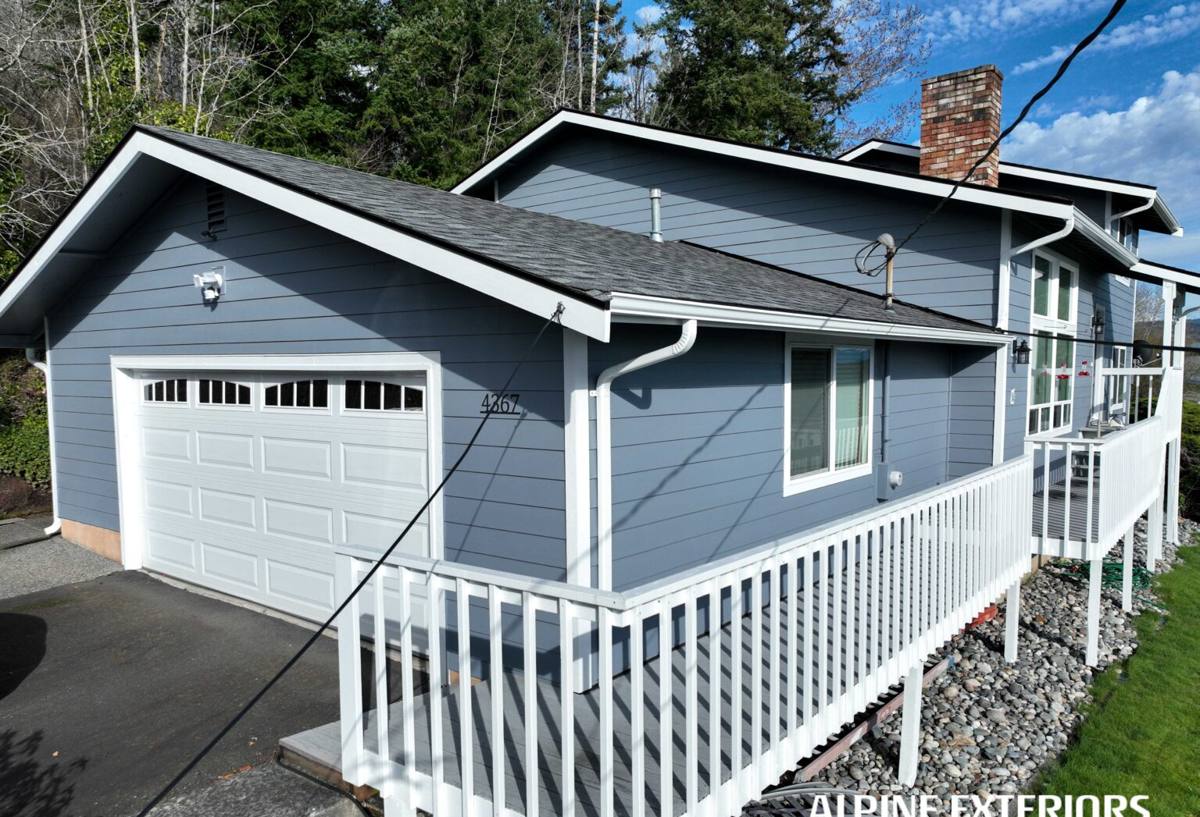
What Actually Causes Roof Failure Around Aldergrove
Driving Rain
Storms here often come with wind, which pushes rain sideways under shingle edges and around flashing instead of letting it run straight down and off. A roof built for calm, vertical rainfall — thinner underlayment, minimal flashing overlap — will eventually let water find a way in at valleys, chimneys, and roof-wall intersections.
Salt Air
Being close enough to the coast to pick up salt in the air matters more for metal components than most homeowners expect. Unprotected or poorly coated fasteners, flashing, and vent stacks corrode faster in salt-influenced air, which is why material and hardware choice matters as much as the shingle itself.
Long Moss Season
Shaded, north-facing slopes and tree-lined lots stay damp for much of the year, which is exactly what moss needs to take hold. Moss isn't just cosmetic — it holds moisture against the roof surface, works its way under shingle tabs, and lifts them over time, giving wind-driven rain a place to get underneath.
What a Correct New Roof Installation Actually Involves
A proper install is a sequence, and skipping or rushing any step is where most premature failures start.
- Deck inspection and repair — every sheet of decking gets checked for rot, delamination, or soft spots before anything new goes down. Covering a bad deck with new shingles just hides the problem.
- Ice and water shield at vulnerable points — eaves, valleys, and roof penetrations get a self-adhering waterproof membrane, not just standard felt, since these are the spots where wind-driven rain and ice back-up (on the rare hard freeze) cause the most damage.
- Synthetic or felt underlayment across the field — a full secondary water barrier under the shingles, sized and lapped correctly for this region's rain volume.
- New flashing at every transition — chimneys, skylights, sidewalls, and valleys. Reusing old flashing to save time is one of the most common shortcuts that leads to callbacks.
- Balanced intake and exhaust ventilation — this is what keeps the underside of the deck dry and helps prevent the moss and moisture problems that start from the inside out.
- Fasteners and hardware rated for coastal exposure — corrosion-resistant nails and flashing hold up far longer under salt-influenced air than standard-grade hardware.
Choosing the Right Roofing Material for This Area
There's no single "best" roofing material — the right choice depends on the home, the budget, and how much long-term maintenance the homeowner wants to take on. Here's how the common options actually compare for a climate like Aldergrove's.
| Material | Moisture & Moss Resistance | Maintenance | Typical Lifespan |
|---|---|---|---|
| Architectural asphalt shingle | Good with proper ventilation; algae-resistant granules help slow moss/moss-related staining | Low to moderate | 25–30 years |
| Standing seam metal | Excellent — sheds water fast, little surface for moss to grip | Low, but coastal-grade fasteners matter | 40–50+ years |
| Cedar shake | Attractive but holds moisture in a damp, shaded climate unless well-ventilated and maintained | High — regular treatment and moss removal needed | 20–30 years with upkeep |
| Synthetic composite shingle | Very good — engineered to resist moisture absorption | Low | 40–50 years |
For most homes in this area, we lean toward architectural asphalt or a synthetic composite as the practical middle ground — strong moisture performance without the ongoing upkeep that cedar demands in a climate this wet. Metal is a great option for homeowners who want the longest possible lifespan and don't mind the higher upfront cost. We'll walk through the real trade-offs for your specific roof rather than pushing one product across the board.
Ventilation and Moisture Control Matter as Much as the Shingles
A brand-new roof with poor attic ventilation will still trap moisture underneath the deck, which shows up as premature shingle aging from below, condensation, and in some cases mold on the roof sheathing itself — problems that have nothing to do with the shingle quality and everything to do with airflow. Balanced intake vents at the eaves and exhaust at the ridge let warm, moist air escape instead of sitting against the underside of the roof through another long, wet Fraser Valley winter. This is one of the most overlooked parts of a new roof install, and one of the most important for anything shaded by trees, which describes a lot of the properties out this way.
Our Installation Process
- On-site inspection and honest assessment — we look at the deck, existing ventilation, flashing condition, and any moss or moisture damage before recommending anything.
- Material walkthrough — we go over the realistic options for your roof pitch, tree exposure, and budget, without steering you toward the most expensive option by default.
- Written estimate — a clear scope of work and price, with no vague allowances that turn into surprise add-ons later.
- Tear-off and deck repair — full removal of the old roofing so the deck can actually be inspected and fixed where needed, not just re-covered.
- Installation to manufacturer spec — underlayment, flashing, ventilation, and shingles installed in the order and manner required to keep warranties valid.
- Final walkthrough — we go over the finished roof with you before we consider the job done.
Why It Matters That We Already Work in Aldergrove
Roofing crews that mostly work drier, sunnier markets tend to under-spec ventilation and underlayment because they've never had to deal with a wet season that lasts this long. Working regularly in and around Aldergrove and greater Whatcom County means we're used to the realities of this area — rural and acreage properties with heavy tree cover, older farmhouses that need extra care around ventilation upgrades, and the general moisture load this part of the Pacific Northwest deals with for a good chunk of the year. That familiarity shows up in small decisions during the install — how much overlap to give underlayment, where moss growth is most likely to start, which flashing details need extra attention — that a crew unfamiliar with the area might not think to prioritize.
Signs Your Roof Needs Replacement, Not Another Repair
Not every roof problem calls for a full replacement, and a straightforward contractor will tell you when a repair is genuinely the better move. But there are signs that usually point toward replacement being the more cost-effective path:
- Shingles that are curling, cracking, or losing granules across large sections of the roof, not just one spot
- Moss that's established itself under shingle tabs rather than just sitting on the surface
- Soft or spongy decking felt during an inspection, which usually means water has already gotten past the surface layer
- Repeated leaks in different locations after past repairs
- A roof that's already past, or close to, its material's expected lifespan
Keeping a New Roof Performing After Installation
A correctly installed roof still benefits from a bit of upkeep, especially in a climate that stays damp this much of the year:
- Clear debris and needles from valleys and gutters at least twice a year, since trapped debris holds moisture against the roof
- Have moss growth addressed early, before it works under the shingle edges
- Keep overhanging branches trimmed back to reduce shade and speed up drying after rain
- Check attic ventilation isn't blocked by insulation or storage
- Have the roof looked at after any major windstorm, since that's when flashing and shingle edges are most likely to take damage
If you're weighing a new roof for a home in Aldergrove, we're glad to come take a look and give you a straight, no-pressure estimate — what your roof actually needs, what it doesn't, and what it'll cost to do it right. There's a form below to get started.