 Lynden Siding
 Metal Roofing Built for Abbotsford's Weather
Abbotsford sits in the Fraser Valley, close enough to the Salish Sea and the Whatcom County border that homes here deal with a specific mix of weather: long stretches of driving rain off the coast, humid air that never really dries out between storms, and enough tree cover in most neighborhoods to keep roofs shaded and damp for weeks at a time. That combination is hard on asphalt shingles and even harder on roofs that were installed without much thought for drainage or ventilation. Metal roofing handles this climate better than almost anything else on the market, but only when it's specified and installed correctly for local conditions.
We work both sides of the border in Whatcom County and the Fraser Valley, so Abbotsford roofs aren't a special case for us — they're a normal Tuesday. That matters more than it sounds like it should, because a roof that's correct for a dry inland climate is not automatically correct for a roof that sits under cloud cover nine months a year.
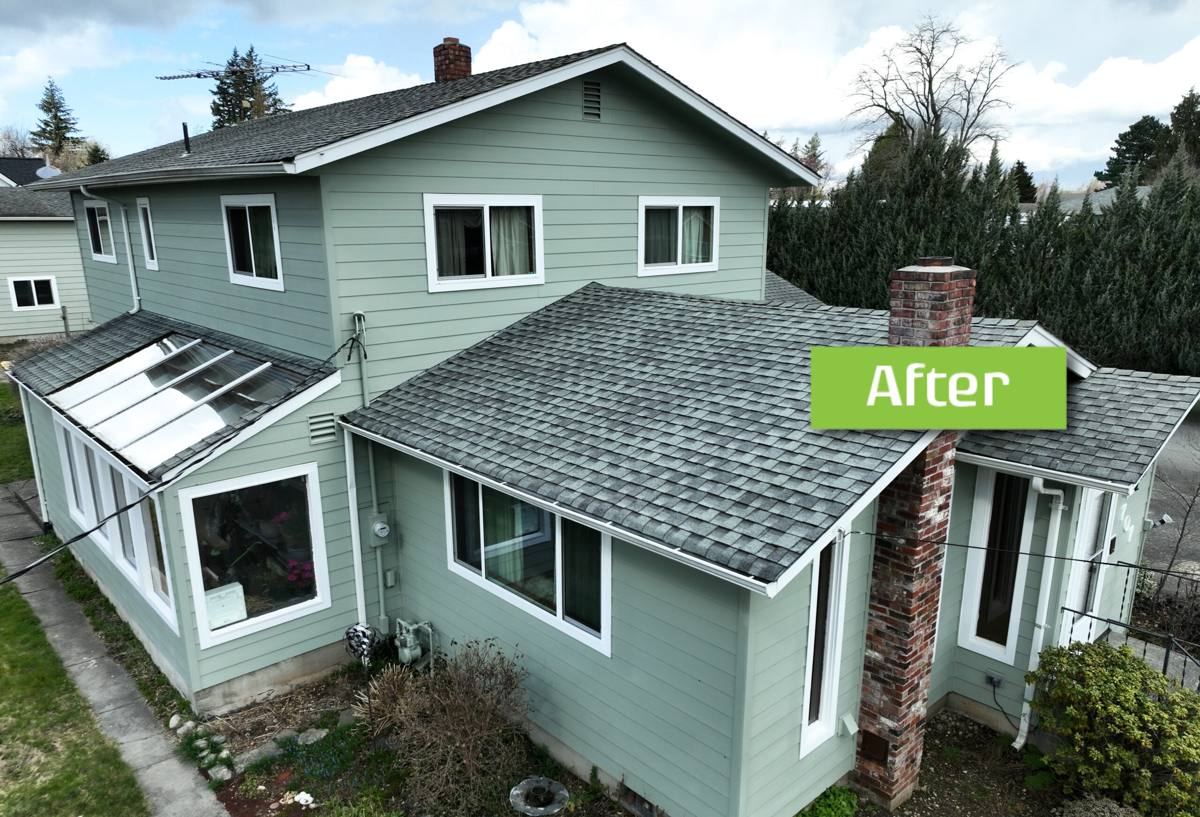
What Abbotsford's Climate Actually Does to a Roof
Moss and Organic Growth
Moss doesn't just sit on a roof looking bad — it holds moisture against the roofing material, works its way under shingle tabs and metal seams, and keeps that section of roof wet long after the rest has dried. On a shaded lot or a north-facing slope, moss season can run most of the year. Metal roofing gives moss far less to grip onto than a shingle surface does, but panels still need clean lines, proper fastening, and roof edges that shed water instead of trapping it.
Driving Rain and Wind-Driven Water
Rain in this region doesn't always fall straight down. Storms coming off the strait push rain sideways, which means underlayment, flashing, and panel overlaps have to be detailed for wind-driven water, not just gravity. A roof that would be fine in a calmer climate can leak here if the details are cut short.
Salt-Influenced Air
Proximity to the coast means the air carries more salt and moisture than you'd find further inland. That accelerates corrosion on any metal component that isn't rated for it — fasteners, flashing, and lower-grade panel coatings age faster near the water. It's one more reason material choice matters more here than in a dry interior climate.
Freeze-Thaw Cycling
Winters in the Fraser Valley aren't brutally cold, but they do dip below freezing often enough that trapped moisture can freeze, expand, and work fasteners loose or crack sealant over a few seasons. A roof system that manages water well in the first place avoids most of this problem entirely.
What a Correct Metal Roof Install Involves
Metal roofing has a reputation for being nearly maintenance-free, and it can be — but only if the work underneath the panels is done right. The panels themselves are the easy part. The details are where roofs succeed or fail.
- Deck inspection and repair before anything goes down — soft or delaminated sheathing gets replaced, not covered up
- A high-quality synthetic or self-adhered underlayment rated for the panel system, with extra ice-and-water protection at eaves, valleys, and penetrations
- Proper ventilation at the ridge and soffit so moisture from inside the home doesn't get trapped under the deck
- Corrosion-resistant fasteners matched to the panel material to avoid galvanic reaction
- Correctly lapped and sealed flashing at every valley, wall intersection, chimney, and vent penetration
- Panel layout planned so seams shed water in the direction of natural runoff, not against it
- Edge and eave detailing that keeps wind-driven rain from working backward under the panels
Skip any one of these and you can still end up with leaks and premature corrosion, even with a good panel product. This is the part of the job that separates a roof that lasts decades from one that needs attention in five years.
Panel Types and How They Fit Abbotsford Homes
There isn't one "best" metal roofing product — the right choice depends on the home's roof pitch, budget, and how the owner wants it to look. Here's how the common options stack up for this climate.
| Panel Type | Best For | Climate Notes |
|---|---|---|
| Standing seam (concealed fastener) | Most residential roofs, especially steeper pitches | Best water-shedding performance in driving rain; no exposed fastener heads to corrode or work loose over time |
| Exposed-fastener panels (screw-down) | Budget-conscious projects, outbuildings, low-traffic roofs | Lower upfront cost, but fastener gaskets age and need periodic checking — more maintenance in a wet climate |
| Stone-coated steel | Homeowners who want a shingle or tile look with metal durability | Textured surface can hold moss and debris slightly more than smooth panels; needs occasional rinsing |
| Aluminum panels | Homes closer to coastal or salt-influenced air | Naturally corrosion-resistant, a strong option where salt exposure is a real factor |
For most Abbotsford homes we're recommending standing seam steel or aluminum with a quality painted finish. The concealed fastener design is simply better suited to sustained wind-driven rain, and it ages more gracefully with less upkeep.
Coatings and Finishes
The paint or coating system on a metal panel matters as much as the base metal underneath it. A well-applied PVDF (Kynar-type) finish holds color and resists chalking far longer than cheaper polyester coatings, especially with regular damp weather working against it year-round. We'll walk through the coating options and warranty terms for whatever panel line fits your budget — this is one area where it pays to ask direct questions before committing.
Why We Don't Push Every Product on Every Roof
Some metal roofing products look great on a sample board but aren't a good match for a shaded, damp roof plane. Textured or stone-coated panels, for example, can trap organic debris in valleys and low-slope sections if a roof doesn't get much sun exposure — that's not a defect in the product, it's a mismatch between the product and the site conditions. Our standard is to recommend what actually performs on your specific roof, not whatever has the widest margin. If a lower-maintenance smooth panel is the better call for a heavily shaded lot, we'll say so plainly.
Our Process for Abbotsford Projects
- On-site assessment — we look at roof pitch, shading, existing ventilation, and any current leak or moss patterns before recommending a system
- Written estimate — panel type, underlayment, flashing scope, and timeline laid out clearly, no vague allowances
- Deck prep — repair or replace any compromised sheathing before underlayment goes down
- Underlayment and flashing — the protective layer that does the real work in a wet climate
- Panel installation — laid out and fastened to shed water correctly given your roof's specific slopes and valleys
- Final walkthrough — we go over ventilation, warranty paperwork, and any maintenance notes specific to your property
Living With a Metal Roof in This Climate
One of the appeals of metal roofing here is how little it asks of homeowners once it's installed correctly. It won't need moss treatments the way a shingle roof does, and it sheds rain and snow load more efficiently. That said, a couple of habits go a long way:
- Keep gutters and valleys clear of needles and leaf debris so water has a clean path off the roof
- Have overhanging branches trimmed back if they're dropping heavy debris onto the roof surface
- Do a visual check after major windstorms for any lifted flashing or debris impact
- Rinse off any accumulated organic buildup in shaded valleys once a year if your lot is heavily treed
That's a short list compared to what an aging shingle roof usually demands, and it's a big part of why metal roofing pencils out well over the long run in a climate like this one.
Why a Local Crew Matters
A roof designed for a dry, sunny region and a roof designed for the Fraser Valley are not the same job, even if the materials list looks similar on paper. We work Whatcom County and the neighboring BC communities regularly, which means we already know how driving rain behaves against these roof pitches, how long moss season really runs here, and which flashing details actually hold up through a wet Pacific Northwest winter. That local pattern recognition is hard to replace with a generic install checklist.
If you're weighing metal roofing for an Abbotsford home, we're glad to walk the roof with you, talk through panel and coating options honestly, and put together a clear, no-pressure estimate — no obligation, just straight answers about what your roof actually needs.