 Lynden Siding
 Building in Laurel Means Building for Wet Weather From Day One
If you're framing a new home in Laurel, the window installation is not a detail to leave for later or hand off to whichever crew is available that week. Laurel sits in a part of Whatcom County where homes take a steady beating from driving rain off the Pacific, salt-tinged marine air drifting in from the Salish Sea, and a moss season that can stretch from October well into May. Windows installed correctly at the framing stage will handle all of that quietly for decades. Windows installed even slightly wrong — a missed flashing lap, a gap in the sill pan, house wrap tucked the wrong direction — will leak eventually, and in this climate "eventually" often means within the first two or three wet seasons.
New-construction window installation is a different job than replacing a window in an existing wall. There's no old flashing to reference, no existing trim to match, and no forgiveness built into the process — every layer has to be built correctly the first time because it gets covered by siding, trim, and interior finish work soon after. For a home going up in Laurel, that means getting the water management right before the walls ever get closed in.
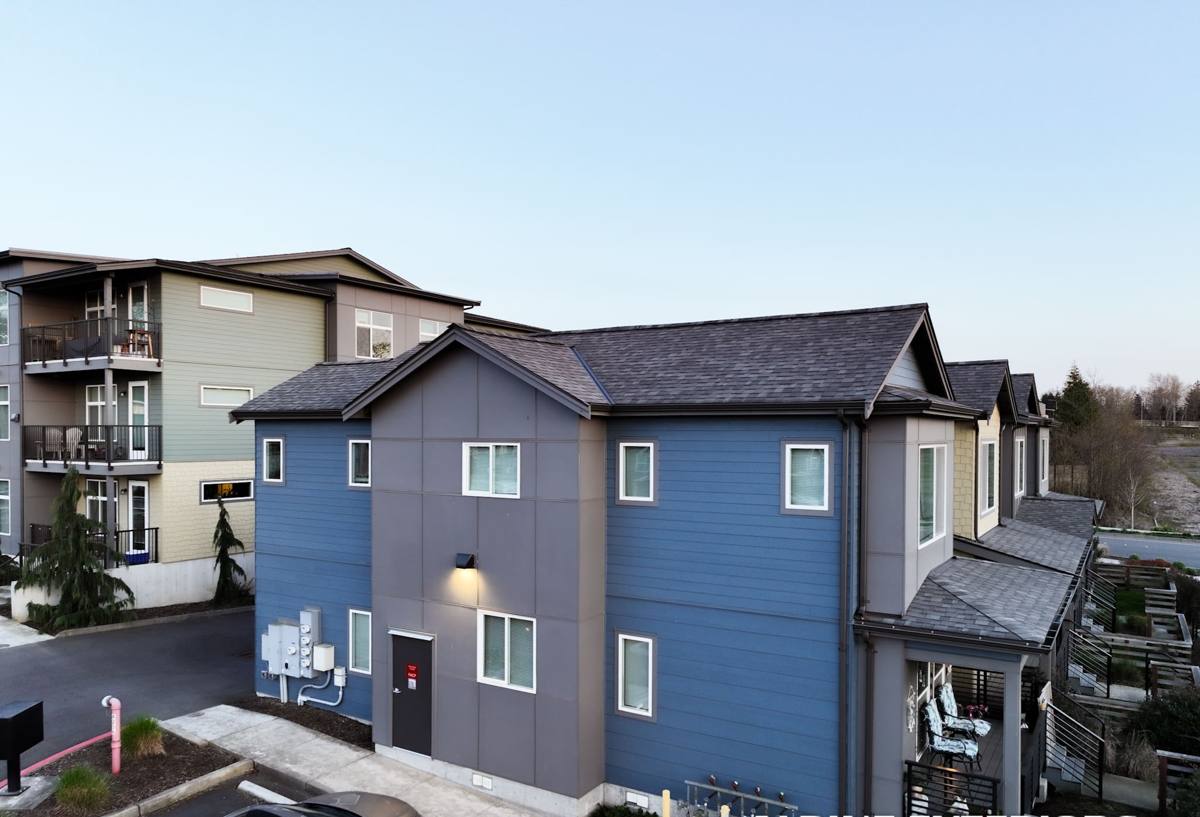
What "New-Construction" Windows Actually Involves
New-construction windows (sometimes called "nail-fin" or "flange" windows) are built with an integrated fin around the perimeter of the frame that gets fastened directly to the sheathing and integrated into the weather-resistive barrier (WRB) — the house wrap or equivalent membrane that wraps the framed structure. This is different from replacement windows, which are designed to fit into an existing finished opening without disturbing the surrounding wall.
Because the fin becomes a structural part of the wall's water management system, the sequencing matters as much as the window itself. Get the layering order wrong — house wrap over the fin instead of under it at the top, for example — and you've built a shingle-lap system backwards, which sends water directly into the wall cavity instead of shedding it outward. In a low-rain climate that mistake might go unnoticed for years. In Laurel's rain totals, it shows up fast.
Why This Matters More for New Builds Than Remodels
On a remodel, a window is often one of several water-management layers doing their job independently. On new construction, the window flashing is stitched directly into the WRB, the flashing tape, and eventually the siding drainage plane as one continuous system. A mistake at the window doesn't stay isolated — it can compromise the water management for the whole wall section around it.
Our Installation Process, Step by Step
We follow the same sequence on every new-construction window opening, regardless of window brand or size. Skipping steps to save time is where most callback leaks originate, so we don't skip them.
1. Rough Opening Prep and Inspection
Before a window ever goes near the opening, we check that the rough opening is square, level, and sized correctly with the manufacturer's tolerances — usually a small amount of shim space on all sides. We also confirm the sheathing and structural framing around the opening are sound, since Laurel's building sites vary from well-drained upland lots to spots with heavier clay soils that hold moisture longer during construction.
2. Sill Pan Flashing
The sill pan is arguably the single most important part of a new-construction window install. It creates a shallow, sloped pan at the bottom of the rough opening that catches any water that gets past the window itself and directs it back outside rather than letting it pool against the framing. We install a proper sill pan — either a pre-formed pan or a correctly lapped flexible flashing membrane — on every opening, sloped to drain outward, with end dams built up on both sides.
3. Setting the Window and Fastening the Fin
The window gets set into the opening, checked for level, plumb, and square, and shimmed as needed before the nailing fin is fastened per the manufacturer's schedule. Over- or under-fastening both cause problems — too few fasteners risks movement and air infiltration over time; too many, or fasteners driven at the wrong angle, can distort the frame and affect how the sash operates.
4. Flashing Tape and WRB Integration
Once the window is fastened, we tape the fin using a proper shingle-lap sequence: sides first, then the top, with the house wrap integrated so water is always directed down and out, never trapped behind a layer. This is the step where the window installation and the whole-house water management system become one continuous barrier.
5. Interior and Exterior Sealing
Low-expansion foam or backer rod and sealant around the interior perimeter controls air leakage without bowing the frame. On the exterior, we leave the bottom of the window unsealed at the trim or siding interface where required — a small detail, but it's what allows any water that does get in to weep back out instead of getting sealed into the wall.
Choosing the Right Window for Laurel's Climate
Material choice affects how a window performs against sustained rain, humidity, and the salt content in coastal Whatcom County air. There's no single "best" window for every home — it depends on budget, architectural style, and how much maintenance the homeowner wants to take on long-term.
| Material | Moisture Performance | Maintenance | Best Fit |
|---|---|---|---|
| Vinyl | Good — won't rot or corrode; seams need quality manufacturing | Low — no painting or sealing needed | Budget-conscious new builds, rental or spec homes |
| Fiberglass | Very good — dimensionally stable in wet/dry cycles, resists warping | Low to moderate | Homes wanting durability without wood upkeep |
| Wood-clad | Good on the exterior face; interior wood needs protection from condensation | Higher — finish and seals need periodic attention | Traditional or higher-end architectural styles |
| Aluminum | Poor for this climate without thermal breaks — prone to condensation | Moderate | Rarely recommended for Whatcom County residential builds |
We steer most Laurel homeowners toward vinyl or fiberglass for the bulk of a build, reserving wood-clad for feature windows where the look matters more than long-term maintenance. This isn't a knock on any manufacturer — it's simply that fewer maintenance obligations means fewer chances for a homeowner to miss something in year eight or nine, long after the builder is gone.
Glass Packages Worth Considering
Double-pane, low-E glass is the baseline we install on new construction in this region — it's a meaningful upgrade over older single-pane or basic dual-pane glass for both energy performance and interior comfort during Whatcom County's damp, overcast winters. For homes with west or south exposure, argon-filled units with a low solar heat gain coefficient help manage summer heat gain without sacrificing the natural light homeowners want.
Mistakes We See on New-Construction Window Jobs
Most window leaks trace back to a small number of repeatable errors. Whether you're vetting your own crew or just want to understand what "correct" looks like, this is what to check for:
- House wrap installed over the top flange instead of under it, reversing the intended water-shedding lap
- No sill pan flashing, or a flat sill pan with no slope to drain water back out
- Missing or crushed corner end dams on the sill pan
- Fasteners driven at an angle or spaced beyond the manufacturer's schedule, distorting the frame
- Exterior sealant applied continuously around all four sides, trapping moisture instead of letting it weep out at the bottom
- Flashing tape applied without firm roller pressure, leaving air gaps that fail adhesion over time
- Window sizes and rough openings that don't match, forcing excessive shimming or field-trimming that voids manufacturer warranties
Why Local Experience in Laurel Matters
A crew that has worked window installs across Laurel and the surrounding Lynden area already understands the practical realities of building here: how site drainage varies lot to lot, what wind-driven rain does to a west-facing wall during a fall storm, and how quickly moss and algae take hold on any surface that stays damp and shaded. That's not something a crew coming in from a drier region will necessarily plan for on day one.
It also means we're not guessing at inspection expectations. Whatcom County building inspectors look closely at flashing details on new construction, and a crew that's been through those inspections repeatedly in this area knows what documentation and sequencing they expect to see before walls get closed in.
What Drives Cost on a New-Construction Window Package
Every new build is different, but the same factors tend to move the price up or down. We walk through these with homeowners and builders before finalizing a window schedule.
| Factor | Impact |
|---|---|
| Number and size of openings | Larger and more numerous windows increase both material and labor cost |
| Window material (vinyl vs. fiberglass vs. wood-clad) | Material cost varies significantly; labor time is similar across materials |
| Glass package (standard low-E vs. triple-pane or specialty coatings) | Upgraded glass adds cost but improves comfort and energy performance |
| Custom shapes or oversized units | Special-order sizes and shapes add lead time and installation complexity |
| Site access and building height | Multi-story or difficult-access builds require more labor and equipment time |
We don't quote a job without walking the plans or the site first — a phone estimate on new construction is a guess, not a number you should build a budget around.
Working With Builders and Owner-Builders
Some of our new-construction window work comes through general contractors managing the whole build; some comes directly from owner-builders managing their own subcontractors in Laurel. Either way, we coordinate closely with the framing and siding schedule so windows go in at the right point — after the WRB is up and ready for integration, and before siding closes in the wall. We also flag anything we see in the rough opening or framing that could affect window performance before it's buried behind finish materials, since that's the last practical point to fix it cheaply.
Long-Term Care Once Your Windows Are In
Correct installation does most of the work, but a little seasonal attention extends the life of any window in this climate. Clear debris and moss from window sills and tracks before the wet season sets in, check that exterior sealant beads remain intact year to year, and keep an eye on interior condensation on cold mornings — persistent condensation can be a sign of ventilation issues in the home rather than a window defect, and it's worth having checked out either way.
If you're planning a new build in Laurel and want windows installed the way this climate actually demands, we're happy to walk your plans and give you a free, no-pressure estimate — just fill out the form below.