 Lynden Siding
 Siding Installation for Kendall Homes
Kendall sits in the northeast corner of Whatcom County, out past Lynden toward the foothills, and homes out here take a different kind of weather beating than a lot of people expect. It's not just rain — it's the combination of long wet stretches, heavy tree cover in a lot of yards, and a growing season for moss and algae that runs most of the year. Add in the driving rain that comes through on a west or southwest wind, and siding here has to do real work, not just look good on installation day.
We install James Hardie fiber cement siding, full stop. We don't carry vinyl, LP SmartSide, primed wood, or other fiber cement brands, and we're upfront about why: after years of doing exterior work in this county, Hardie is the only siding system we're willing to put our name on for the long haul. This page is about what that looks like specifically for a Kendall property — what the climate demands, what correct installation actually involves, and how we run the job from estimate to finish.
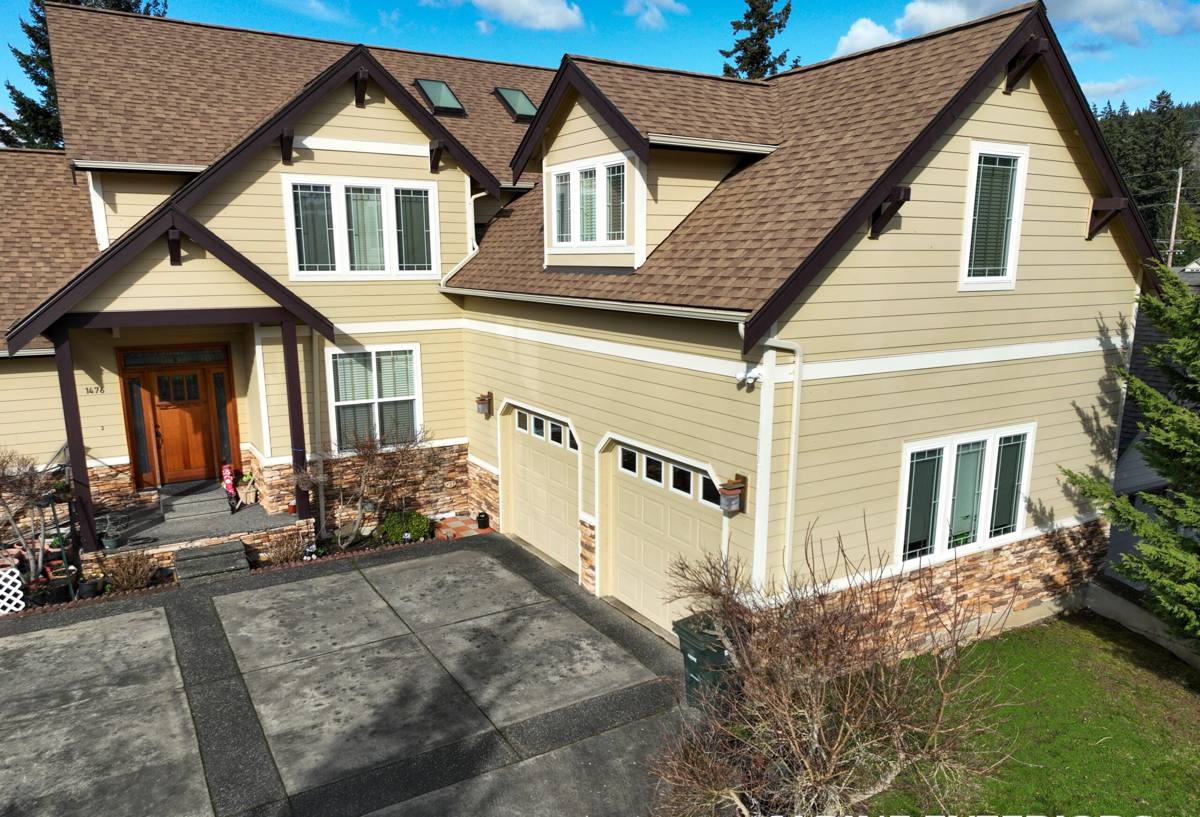
What Kendall's Climate Actually Does to Siding
Whatcom County sits in a marine-influenced climate zone, and out toward Kendall that means damp air for a large part of the year, seasonal downpours that come in sideways more often than straight down, and shaded, moisture-retentive yards where moss and algae get a real foothold on north- and east-facing walls. None of that is unique to Kendall, but it's more pronounced on rural and semi-rural lots with mature trees and less direct sun exposure than you'd get on an open in-town lot.
Three things matter most for siding performance in this environment:
- Moisture cycling — siding that gets wet and dries slowly, over and over, for months at a stretch. Materials that swell, delaminate, or hold water against the sheathing fail faster here than in drier parts of the state.
- Driving rain exposure — wind-driven rain doesn't just hit the wall, it works its way behind poorly lapped or poorly caulked siding. Flashing and lap details matter more here than in calmer climates.
- Moss and algae growth — organic growth holds moisture against the surface and accelerates any weakness already present in the material or the finish.
Homes in Kendall that were sided with the wrong product, or sided correctly but with the wrong details, tend to show it first at butt joints, around trim, and on the shaded sides of the house — exactly where moisture sits longest.
Why This Pushes Us Toward Fiber Cement
Wood-based products — including primed wood siding and engineered wood like LP SmartSide — rely on an intact factory or field-applied coating to keep water out. In a climate where siding stays damp for days at a time during the wet season, any gap in that coating, any cut edge left unsealed, any fastener that backs out slightly, becomes an entry point. Vinyl doesn't absorb water the same way, but it moves with temperature swings, can warp or crack in cold snaps, and won't hold a factory finish the way fiber cement does. James Hardie fiber cement is inert to moisture in the way wood is not — it doesn't swell, rot, or feed fungal growth the way organic materials can, which matters directly in a spot like Kendall where the wet season runs long.
What a Correct Siding Installation Involves
Fiber cement siding is only as good as the installation behind it. A rushed or generic install — one that ignores local conditions — will show problems within a few wet seasons regardless of the material. Here's what we treat as non-negotiable on every Kendall job:
- Weather-resistive barrier, installed correctly — a properly lapped and sealed water-resistive barrier behind the siding, not just stapled up as an afterthought.
- Correct fastener pattern and depth — Hardie specifies fastener placement and drive depth for a reason; overdriven or misplaced nails crack panels or leave them loose over time.
- Proper clearances — siding held up off decks, patios, and grade per manufacturer spec, so it isn't sitting in standing moisture or splashback.
- Flashing at every horizontal transition — window heads, trim boards, roof-to-wall intersections, and butt joints all get flashed, not just caulked.
- Factory-cut edges sealed — any field cut gets a sealed edge before it goes on the wall, protecting the exposed fiber cement core.
- Correct lap and reveal — consistent, code-compliant overlap so wind-driven rain can't work its way behind a course.
None of this is exotic. It's the difference between an installation crew that's read the Hardie install guide and one that's just used to hanging siding generically.
Comparing Siding Options for a Kendall Property
| Factor | James Hardie Fiber Cement | Vinyl | Wood / Engineered Wood |
|---|---|---|---|
| Moisture resistance | Does not rot, swell, or feed fungal growth | Water-resistant but can trap moisture behind panels | Vulnerable if coating fails or edges are exposed |
| Performance in driving rain | Stable dimensionally; relies on correct flashing detail | Can allow water intrusion at seams over time | Coating integrity is the only real barrier |
| Moss/algae resistance | Inert surface; growth can be washed off without damaging material | Growth sits on surface, can be washed off | Growth can work into any coating breaks or grain |
| Fire resistance | Non-combustible | Combustible | Combustible |
| Finish longevity | Factory ColorPlus finish, engineered for UV and moisture exposure | Color molded in but can fade and chalk | Field or factory paint, needs recoating on a cycle |
| Maintenance | Occasional wash; repaint only if desired, not required for protection | Low maintenance but limited repair options | Regular inspection and recoating needed |
We don't install two of the three columns above. We're not neutral on this, and we don't pretend to be — but the table reflects real trade-offs, not marketing claims.
Our Process for a Kendall Siding Job
1. On-Site Estimate and Assessment
We walk the property, look at current siding condition (if any is still up), check for moisture damage at grade level, decks, and roof transitions, and talk through what the house actually needs — not a generic package.
2. Product and Line Selection
Hardie's product lines are engineered for different climate zones (HZ5 and HZ10 designations exist for this reason). We spec the right line and profile for a Whatcom County installation, and walk you through color and texture options in the ColorPlus lineup.
3. Prep and Tear-Off
Old siding comes off, sheathing gets inspected for hidden moisture damage before anything new goes up — this step gets skipped by crews in a hurry, and it's the step that matters most on a house that's had years of Whatcom County weather working on it.
4. Weather Barrier and Flashing
New water-resistive barrier goes on correctly lapped, with flashing detailed at every horizontal break, window, and roof intersection before a single piece of siding goes up.
5. Installation to Manufacturer Spec
Panels and lap siding go up per Hardie's fastening, clearance, and lap requirements — not "close enough."
6. Final Walkthrough
We walk the finished job with you, check caulk lines, trim details, and clearances, and answer any questions about care going forward.
What to Look For in a Contractor for This Kind of Job
Siding installation is one of those trades where a bad job can look fine for the first year and then fail early — which makes it hard for a homeowner to evaluate a contractor on looks alone. A few things worth checking before you hire anyone for a Kendall siding job:
- Do they work in Whatcom County regularly, or are they generalists who happen to also do siding?
- Can they explain their flashing and lap details, specifically, not just "we follow code"?
- Do they carry manufacturer-specific installation training, or just general carpentry experience?
- Will they put the product line, install scope, and warranty terms in writing before work starts?
- Do they inspect sheathing during tear-off, or just cover over whatever's there?
A crew that already works this area understands things a traveling or out-of-county crew might not think to ask about — how shaded a lot typically is, how long moss season runs, which sides of a house take the worst of the driving rain in a given season.
Caring for Hardie Siding After Installation
One of the practical advantages of fiber cement in a climate like this is how little upkeep it demands compared to wood. That said, a few habits keep it performing at its best:
- Rinse siding periodically, especially on shaded or moss-prone sides, with a garden hose or soft wash — avoid high-pressure washing directly at seams and edges.
- Keep gutters clear so overflow doesn't run down the wall face and hold moisture against the siding.
- Trim back vegetation and tree cover that keeps a wall section shaded and damp longer than the rest of the house.
- Watch caulk lines at trim and penetrations over the years — caulk is a maintenance item even when the siding itself isn't.
- Address any impact damage (chips, cracks) promptly so the fiber cement core isn't left exposed to moisture.
Warranty and Long-Term Value
James Hardie backs its siding with a substantial product warranty, and the ColorPlus factory finish carries its own separate finish warranty — both are transferable, which matters if you sell the home down the line. That's part of why we standardized on this system: it's not just about how the siding performs on day one, it's about what happens fifteen or twenty years into a Whatcom County wet season, and whether the product and the installation both hold up to scrutiny if something does go wrong.
If you're planning a siding project in Kendall or anywhere around Lynden, we're happy to come take a look at the house, talk through what the property actually needs, and give you a straightforward, no-pressure estimate. There's a form below to get that started.