 Lynden Siding
 Acme's Setting Is Hard on Exterior Siding
Acme sits in the wooded, low-lying country east of Lynden, in the part of Whatcom County where tree cover, valley moisture, and long stretches of overcast weather combine to keep exterior surfaces damp far more of the year than most homeowners realize. Even homes well away from open water deal with the same marine-driven weather pattern that defines this whole corner of Washington: salt-tinged air pushing inland off the Sound, driving rain that comes in sideways during fall and winter storms, and a moss season that can stretch from October into May in shaded, tree-lined yards.
Siding in this kind of environment isn't just a cosmetic surface — it's the first line of defense against moisture intrusion, rot, and the slow biological growth that eats away at paint and substrate alike. Products that aren't built for this specific combination of dampness and shade tend to show their weaknesses here faster than they would in a drier climate. That's the starting point for every recommendation we make on an Acme job.
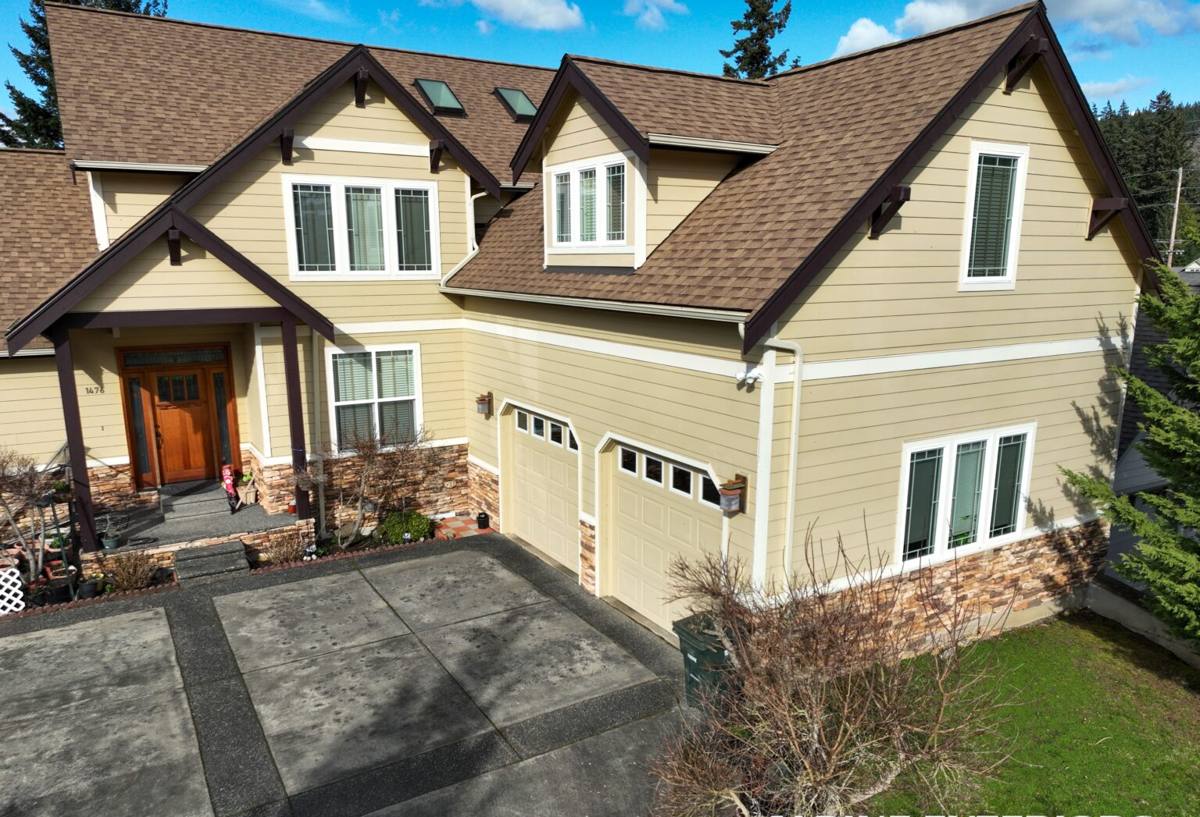
What Acme's Climate Actually Does to a House
Moisture That Doesn't Dry Out Quickly
Homes tucked under tree canopy or set back in low, shaded lots don't get the sun exposure that helps siding dry between rain events. Water sits in seams, behind poorly flashed trim, and in any siding material that absorbs moisture rather than shedding it. Over a few seasons, that trapped moisture is what causes swelling, delamination, and soft spots — long before a homeowner notices anything wrong from the ground.
Moss, Algae, and Organic Growth
Shade plus moisture plus mild temperatures is exactly the recipe moss and algae need. On siding materials with a rougher or more porous surface, spores take hold and spread, staining the finish and holding even more moisture against the wall. Once established, moss is difficult to remove without damaging paint or the siding surface underneath it.
Wind-Driven Rain
Whatcom County's storms regularly come with enough wind to push rain sideways into wall assemblies, not just straight down onto roofs. Siding that isn't installed with correct overlaps, clearances, and flashing details will let that wind-driven moisture find its way behind the cladding, where it does the most damage and is hardest to catch early.
Why We Install Only James Hardie Fiber Cement
We made a deliberate decision to install James Hardie products exclusively, and Acme's climate is a good example of why. James Hardie fiber cement is engineered specifically for regional weather conditions through its HardieZone system — homes in our part of Washington fall under the HZ5 climate engineering profile, which accounts for the moisture, humidity swings, and precipitation patterns common to the Pacific Northwest.
Fiber cement is a blend of cement, sand, and cellulose fiber, which makes it non-combustible and dimensionally stable. It doesn't absorb water the way wood-based products do, and it doesn't expand and contract with humidity the way vinyl does. That stability matters in a climate where siding is wet more often than it's dry.
Why We Don't Install the Alternatives
We get asked regularly why we won't quote LP SmartSide, vinyl, Cemplank, Allura, primed spruce, or cedar. None of these are junk products — each has a legitimate use case somewhere. But for the specific conditions we see on Acme and Lynden-area homes, each comes with a trade-off we're not willing to put our name behind:
- Engineered wood (LP SmartSide): resin-treated OSB-based product that performs reasonably in drier climates, but wood-based substrates are more vulnerable to long-term moisture exposure at cut edges and joints than fiber cement.
- Vinyl siding: low cost and low maintenance, but it flexes with temperature, can crack in cold snaps, fades over time, and doesn't offer the same fire resistance or impact durability as fiber cement.
- Cemplank and Allura: other fiber cement brands that are chemically similar to Hardie, but we've standardized on one manufacturer so we can guarantee consistent product behavior, factory finish quality, and warranty terms across every job.
- Primed spruce and cedar: real wood siding requires ongoing painting, caulking, and moisture vigilance that most homeowners underestimate — especially under the tree cover common around Acme.
The short version: in a climate that punishes anything that absorbs water or degrades under constant dampness, fiber cement with a factory-applied finish is the material that holds up with the least maintenance burden over the life of the siding.
ColorPlus Finish and Why It Matters Here
Most James Hardie siding we install carries the ColorPlus factory finish — a baked-on, multi-coat finish applied under controlled conditions before the boards ever reach the jobsite. That matters in a climate like this one for a specific reason: field-applied paint on siding installed in damp, cool weather doesn't cure the same way, and homes in shaded, moisture-heavy settings are exactly where a weak paint job fails first, usually as peeling or fading at seams and butt joints. A factory finish removes that variable and gives the color a much more consistent bond to the board.
What a Correct Installation Involves
Fiber cement siding is only as good as the installation behind it. A large share of the siding problems we get called out to inspect on older homes aren't material failures — they're installation shortcuts. On every Acme job, our crew follows the same non-negotiables:
- Correct nailing pattern and fastener depth — over-driven or under-driven nails are one of the most common causes of premature siding failure.
- Proper clearance between siding and grade, decks, patios, and roof lines to keep the bottom edge of the siding from sitting in standing moisture.
- Weather-resistant barrier installed and lapped correctly behind the siding, not just stapled on as an afterthought.
- Flashing at every window, door, and horizontal trim transition — the single most common point where wind-driven rain gets behind siding.
- Correct joint and seam treatment, including caulking specified for the product, not generic exterior caulk.
- Field-cut edges sealed per manufacturer instructions to prevent moisture wicking into the cut end of the board.
None of this is exotic — it's simply what the manufacturer's installation instructions call for, done consistently, on every wall, every time. Skipping any one of these steps is how a well-made product ends up with a ten-year-old problem.
Choosing the Right Product Line and Profile
James Hardie makes several siding profiles, and the right one for an Acme home depends on the house's style, exposure, and how much of the wall sits under tree cover versus open sun. We walk through these options during the estimate rather than defaulting to one product for every house.
| Product | Best Fit For | Key Consideration in Acme's Climate |
|---|---|---|
| HardiePlank lap siding | Most single-family homes, traditional or farmhouse styles | Wide range of profiles and textures; performs well under consistent moisture with correct flashing |
| HardiePanel vertical siding | Modern styles, accent walls, gable ends | Fewer horizontal seams for water to catch on, useful on steep or shaded gables |
| HardieShingle | Craftsman and cottage-style homes | Adds texture and shadow lines; needs careful joint detailing given the higher seam count |
| HardieTrim | Corners, window and door surrounds, fascia | Matched fiber cement trim avoids the mismatched aging you get pairing wood trim with fiber cement siding |
Our Process, Start to Finish
We keep the process straightforward and communicate at each stage, since most homeowners are going through a siding replacement for the first time:
- On-site assessment. We look at the existing siding, sheathing condition, moisture history, and any trouble spots — trapped moisture around trim, staining, soft areas — before quoting anything.
- Product and color selection. We walk through HardiePlank, panel, and shingle options and ColorPlus color choices suited to the home's style and sun exposure.
- Written estimate. A clear scope of work, product specification, and price — no vague allowances.
- Tear-off and substrate check. Old siding comes off and we inspect sheathing for any hidden rot or moisture damage before closing the wall back up.
- Weather barrier and flashing. Installed and lapped to shed water downward and outward at every penetration.
- Siding installation. Installed to manufacturer spec for fastening, clearance, and joint treatment.
- Final walkthrough. We go over the finished job with the homeowner before calling it complete.
Signs Your Current Siding May Already Be Failing
Because moisture damage develops behind the siding surface, it's often further along than it looks by the time it's visible. Watch for:
- Soft or spongy spots when you press on the siding, especially near the bottom courses
- Persistent moss or algae staining that returns shortly after cleaning
- Peeling, bubbling, or chalking paint, particularly at seams and butt joints
- Visible warping, cupping, or gaps opening up between boards
- Rising utility bills or drafts, which can point to a compromised weather barrier
- Water staining or discoloration on interior walls near exterior corners
Why a Crew That Already Works in Acme Makes a Difference
Siding contractors who mostly work in drier or more urban parts of Washington don't always account for how much tree cover, valley moisture, and moss cycles change the calculus on a job. A crew that regularly works the Acme and greater Lynden area already knows which details — flashing at grade transitions, clearance under tree-shaded walls, seam sealing before the next rain — matter most for homes in this specific setting, and builds them in as standard practice rather than an afterthought. That local familiarity, paired with sticking to one manufacturer's product and installation system rather than juggling several, is what lets us stand behind the work.
If you're weighing a siding replacement or just want an honest read on what condition your current siding is in, we're happy to take a look. Reach out for a free, no-pressure estimate — we'll walk the exterior with you, point out anything worth knowing, and give you a straightforward quote for James Hardie siding done right.