 Lynden Siding
 Fiber Cement Siding Built for a Damp, Shaded Lakeshore
Homes around Wiser Lake face a different set of exterior conditions than a house on an open, sun-exposed lot in town. Mature tree cover, low-lying moisture off the water, and long stretches of shade combine to create siding conditions that punish the wrong material and reward the right one. We install James Hardie fiber cement siding on homes throughout the Wiser Lake area, and this page walks through what that job actually involves and why it holds up here.
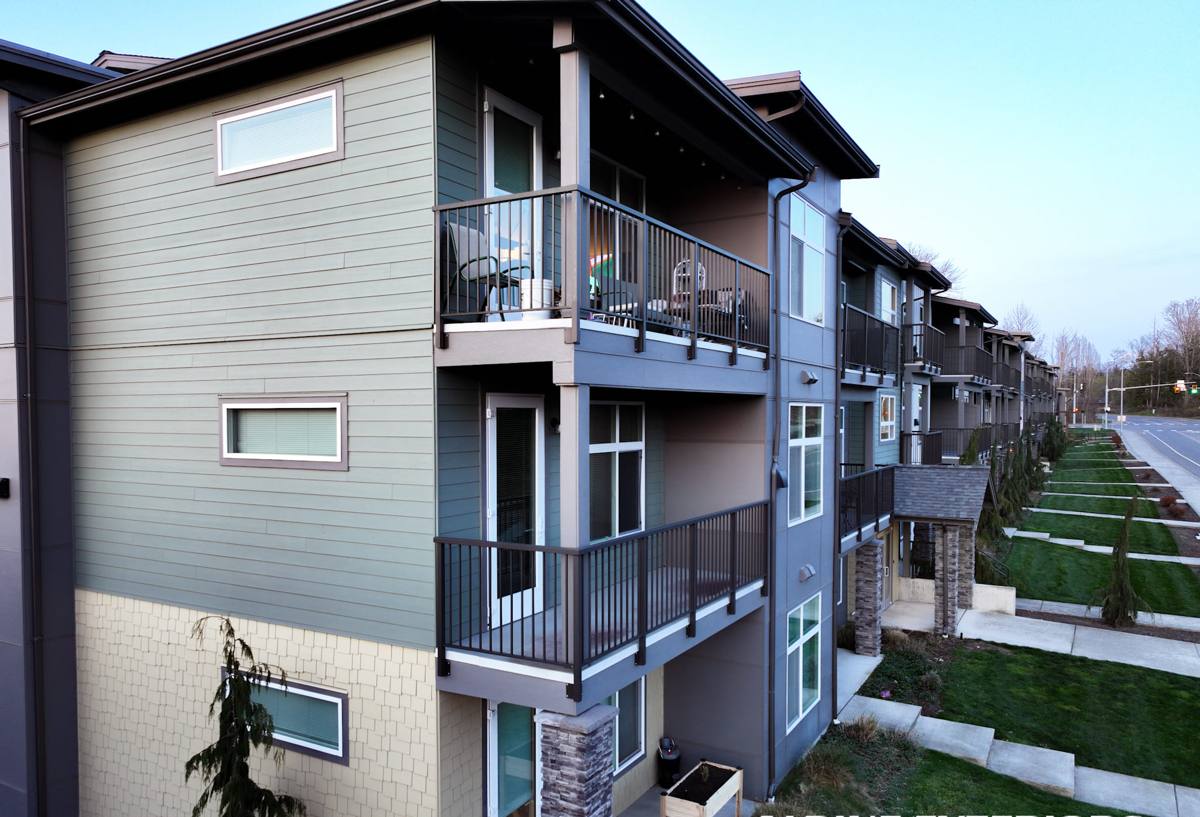
What Wiser Lake Properties Are Up Against
Whatcom County sits inside a marine-influenced climate zone, and that moist air moves inland across the county's lakes and low ground just as it does along the coast. Add a lake's own microclimate — cooler mornings, heavier dew, slower evaporation — and you get siding conditions that are more demanding than a typical dry, open lot.
Shade and Moss
Tree-lined lots around Wiser Lake stay damp longer after rain than open lots do. North-facing walls and anything tucked under a tree canopy can stay wet for days at a time in the fall and winter. That prolonged dampness is exactly what moss and algae need to establish on a wall surface, and it's why homes in wooded, shaded settings tend to show green or black staining years before an open-lot home nearby does.
Driving Rain and Wind Off the Water
Open water creates its own wind patterns, and lakefront and near-lake homes often catch wind-driven rain at angles that push moisture up under laps and around trim that a more sheltered home never sees. That means flashing, caulking, and lap alignment matter more here than they do on a fully protected lot.
Long Moss Season
Between the marine climate and the extra shade near the water, this region's moss season simply runs longer than it does in drier parts of the state. Siding that can't shed moisture and dry out between rain events becomes a long-term host for it.
Why Fiber Cement Is the Right Call for This Environment
We install only James Hardie fiber cement siding — not vinyl, not LP SmartSide, not Cemplank, not Allura, not primed spruce or cedar. That's a deliberate standard, not a default. In a damp, shaded, tree-covered setting like Wiser Lake, the material choice matters more than almost anywhere else in the county.
| Material | Behavior in Damp, Shaded Conditions | Combustibility | Long-Term Maintenance |
|---|---|---|---|
| James Hardie Fiber Cement | Won't rot, swell, or delaminate from sustained moisture; resists moss adhesion better than wood-based products | Non-combustible | Low — factory finish holds color, no repainting cycle |
| Vinyl | Doesn't rot, but traps moisture behind it and can warp or bow with temperature swings; seams offer nowhere for moss to grip but joints can gap | Combustible, can melt/deform | Low, but limited repair options — panels fade and can't be spot-refinished |
| Wood-Based (LP SmartSide, cedar, primed spruce) | Engineered wood strand or solid wood; absorbs moisture at cut edges and fastener points, feeding rot and moss growth in shaded conditions | Combustible | Higher — repainting/resealing cycle, edge sealing, more failure points over time |
| Cemplank / Allura (fiber cement) | Similar base material to Hardie, but product line depth, factory finish options, and climate-specific engineering vary by manufacturer | Non-combustible | Varies by product and finish; we don't install these — see below |
Every product on that list has an argument in its favor somewhere. What we care about is what happens over 15-20 years on a shaded, damp lot, and that's why we standardized on James Hardie. It's engineered specifically for moisture and won't rot, and the ColorPlus factory finish means we're not asking a homeowner to repaint a wall that never fully dries out.
What a Correct Installation Involves Here
Fiber cement is only as good as the install behind it. On a job near Wiser Lake, a few details get extra attention because the consequences of skipping them show up faster in this environment than they would on a dry, open lot.
Clearance and Drainage
Siding needs proper clearance from grade, roof lines, and decks so water has somewhere to go instead of wicking up into the bottom edge of the board. On shaded, slower-drying lots, that clearance is what keeps the bottom courses from staying damp long enough to grow moss or hold moisture against the substrate.
Flashing and Water Management
Every window, door, and horizontal trim transition needs flashing detailed to shed water outward, not just decoratively covered. On a lot that catches wind-driven rain off the lake, a flashing detail that's "close enough" on a sheltered home becomes a leak point here.
Fastening and Lap Alignment
Correct fastener placement and consistent lap exposure keep water moving down and off the wall the way the product is designed to shed it. Inconsistent laps create shadow lines that trap moisture and give algae a place to start.
Caulking Only Where It Belongs
Fiber cement systems are designed to shed water through overlap and flashing, not caulk. Over-caulking a joint that should be left to drain is a common shortcut that traps moisture behind the board instead of letting it out — a bigger problem on a slow-drying, shaded lot than almost anywhere else.
Pre-Install Checklist We Run on Every Wiser Lake Job
- Inspect and repair the water-resistive barrier before a single board goes up
- Confirm proper clearance at grade, roofline, and deck ledger connections
- Flash every window, door, and trim transition to shed water outward
- Set consistent lap exposure across the wall
- Use fasteners and spacing per manufacturer spec for the HZ product line installed
- Caulk only where the manufacturer's install guide calls for it
- Walk the finished wall for gaps, exposed fastener heads, and flashing coverage
James Hardie Product Lines for This Climate
James Hardie engineers its HZ (HardieZone) product lines for specific climate profiles, and homes in this part of Washington fall into the HZ5 category — engineered for wetter, more moisture-exposed regions. On Wiser Lake homes, we typically work with:
- HardiePlank lap siding — the standard horizontal siding profile for most home styles, available in a range of ColorPlus factory finishes
- HardiePanel vertical siding — used for board-and-batten looks or accent sections, common on cabin-style and lake-adjacent homes
- HardieTrim — matched trim boards that don't share the moisture and rot vulnerabilities of wood trim around windows, corners, and fascia
ColorPlus factory-applied finish matters as much as the board profile here. A factory finish is baked on under controlled conditions and backed by its own finish warranty — it holds up to sustained moisture and shade far better than field-applied paint, which is exactly the maintenance burden we're trying to design out of a damp, shaded lot.
Our Process for Wiser Lake Projects
The process is the same discipline whether the home is on open ground or tucked into tree cover near the water — we just pay closer attention to the moisture-related details on a lot like this.
- On-site assessment: we look at grade clearance, shade patterns, existing moss or staining, and the condition of the substrate and trim before quoting anything
- Written scope: a clear plan covering product lines, trim details, flashing approach, and timeline — no verbal promises
- Tear-off and substrate check: old siding comes off and we inspect sheathing for hidden moisture damage before closing the wall back up
- Water-resistive barrier and flashing: corrected or replaced as needed before any new siding goes on
- Installation to manufacturer spec: HZ5-rated Hardie products installed to James Hardie's published guidelines, not shortcuts
- Final walk-through: we review the finished wall with the homeowner and confirm everything matches the written scope
Maintenance on a Shaded Lake Lot
Fiber cement dramatically lowers the maintenance burden compared to wood-based siding, but no siding is entirely maintenance-free on a shaded, moisture-heavy lot. A little seasonal attention goes a long way.
- Rinse siding periodically with a garden hose, focusing on shaded and north-facing walls where moss is most likely to start
- Keep tree branches and shrubs trimmed back from the wall to improve airflow and sun exposure
- Clear gutters each fall so overflow doesn't run down the face of the siding
- Check caulking at trim joints annually and have any cracked sections addressed promptly
- Address any moss or algae early with a gentle wash rather than letting it establish and spread
Why Local Experience in Wiser Lake Matters
A siding crew that's worked lake-adjacent, tree-covered lots in this area knows where water actually goes on a home like this — not just where the plans say it should go. That shows up in small decisions: where extra flashing attention pays off, which walls need a closer look at clearance, how much lap exposure holds up against wind off the water. It's the difference between a siding job that looks right on installation day and one that still looks right in ten years of Whatcom County weather.
If you're planning a siding project near Wiser Lake, we're glad to walk your property, look at your specific shade and moisture conditions, and give you a straightforward, no-pressure estimate — just fill out the form below to get started.