 Lynden Siding
 Roofing in Ferndale Has to Answer to the Weather
Ferndale sits close enough to Bellingham Bay and the Strait of Georgia that salt-laden air is a real factor in how roofing materials age here, not just in the wetter months but year-round. Add in Whatcom County's long stretch of driving rain off the water, heavy tree cover in a lot of Ferndale's older neighborhoods, and a moss season that can run from fall clear through spring, and you've got a climate that is genuinely harder on a roof than most manufacturers' warranty testing accounts for. A new roof installed here needs to be specified and installed with that reality in mind, not just built to a generic code minimum.
This page is specifically about new roof installation for Ferndale homes — what the climate demands, what a correct installation actually includes, and how our process works when we take on a project in this area.
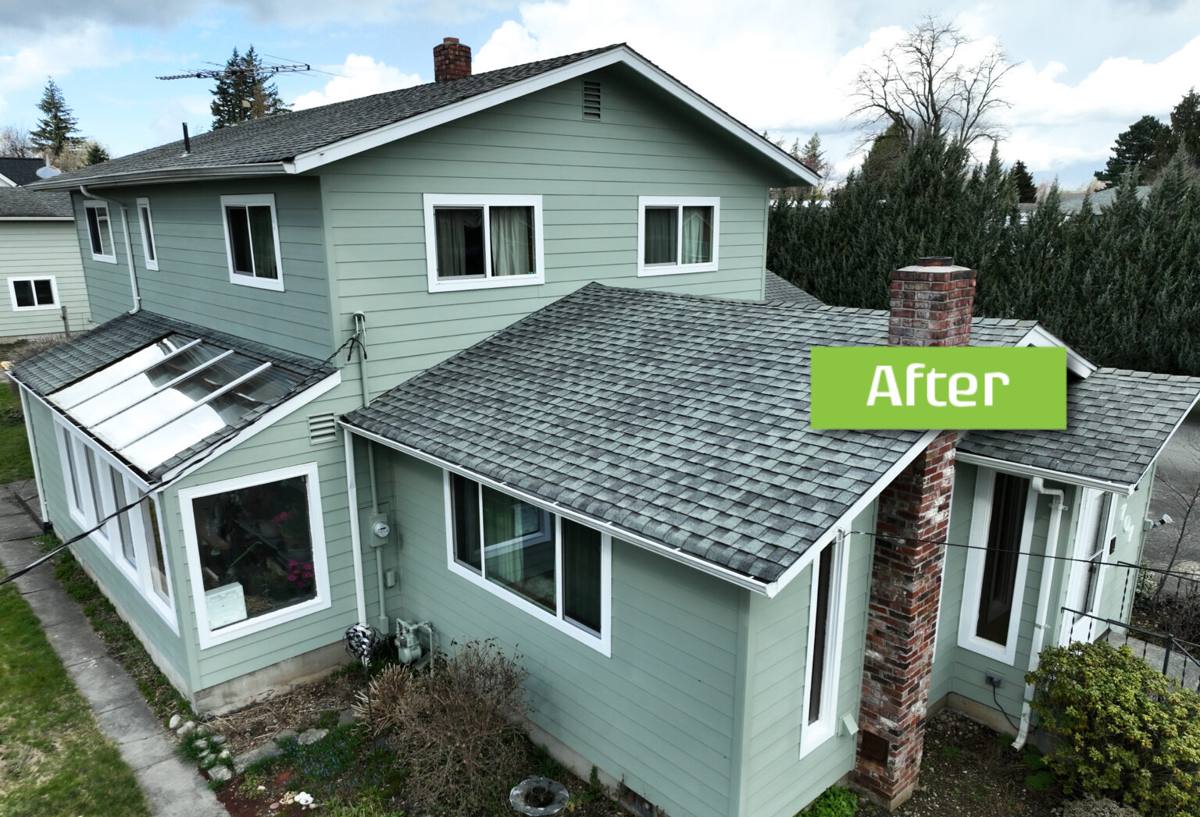
Signs a Ferndale Home Needs a New Roof, Not Another Repair
Not every roofing problem calls for full replacement, but there's a point where patch repairs stop making financial sense. In our experience working Whatcom County roofs, homeowners usually reach that point when they're seeing more than one of the following at once:
- Shingles that are cupping, curling at the edges, or losing granules in visible patches
- Moss that keeps coming back within a season or two of cleaning, especially on north-facing slopes
- Soft spots in the decking you can feel when walking the roof, or sagging visible from the ground
- Repeated leaks around the same valley, chimney, or vent boot even after previous repairs
- A roof that's approaching or past the manufacturer's expected service life for its material and exposure
- Rising interior humidity, condensation on windows, or musty attic smell — signs moisture is getting past the roof assembly
A roof that's failing in one isolated spot is usually a repair. A roof showing several of these signs at once, especially on a home more than 20-25 years old, is usually telling you the underlying materials are done, even if the shingles still look okay from the driveway.
Why Salt Air, Rain, and Moss Change the Math
Salt Air
Homes closer to the water deal with airborne salt that accelerates corrosion on exposed metal — flashing, fasteners, vent caps, and gutter hardware. Standard fasteners and thin-gauge flashing that would hold up fine further inland can start showing corrosion years ahead of schedule this close to the coast. It's a detail that's easy to overlook and expensive to ignore.
Driving Rain
Whatcom County storms don't just fall straight down — wind-driven rain pushes water sideways and upward under laps, edges, and flashings that aren't sealed with that in mind. A roof built for a drier or calmer climate can look fine in a light rain and still leak in a real Ferndale storm.
Moss Season
Shade, moisture, and mild temperatures are exactly what moss wants, and Ferndale has all three for a good chunk of the year. Moss isn't just cosmetic — it holds moisture against the roof surface, lifts shingle edges as it grows, and works its way into laps and fastener penetrations over time. A roof that isn't installed and detailed with moss in mind will need more aggressive (and more frequent) cleaning to stay healthy.
Roofing Materials: How They Hold Up Locally
There's no single "best" roofing material for every home — it depends on the roof's exposure, the home's style, and how much long-term maintenance the homeowner wants to take on. Here's how the common options compare specifically for Whatcom County conditions:
| Material | Performance in Salt Air / Rain | Moss Resistance | Maintenance Burden |
|---|---|---|---|
| Standard asphalt composition shingle | Good with proper flashing and fasteners; budget-conscious choice | Moderate; benefits from algae-resistant granules | Periodic moss/debris removal, especially on shaded slopes |
| Algae-resistant (AR) composition shingle | Good; copper- or zinc-infused granules resist growth longer | Better than standard shingle | Lower than standard shingle, still not maintenance-free |
| Standing seam metal | Excellent when detailed with corrosion-rated fasteners and flashing | Very good; smooth surface sheds moss more easily | Low; occasional debris clearing |
| Synthetic/composite shingle | Good; consistent performance, resists moisture absorption | Good, varies by product | Low to moderate |
We'll walk through which option fits a given roof's slope, sun exposure, and tree cover during the estimate rather than defaulting to one product for every home.
What a Correct New Roof Installation Actually Involves
A new roof is more than shingles nailed to plywood. In this climate, the layers underneath the visible surface do most of the work of keeping a home dry over the next 25-40 years. A correct installation includes:
Deck Inspection and Repair
Every board of decking gets checked once the old roofing is stripped off. Soft, delaminated, or water-stained decking gets replaced before anything new goes down — roofing over bad decking just hides the problem until it fails again.
Ice and Water Shield in Vulnerable Areas
Valleys, eaves, and roof-to-wall transitions get self-adhering waterproof membrane, not just felt. These are the spots where wind-driven rain and ice most commonly force their way under the roofing.
Synthetic Underlayment
A high-quality synthetic underlayment across the full roof gives a second line of defense that performs better in sustained wet weather than older felt products, and holds up better during the install itself if weather rolls in mid-project.
Corrosion-Rated Flashing and Fasteners
Given the salt air exposure this close to the coast, we don't cut corners on metal quality around chimneys, skylights, sidewalls, and vents. This is one of the most common places we see older Ferndale roofs fail early.
Balanced Attic Ventilation
Intake at the eaves and exhaust at the ridge, sized to the attic's actual square footage — not guessed at. Poor ventilation traps moisture, which shortens shingle life and can lead to rot and mold regardless of how good the roofing material is.
Our Installation Process
Every roof is different, but the sequence we follow doesn't change:
- On-site inspection and honest assessment of whether the roof needs full replacement or targeted repair
- Written estimate covering material options, scope, and timeline — no pressure to decide on the spot
- Material selection based on the roof's exposure, slope, and the homeowner's budget and maintenance preferences
- Protection of landscaping, siding, and gutters before tear-off begins
- Complete tear-off and deck inspection, with any damaged decking replaced
- Installation of ice and water shield, underlayment, flashing, and ventilation components
- Roofing material installation to manufacturer specification
- Full site cleanup, including a magnetic sweep for stray fasteners
- Final walkthrough with the homeowner before we consider the job done
Ventilation and Moisture: The Part Homeowners Don't See
A lot of premature roof failures we get called out to inspect in Whatcom County aren't material failures at all — they're ventilation failures. An attic that can't breathe traps humidity underneath the roof deck, which shortens shingle life from below while moss works on it from above. For a Ferndale home, where outdoor humidity is already elevated most of the year, getting intake and exhaust ventilation right isn't optional — it's one of the biggest factors in whether a new roof reaches its full expected lifespan.
Moss Prevention Built Into the Install, Not Left to Chance
We don't treat moss control as an afterthought or a separate service to sell later. Where the roof's slope and shading make moss likely, we discuss zinc or copper strip installation at the ridge during the original install — a passive, low-maintenance way to slow regrowth on shaded and north-facing sections. It won't eliminate the need for periodic cleaning on a heavily treed lot, but it meaningfully reduces how often that cleaning is needed.
Why a Crew That Already Works Ferndale Matters
Roofing crews unfamiliar with this specific stretch of Whatcom County sometimes underestimate how much the coastal exposure and moss pressure here differ from roofing further inland. A crew that regularly works Ferndale and the surrounding Lynden area already knows which details — flashing grade, ventilation sizing, moss prevention — aren't optional extras but standard practice for a roof that's actually going to last in this climate. That local familiarity shows up in fewer callbacks and a roof that performs the way it's supposed to, storm after storm.
If you're weighing a new roof for a Ferndale home, we're glad to take a look and give you a straight answer on condition, options, and timeline. Fill out the form below for a free, no-pressure estimate.