 Lynden Siding
 Windows Built for Acme's Weather, Not Just the Showroom
Acme sits in the stretch of Whatcom County east of Lynden, where the weather off the water and the moisture that settles into the foothills both leave their mark on a house. Homes out here deal with salt-laden air carried in on coastal weather systems, driving rain that comes in sideways during winter storms, and a moss season that can run most of the year on north-facing walls and trim. Windows are one of the first places that combination shows up — as fogged glass, soft sills, drafts you can feel with your hand, and frames that never quite dry out between storms.
"Energy-efficient" gets used loosely in window marketing. For an Acme home, it has to mean something specific: glass and frame performance that actually reduces heating costs through a wet Whatcom County winter, and an installation that keeps water out of the wall assembly for the next twenty-plus years. Both parts matter. A high-performance window installed poorly will leak before it ever pays for itself in energy savings.
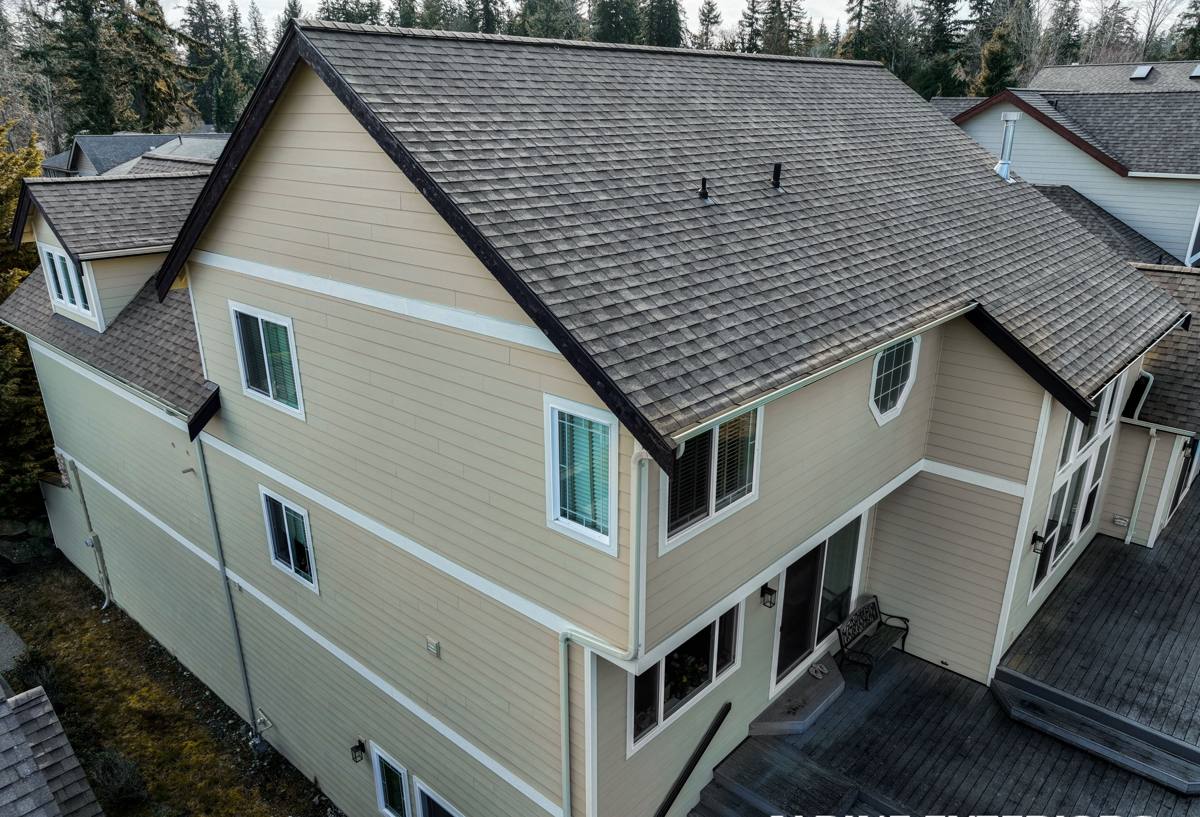
What Driving Rain and Damp Winters Do to Older Windows
Most window failures we see on older Acme homes aren't really about the glass — they're about what's happening at the frame and the flashing underneath it. Wind-driven rain pushes water sideways against the wall, and if the original flashing details weren't built for that (a lot of older builds weren't), water finds its way behind the trim and into the framing over years, not months.
Add in the near-constant humidity and shaded, moss-prone exposures common on this side of the county, and you get a slower but just as damaging problem: wood that stays wet longer than it should, seals that break down faster, and hardware that corrodes. By the time a homeowner notices a soft sill or a window that won't latch cleanly, there's usually already moisture damage in the framing behind it that a simple window swap won't fix on its own.
Common Symptoms We See on Acme Homes
- Condensation or fogging between the panes — the seal has failed and the insulating gas is gone
- Visible gaps or drafts around the frame, especially on the sides that take the worst weather
- Soft or discolored wood at the sill or bottom corners
- Difficulty opening, closing, or locking — frames have swelled, warped, or sagged
- Moss or algae staining on the exterior trim that never fully dries
- Noticeably colder rooms near windows in winter, or higher heating bills without another clear cause
What Actually Makes a Window Energy-Efficient Here
The performance numbers on a window label — U-factor, solar heat gain coefficient, air leakage — mean more in a marine climate like ours than they do somewhere dry and mild. Whatcom County's cool, wet winters put the emphasis on a low U-factor (how well the window resists heat loss) more than on solar heat gain, since we're not fighting intense summer sun the way homes further inland or south are.
Glass Package
Double-pane, low-E glass with an argon gas fill is the standard baseline for this climate and covers most homes well. Triple-pane adds another layer of insulation and can be worth it on north-facing walls, homes near open exposure to wind, or for owners who are especially sensitive to cold spots near glass — but it comes at a real cost premium and added window weight, so it's a case-by-case call rather than an automatic upgrade.
Frame Material
The frame matters as much as the glass in a climate this wet. It has to hold its seal and shape through repeated soak-and-dry cycles without warping, rotting, or corroding. That's the main reason we steer most Acme homeowners toward vinyl or fiberglass frames over painted wood — not because wood windows are bad products, but because they demand a maintenance commitment (regular repainting and caulk inspection) that a lot of busy homeowners can't keep up with in a climate this damp, and a missed maintenance cycle here shows up as rot faster than it would somewhere drier.
Weatherstripping and Hardware
Compression seals and corrosion-resistant hardware matter more here than in a dry climate — cheaper hardware pits and sticks faster when it's damp and salt-tinged air is in the mix for weeks at a stretch.
Frame Material Comparison for This Climate
| Material | Moisture Resistance | Maintenance | Typical Lifespan |
|---|---|---|---|
| Vinyl | Very good — won't rot, low corrosion risk | Low — occasional cleaning | 20–30 years |
| Fiberglass | Excellent — very stable in wet/dry cycling | Low | 30+ years |
| Wood (painted/clad) | Fair — depends entirely on upkeep | High — repainting, caulk checks | Varies widely with maintenance |
| Aluminum | Good structurally, poor thermal performance | Low | 20–30 years |
We don't install every material on this list for every situation. For most Acme homes, vinyl or fiberglass gives the best balance of weather performance and long-term maintenance for the money. Where a homeowner wants a wood-look frame for a specific architectural reason, we'll talk through the maintenance commitment honestly before quoting it.
Signs Your Acme Home Is Ready for New Windows
- Windows feel cold to the touch or you can feel a draft standing near them in winter
- Heating bills have crept up without another explanation
- One or more panes show fogging or a milky haze between the glass layers
- Frames are visibly warped, cracked, or soft at the bottom corners
- You're painting or caulking the same window trim every year or two just to keep water out
- Outside noise (traffic, weather, neighbors) comes through more than it should
If two or more of these sound familiar, it's worth having someone look at the windows individually rather than assuming the whole house needs a full replacement — sometimes it's three or four windows on the weather-exposed side of the house, not all of them.
How We Handle a Window Replacement
1. On-Site Assessment
We look at each window individually — not just the glass, but the sill, the framing behind it, and how water has historically moved (or pooled) around that opening. This tells us whether it's a straight window swap or whether there's framing repair to plan for first.
2. Flashing and Water Management
This is the step that determines whether a window lasts twenty years or five in this climate. Proper flashing tape, correctly lapped house wrap, and a sill pan that sheds water outward are non-negotiable on every install, whether it's one window or twenty. Skipping or rushing this step is the single most common cause of window failures we get called out to fix on other people's work.
3. Installation and Sealing
Windows are set plumb and level, shimmed correctly so they operate smoothly for years, and sealed with materials rated for exterior, wet-climate exposure — not general-purpose caulk that breaks down after a couple of wet seasons.
4. Final Check and Walkthrough
Every window gets operated, checked for square, and inspected for a clean seal inside and out before we consider the job done. We'll walk the finished work with you so you know what was done and what to watch for.
Cost Factors to Plan Around
| Factor | How It Affects Cost |
|---|---|
| Number of windows | Per-window pricing typically drops somewhat as the count on a single job goes up |
| Glass package | Triple-pane and specialty coatings cost more than standard double-pane low-E |
| Frame material | Fiberglass generally costs more upfront than vinyl; both cost less long-term than high-maintenance wood |
| Existing damage | Rotted framing or sill damage found during removal adds repair cost before the new window goes in |
| Window size and type | Large, custom, or non-standard shapes (bay, arched) cost more than standard double-hung or slider sizes |
We'll never quote a job without seeing the actual windows and openings — a phone estimate on window replacement isn't a real number, because so much of the cost depends on what's found once the old window comes out.
Why a Crew That Already Works in Acme Makes a Difference
A window installer who works across Whatcom County regularly already knows how the weather here behaves — which exposures take the worst of the driving rain, how long moss really takes to become a maintenance problem on shaded walls, and what flashing details actually hold up over a wet Pacific Northwest winter rather than just looking right on install day. That's not something you get from a crew that mostly works drier inland climates and treats every job the same way.
It also means we're not guessing at lead times, permitting, or material availability for the area — we know what works here because we've already installed and later inspected windows in Acme and the rest of the Lynden area, and we adjust our approach based on what actually holds up.
If your windows are drafty, fogged, or just past their working life, we'll come take a real look and put together a straightforward, no-pressure estimate — no inflated urgency, just an honest read on what your home needs. Use the form below to get started.