 Lynden Siding
 Building Decks for Blaine's Coastal Conditions
Blaine sits close enough to the water that salt-laden air is a real factor in how a deck ages, not just a talking point. Add in the driving rain that comes off Whatcom County winters and a moss season that can stretch from October well into spring, and you've got a combination that punishes decks built to a generic spec. A deck that would hold up fine in a dry inland climate can start showing fastener corrosion, soft framing, or slick, moss-covered boards within a few seasons out here if it wasn't built with this specific environment in mind.
We build decks for homes in and around Blaine and Lynden regularly, and the difference between a deck that lasts and one that becomes a maintenance headache almost always comes down to decisions made before the first board goes down: material selection, fastener grade, framing details, and drainage. This page walks through what actually matters for a deck built in this part of Whatcom County.
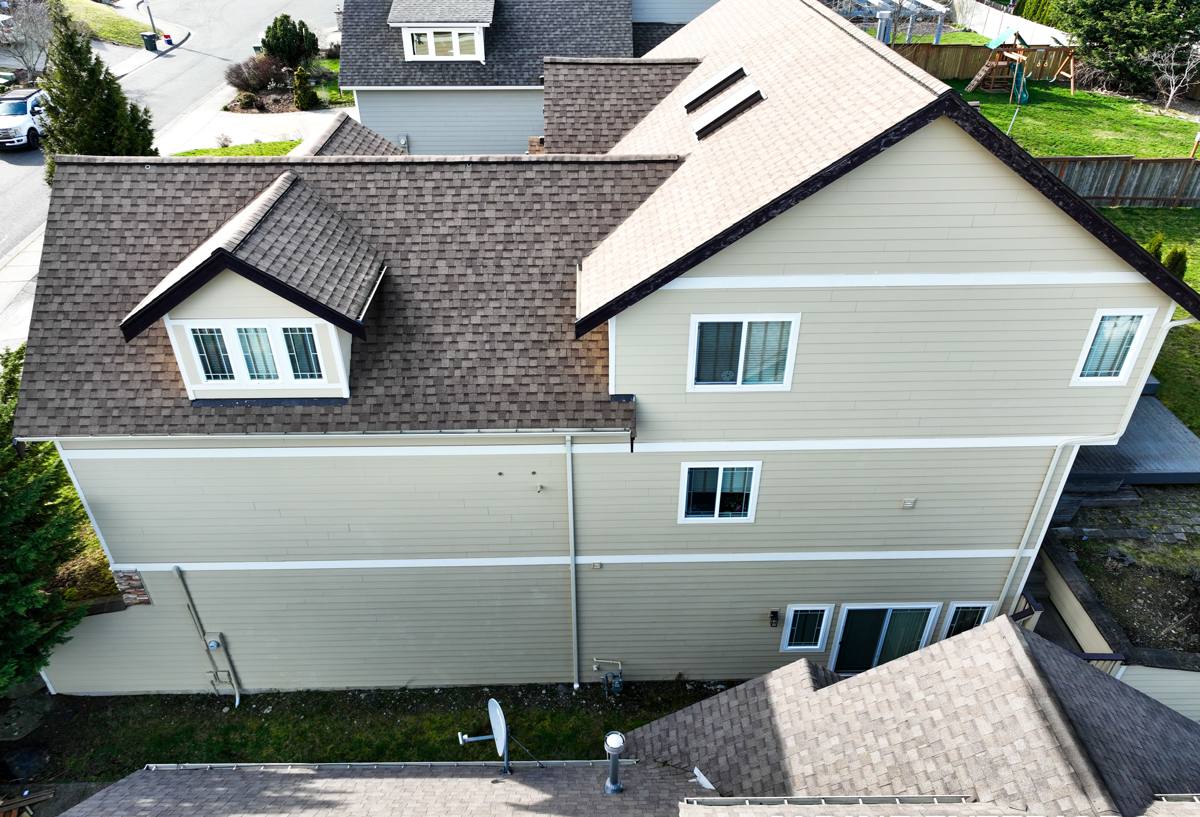
What Salt Air, Rain, and Moss Actually Do to a Deck
Salt Air and Metal Fatigue
Airborne salt accelerates corrosion on anything metal — fasteners, brackets, railing hardware, even the coating on some flashing products. Standard hardware that would last decades elsewhere can start rusting and weakening within a few years this close to the water. Once a fastener corrodes, it loses holding strength long before it looks obviously bad, which is part of why this problem tends to get discovered the hard way.
Driving Rain and Hidden Moisture
Rain that comes in sideways during a windstorm doesn't behave like rain falling straight down. It gets pushed under railings, into ledger connections, and along the underside of decking where standard drainage details assume water only moves downward. Over time this shows up as rot in framing that looked fine from above.
Moss and a Long Wet Season
A deck that stays damp for months at a time grows moss and algae on any surface that holds moisture, and that includes the top of decking boards, not just the shaded north side of a roof. Beyond looking bad, moss growth on a walking surface gets slick and can accelerate surface wear on softer wood species.
Choosing the Right Decking Material for Blaine
There isn't one "correct" decking material for every project — it depends on budget, how much upkeep the homeowner wants to take on, and how exposed the deck is to weather. Here's how the common options actually perform in this climate:
| Material | How It Handles This Climate | Maintenance Reality |
|---|---|---|
| Pressure-treated wood | Affordable, but needs a quality sealer reapplied on a schedule or it will absorb moisture and support moss growth | Highest — annual cleaning and periodic re-sealing |
| Cedar | Naturally more rot-resistant than most softwoods, but still an organic material that will gray and can hold moisture if not finished | Moderate to high — finish maintenance to keep color and protect against moisture |
| Composite decking | Resists moisture absorption and won't rot, though lower-quality composites can still grow surface algae if capping is thin | Low — periodic washing, no sealing or staining |
| PVC / capped polymer decking | Fully sealed surface handles driving rain and salt exposure well; doesn't feed moss the way organic materials can | Lowest — occasional rinse |
For homeowners who want the lowest long-term maintenance in a salt-air, high-moss environment, capped composite or PVC decking is generally our recommendation. For those who want the look and feel of real wood and are comfortable with a sealing schedule, we build plenty of solid wood decks too — the key is being honest about the upkeep that choice requires before the project starts, not after.
A Note on Softwood Decking Without a Finish
We don't recommend leaving pressure-treated or cedar decking unfinished in this climate. Unfinished wood left exposed to sustained rain and salt air weathers unevenly, holds moisture longer, and gives moss more to grip onto. It's not that the wood itself is a bad product — it's that skipping the finish removes the one layer of protection doing the most work.
Framing and Substructure: The Part Nobody Sees
Decking gets all the attention, but the framing underneath is what actually determines how long a deck lasts. In a climate with this much rain, we pay particular attention to:
Joist Protection
Joist tops are one of the most common places rot starts, because water sits in the fastener line where decking is attached. We use joist tape or a comparable protective barrier on framing lap joints to keep moisture from tracking into the wood fibers.
Ledger Board Attachment
Where a deck attaches to the house, proper flashing is non-negotiable. A ledger board that isn't flashed correctly is one of the most common sources of structural rot in decks we're asked to repair or rebuild, and it's a mistake that doesn't show itself until the damage is already done.
Post Bases and Ground Contact
Posts set directly in contact with wet soil or sitting in standing water are a slow-motion failure. We keep post bases elevated off grade and use hardware rated for exterior, ground-adjacent exposure.
Railings, Fasteners, and Hardware That Won't Fail Quietly
Railings take the most direct exposure to driving rain and salt air, and they're also a safety component — this isn't a place to save money with lower-grade hardware. We spec stainless steel or heavy hot-dip galvanized fasteners and connectors for anything exposed to the weather, not the standard zinc-coated hardware that's fine in drier inland climates but corrodes faster here. The cost difference on fasteners is small relative to the whole project; the difference in how long the railing stays solid is not.
Drainage and Moisture Management
Good drainage is less about any single product and more about the whole system working together:
- Decking gapped correctly so water sheds through rather than pooling on the surface
- Ledger flashing that directs water away from the house, not into the connection point
- Joist protection at every fastener penetration point
- Post bases and hardware kept clear of standing water and wet soil contact
- Under-deck drainage considered up front if the space below will be used as living or storage space
Skipping any one of these doesn't cause an immediate problem — it causes a problem in three to five years that costs far more to fix than it would have to build correctly the first time.
Our Process, From Estimate to Finished Deck
We keep the process straightforward and don't push a sales pitch for the most expensive option:
- On-site visit to look at the space, existing structure (if replacing a deck), and any drainage or exposure issues specific to the lot
- Honest material walkthrough — the real trade-offs between wood and composite options for this climate, at your budget
- Written estimate covering material, labor, permitting where required, and a realistic timeline
- Build, with attention to the framing and flashing details that determine whether the deck lasts
- Final walkthrough so you know how to care for whatever material you chose
Maintenance a Blaine Homeowner Should Actually Do
Even a well-built deck needs some ongoing attention in this climate. A simple, realistic maintenance routine:
- Sweep debris off the deck surface regularly, especially in fall when leaves trap moisture against the boards
- Rinse or wash the surface periodically to slow moss and algae buildup before it takes hold
- Check railing hardware annually for early signs of corrosion, especially near the coast-facing side of the home
- Re-seal or re-stain wood decking on the schedule recommended for the specific product used
- Keep gutters and downspouts clear so runoff isn't being directed onto or under the deck
Why a Crew That Already Works Blaine Matters
A contractor who mostly builds decks in drier, inland conditions can still build a structurally sound deck — but they may not default to the fastener grade, flashing details, or material recommendations that this specific combination of salt air, driving rain, and moss actually calls for. We work throughout Whatcom County, including Blaine and Lynden, and we build to the conditions this area actually has rather than a generic regional spec. That means fewer surprises three years in, and a deck that's built to hold up to what this climate actually does to it.
If you're planning a new deck or need to replace one that's showing its age, we're happy to take a look and give you a straightforward, no-pressure estimate. Use the form below to get started.