 Lynden Siding
 Custer Roofs Wear Differently Than Roofs Inland
Custer sits close enough to Whatcom County's saltwater that homes here take on a combination of weather stresses you don't get in a drier, inland climate. Salt-laden marine air off the Salish Sea works into shingle granules and metal fasteners over the years. Driving rain off the water arrives sideways more often than straight down, which means it finds every weak seam, lifted shingle tab, and undersized flashing detail a roof has. And then there's moss season, which around here isn't really a season at all — it's most of the year. Cool, damp, shaded conditions let moss and algae get a foothold on north-facing slopes and anywhere tree cover blocks the sun, and once established it holds moisture against the roofing material long after the rest of the roof has dried out.
None of this means a roof in Custer needs to be exotic or over-built. It means the details that get glossed over on an easy job — ventilation, underlayment choice, flashing, edge protection — are exactly the details that determine whether a roof makes it to 20 years or starts failing at 12. That's the lens we replace roofs through in this area.
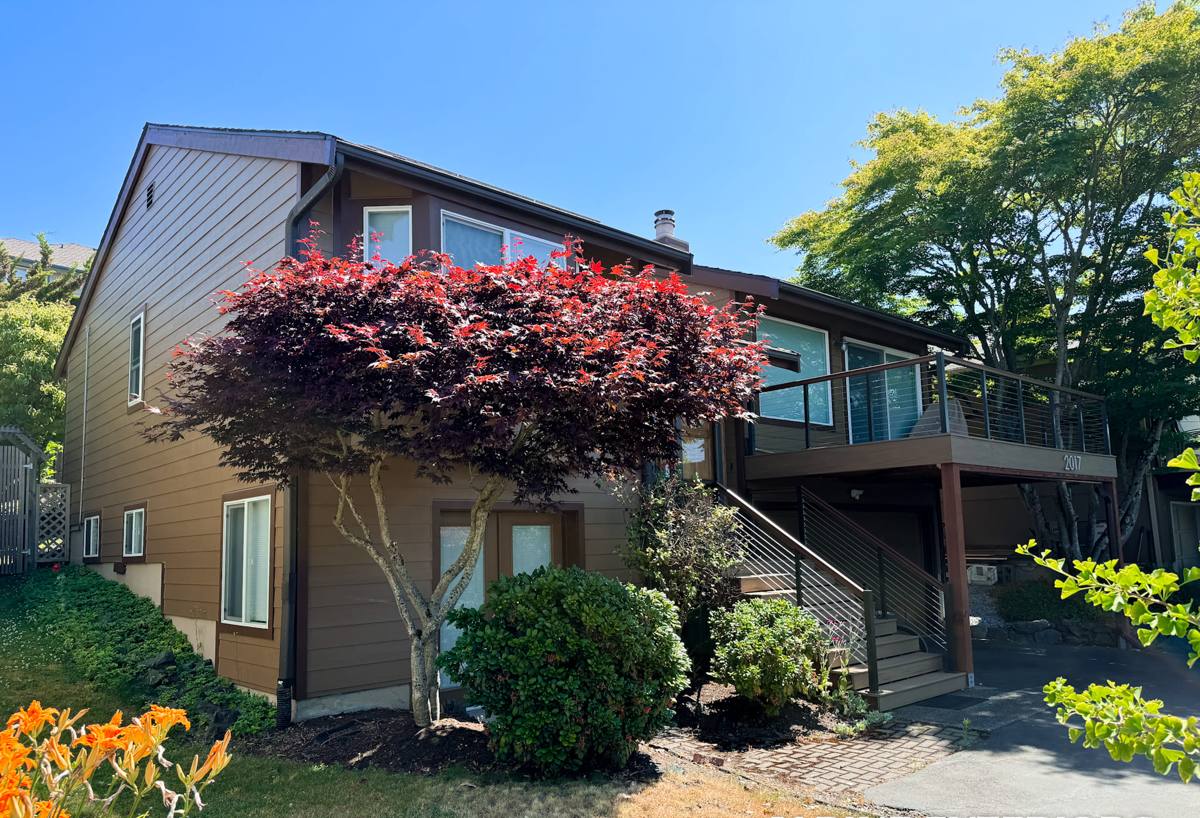
Signs a Custer Roof Has Reached the End of Its Service Life
Roofs rarely fail all at once. They send signals for a year or two before a leak actually shows up inside the house. Homeowners in this area should watch for:
- Granules collecting in gutters or at downspout outlets, which means the shingle's protective surface is wearing thin
- Shingle edges that are cupping, curling, or losing their flat profile, especially on south and west-facing slopes
- Persistent moss or dark algae streaking that comes back within months of cleaning
- Soft spots or slight give underfoot on a walked inspection, which usually points to wet decking below
- Daylight visible through the attic roof boards, or damp insulation near the roof deck
- Flashing around chimneys, skylights, and roof-to-wall transitions that's rusted, lifted, or loosely sealed with old caulk instead of properly formed metal
- A roof that's already had one layer of shingles installed over it and is now approaching 18-20 years old
Any one of these on its own might just need a repair. Several at once, especially on a roof already past 18-20 years, usually means repair costs start climbing faster than replacement makes sense.
What a Correct Roof Replacement Actually Involves
A roof replacement is more than swapping old shingles for new ones. Done right, it's really several separate systems working together, and skipping any one of them is where premature failures come from — especially in a wet, mossy climate.
Tear-Off and Deck Inspection
We remove existing roofing down to the deck rather than layering over it. That's the only way to actually see the plywood or plank sheathing underneath, which is where hidden rot from old leaks or trapped moisture usually shows up. Any soft or delaminated decking gets replaced before anything new goes down — installing new roofing over compromised decking just hides the problem for another few years.
Underlayment and Ice/Water Protection
This is the layer that actually keeps water out if wind-driven rain gets past the shingles, which happens more often here than in calmer inland climates. We use synthetic underlayment across the field of the roof and self-adhered ice-and-water membrane at eaves, valleys, and around every penetration — the spots most exposed to standing water and wind-blown rain.
Ventilation
A roof with poor attic ventilation traps moisture underneath the deck, which speeds up rot and gives moss and mildew a damp environment to spread from below as well as above. Balanced intake at the eaves and exhaust at the ridge keeps air moving and the deck dry, which matters more in a marine climate than almost anywhere else.
Flashing and Edge Detail
Flashing at chimneys, sidewalls, valleys, and skylights is formed and step-flashed in metal, not patched with sealant. Sealant breaks down; properly lapped metal flashing doesn't. Drip edge at the eaves and rakes directs water away from the fascia instead of letting it wick back under the shingles, which is a common source of hidden fascia and soffit rot on older roofs in this area.
Choosing a Roofing Material for This Climate
There's no single "best" roofing material — the right choice depends on the roof's exposure, the home's style, and how much long-term maintenance the owner wants to take on. Here's how the common options compare for a Custer property dealing with salt air, rain, and moss:
| Material | Moss/Algae Resistance | Wind & Rain Performance | Typical Lifespan | Maintenance |
|---|---|---|---|---|
| Standard asphalt composition shingle | Moderate — benefits from algae-resistant granules | Good when properly fastened and flashed | 20-25 years | Periodic moss removal on shaded slopes |
| Architectural (dimensional) shingle | Better — thicker mat sheds moisture faster | Very good; rated for higher wind exposure | 25-30 years | Low; occasional cleaning |
| Metal (standing seam or panel) | Excellent — smooth surface gives moss little to hold onto | Excellent; sheds wind-driven rain well | 40-50+ years | Very low |
| Composite/synthetic shake or slate | Good; varies by product density and coating | Good to very good | 30-50 years | Low to moderate |
For most Custer homes, a heavier architectural shingle with algae-resistant granules is the practical middle ground — meaningfully better moss and wear resistance than a builder-grade shingle, without the upfront cost jump of metal. Metal earns its cost on roofs with heavy tree shade or where the owner wants to essentially stop thinking about the roof for decades. We'll walk through the honest trade-offs for your specific roof rather than pushing one product across the board.
Our Replacement Process
The process is the same whether it's a straightforward gable roof or something with more valleys and dormers — only the timeline scales:
- On-site assessment — we inspect the existing roof, attic ventilation, and decking condition, and measure for an accurate material estimate
- Written estimate — clear scope, material options, and price before any work is scheduled, no surprise add-ons for things we could have caught during inspection
- Material delivery and site protection — landscaping, siding, and driveways get protected before tear-off starts
- Tear-off — old roofing removed down to the deck, with decking inspected as it's exposed
- Deck repair — any soft or damaged sheathing replaced before underlayment goes down
- Underlayment, flashing, and ventilation install — the systems that do the real waterproofing work
- Roofing material installation — shingles, metal, or composite installed to manufacturer spec
- Cleanup and magnetic sweep — job site and yard cleared of debris and stray fasteners
- Final walkthrough — we go over the finished roof and warranty paperwork with you directly
Moss and Ventilation: The Long Game After Installation
A new roof in Custer isn't maintenance-free just because it's new. The same conditions that wore out the old roof are still there — shaded slopes will still grow moss eventually, and gutters will still need clearing so water isn't backing up against the roof edge. What changes with a correctly built roof is how much that maintenance actually matters. Good ventilation and proper flashing mean an occasional moss growth on a shaded slope is a cosmetic issue you clean off once a year, not a moisture problem working its way into the decking. We're happy to talk through a simple annual upkeep routine when the job wraps up — it's a short list, not a burden.
What Drives the Cost of a Roof Replacement
Every roof is priced from its own measurements and conditions, but the same handful of factors move the number up or down on almost every job:
| Factor | Why It Matters |
|---|---|
| Roof size and number of squares | Larger roof area means more material and labor hours |
| Roof pitch and complexity | Steep roofs and multiple valleys/dormers take longer and require more safety setup |
| Layers to remove | A roof with one or two existing layers takes more tear-off time than a single-layer roof |
| Decking condition | Rotted or soft sheathing found during tear-off adds material and labor to replace it |
| Material choice | Standard shingle, architectural shingle, metal, and composite all sit at different price points |
| Access and site conditions | Tree cover, tight driveways, or difficult staging areas affect labor time |
We won't quote a firm number over the phone — accurate pricing needs eyes on the roof and, ideally, a look at the attic. What we can promise is a written estimate that spells out exactly what's included, so there's no guessing later about what the price covers.
Why a Crew That Already Works Custer Matters
Roofing crews that mostly work drier, inland climates sometimes treat ventilation and underlayment as optional upgrades. In Whatcom County's marine climate, they're not optional — they're the difference between a roof that handles decades of salt air and driving rain and one that starts showing moisture problems within a handful of years. Working roofs in and around Custer and Lynden regularly means we're not guessing at how a given material or detail holds up here; we've seen what actually lasts through a full winter of driving rain and what doesn't survive a wet spring on a shaded, north-facing slope. That local track record shapes the recommendations we make, not just the labor we perform.
If your roof is showing its age, or you just want a straight answer on whether repair or replacement makes more sense, we're glad to take a look. Reach out for a free, no-pressure estimate using the form below.