 Lynden Siding
 Roofing in Blaine: A Different Set of Problems Than Inland Whatcom County
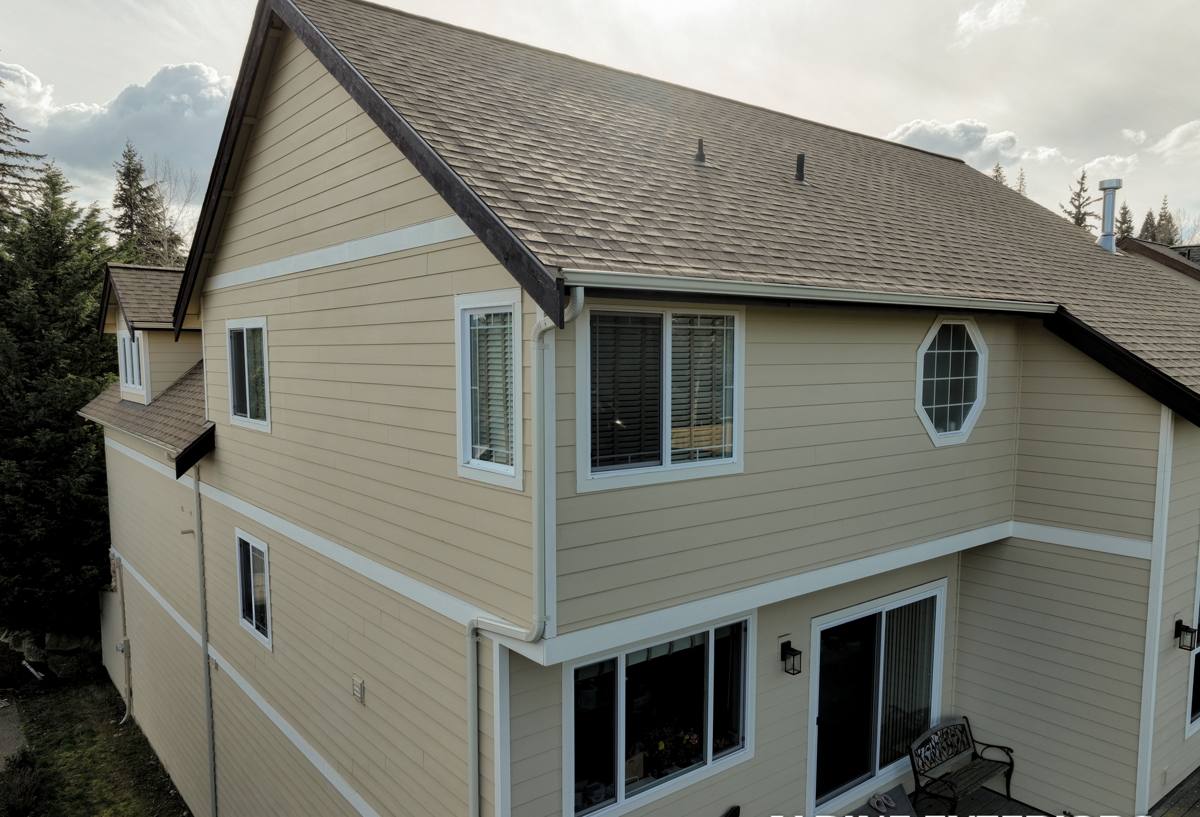
Blaine sits right on Semiahmoo Bay, a few miles from the Canadian border, and that location changes what a roof has to deal with. Homes here take on salt-laden air off the water, wind-driven rain that gets pushed sideways under poorly flashed edges, and a moss season that runs long and heavy thanks to the shade, humidity, and mild temperatures typical of this stretch of Whatcom County. A roofing system that would hold up fine twenty miles inland can wear out faster in Blaine if it wasn't built with these conditions in mind.
That's the lens we bring to every roof replacement we do in Blaine: not a generic tear-off-and-reroof job, but one that accounts for what the coast actually does to roofing materials and details over time.
What Salt Air, Rain, and Moss Actually Do to a Roof
Salt Air and Metal Components
Salt in the air accelerates corrosion on anything metal that isn't properly rated or coated — nails, flashing, vent boots, drip edge, and fasteners. In coastal zones like Blaine, standard electro-galvanized fasteners can start showing rust streaks and weakening well before their inland equivalents. This is one of the most common causes of premature roof failure we see near the water: not the shingles themselves, but the metal that's supposed to be holding everything together and directing water where it needs to go.
Driving Rain and Wind
Blaine gets its share of storms rolling off the water, and wind-driven rain behaves differently than a straight-down downpour. It can work its way sideways and upward under shingle tabs, around chimneys, and through poorly lapped flashing — spots that would stay dry in calmer weather. A roof here needs underlayment and flashing details that assume rain won't always fall straight down.
Moss and Prolonged Moisture
The combination of tree cover, marine humidity, and mild temperatures gives moss a long growing season in this part of Whatcom County. Moss holds moisture directly against the roof surface, works its way under shingle edges as it grows, and can lift tabs enough to let water in. A roof that goes years without moss management can suffer real damage even if the shingles themselves are otherwise in decent shape.
Signs a Blaine Home May Need a Roof Replacement
- Granule loss showing up in gutters or at the base of downspouts
- Shingles that are cupping, curling, or cracking, especially on south- and west-facing slopes
- Moss buildup that keeps returning within a season or two of cleaning
- Rusted or corroded flashing, vent boots, or exposed fasteners
- Soft spots in the decking when walked on, or visible sagging
- Water stains on interior ceilings or in the attic, especially near valleys or chimneys
- A roof approaching or past the manufacturer's expected service life for its material and local conditions
Any one of these on its own might just call for a repair. Several at once, or a roof that's already past the age where coastal conditions typically start taking a toll, is usually a sign it's time to talk about full replacement instead of patching the same problem every year or two.
What a Correct Roof Replacement Looks Like on the Coast
Full Tear-Off, Not a Layover
We remove the existing roofing down to the deck rather than installing new shingles over old ones. That lets us actually inspect the decking, catch any hidden rot or soft spots, and start the new system on a sound, dry base — which matters more in a wet climate than in a dry one, where a hidden problem has less chance to get worse before it's found.
Deck Repair Before Anything Goes Down
Any decking that's soft, delaminated, or water-damaged gets replaced before underlayment goes on. Skipping this step to save time is one of the most common shortcuts that leads to callbacks and premature failure, and it's not one we take.
Underlayment Built for Wind-Driven Rain
Given how rain behaves in a coastal wind event, we pay close attention to underlayment coverage and lap direction, with extra protection at eaves, valleys, and any area prone to ice or water backup. This is the layer that saves a roof when wind pushes water somewhere the shingles alone wouldn't stop.
Corrosion-Resistant Metal and Fasteners
Because salt air accelerates corrosion, we use flashing, drip edge, and fasteners rated for coastal exposure rather than defaulting to standard inland-grade hardware. This is a detail that's easy to skip and hard to notice until it fails years down the line — by which point it usually means water intrusion around chimneys, sidewalls, or vents.
Ventilation That Matches the Climate
Proper intake and exhaust ventilation keeps moisture from building up in the attic, which matters in a humid coastal climate where trapped moisture can lead to rot, mold, and reduced shingle life from the underside. We check existing ventilation as part of every replacement and correct it where it's inadequate.
Material Options and How They Hold Up in Blaine's Climate
There's no single "best" roofing material for every home — it depends on budget, roof pitch, architectural style, and how much long-term maintenance an owner wants to take on. Here's how the common options compare for a coastal Whatcom County home specifically.
| Material | Coastal Durability | Moss Resistance | Maintenance | Typical Lifespan |
|---|---|---|---|---|
| Architectural asphalt shingles | Good with coastal-rated flashing and fasteners | Moderate — benefits from periodic cleaning or treatment | Low to moderate | 25-30 years |
| 3-tab asphalt shingles | Fair — thinner profile, more exposure to wind lift | Lower — less resistant to moss lifting edges | Moderate | 15-20 years |
| Metal roofing (standing seam) | Excellent when properly coated and fastened | High — moss struggles to gain a foothold | Low | 40-plus years |
| Composite/synthetic shingles | Good, resists moisture absorption well | Moderate to high depending on product | Low | 30-50 years |
We're honest about trade-offs rather than pushing one product for every home. Metal costs more up front but demands the least ongoing attention in a moss-prone, salty environment. Architectural asphalt remains a solid, budget-conscious choice as long as the installation details — flashing, fasteners, ventilation — are done right, since those details matter more than the shingle brand in how long a coastal roof actually lasts.
Our Roof Replacement Process
- On-site inspection: We walk the roof and attic, check for soft decking, ventilation issues, and existing damage, and take measurements.
- Honest recommendation: We explain what we found in plain terms — whether a repair would actually hold up or whether replacement is the more sound long-term choice — and walk through material options that fit the home and budget.
- Written estimate: A clear scope of work and price, with no vague allowances or surprise add-ons buried in fine print.
- Scheduling around weather: We plan tear-off and installation around forecasted dry windows where possible, since an open roof deck and coastal rain don't mix.
- Tear-off, deck inspection, and repair: Old roofing comes off, decking gets inspected, and any damaged sections are replaced before moving forward.
- Underlayment, flashing, and material installation: Installed with attention to the coastal details covered above — lap direction, flashing at penetrations, corrosion-resistant hardware.
- Final walkthrough: We review the completed roof with the homeowner, including ventilation and any maintenance recommendations specific to their site — tree cover, shade patterns, and exposure.
Why a Crew That Already Works in Blaine Matters
Roofing crews based well inland don't always think about coastal-grade fasteners, wind-driven rain details, or moss management as a standard part of the job — because most of the roofs they work on don't need it. A crew that regularly works Blaine and the surrounding Whatcom County coastline treats those details as routine, not an upsell. That familiarity shows up in fewer callbacks, flashing that's sized and lapped correctly for sideways rain, and materials chosen with salt exposure already factored in rather than added as an afterthought.
It also means a faster, more accurate read on what a specific roof actually needs. A roof shaded by evergreens on a north-facing slope near the water has a very different risk profile than a sun-exposed roof a few streets away, and knowing the difference from experience — not guesswork — leads to a better recommendation from the first visit.
Maintaining a New Roof in a Coastal Climate
- Have moss growth addressed before it spreads under shingle edges, not after
- Keep gutters and downspouts clear so water doesn't back up under the roof edge
- Trim back overhanging branches to reduce shade, debris buildup, and moss-friendly conditions
- Schedule a periodic visual inspection, especially after major windstorms
- Watch for granule buildup in gutters as an early sign of shingle wear
A well-installed roof still benefits from basic upkeep in this climate. None of it is complicated, but skipping it is how a 30-year roof ends up needing attention at year 15.
Get a Free, No-Pressure Estimate
If your Blaine roof is showing its age, dealing with recurring moss, or you're just not sure whether it's a repair or a replacement situation, we're happy to take a look and give you a straight answer. Use the form below to request a free estimate — no pressure, no obligation, just an honest assessment of what your roof actually needs.