 Lynden Siding
 Birch Bay's Coastal Climate Is Hard on Siding
Birch Bay sits right on the water, and that changes what "normal wear" looks like on a house. Homes a few miles inland in Lynden or Everson deal with plenty of moisture, but Birch Bay properties get the added combination of salt-laden air, wind-driven rain coming straight off the Strait of Georgia, and a moss season that runs long on north-facing walls and anything shaded by trees. Siding that would hold up fine in a drier, more sheltered part of Whatcom County can show damage years earlier out here.
Salt air is corrosive to exposed fasteners, trim flashing, and any metal components tied into the siding system. Driving rain doesn't just wet the surface of the wall — on a windy day it gets pushed sideways and upward, finding its way into laps, seams, and butt joints that would stay dry in a calm rain. And moss doesn't just look bad; it holds moisture against the siding surface for weeks at a time, which is exactly the condition that rots wood-based products and stains and degrades paint film on anything not built for it.
None of this means Birch Bay is a bad place to own a home — it means siding repair here has to account for conditions that a generic repair approach ignores.
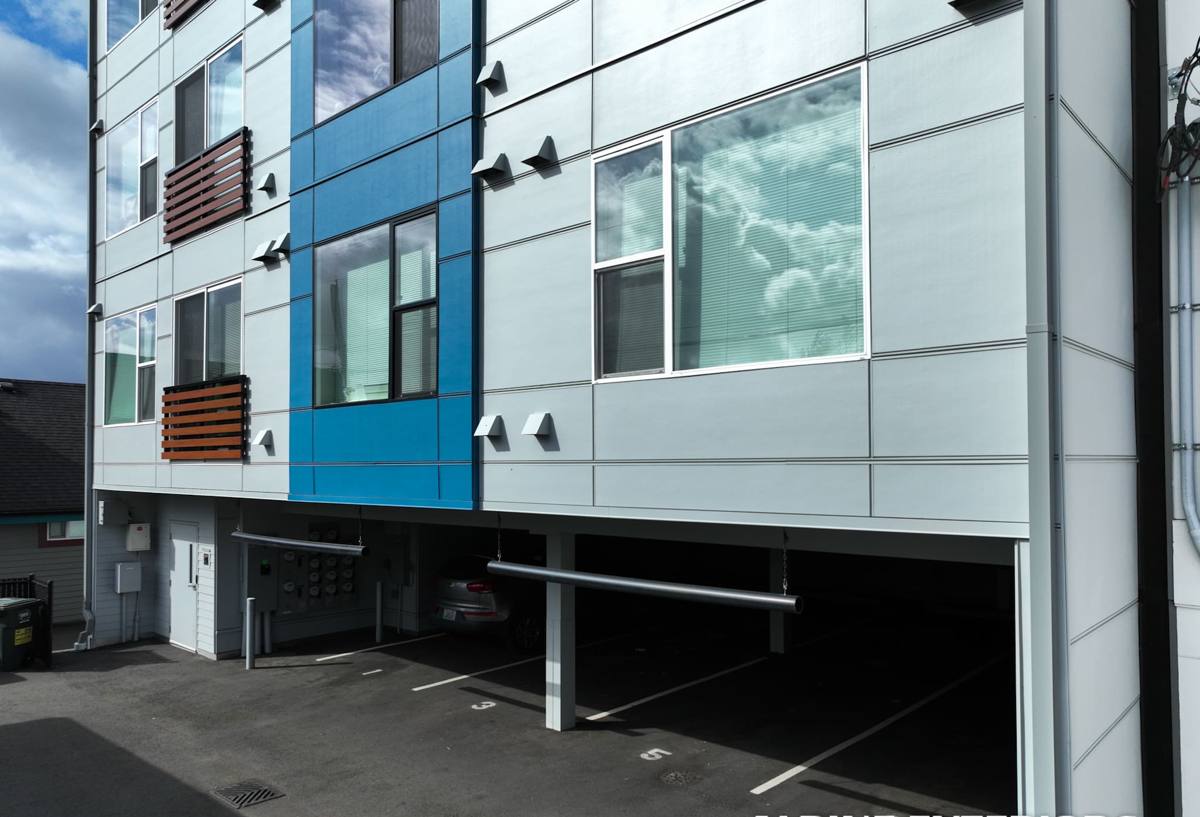
Signs a Birch Bay Home Needs Siding Repair
Some damage is obvious. Some isn't visible until you know what to look for. A homeowner doing a walk-around should check for:
- Soft or spongy spots when you press on siding, especially near the bottom courses and around windows
- Visible cracking, splitting, or buckling panels
- Paint that's peeling, bubbling, or chalking heavily in patches rather than evenly across the wall
- Dark streaking or green/black growth that keeps coming back after cleaning
- Gaps opening up at seams, corners, or where siding meets trim, window frames, or the foundation
- Rust bleeding from fastener heads or trim flashing
- Warping or gapping boards that used to sit flat
- Interior clues — a musty smell, a damp spot on drywall, or peeling interior paint on an exterior wall
Any one of these can be minor. Several together, especially on the side of the house that faces the water or prevailing wind, usually means moisture has been getting behind the siding for a while.
Why Small Problems Don't Stay Small Here
In a drier climate, a small gap or a hairline crack might sit there for years without causing real damage. In Birch Bay's salt air and frequent rain, that same opening is a path for moisture intrusion nearly year-round. Once water gets behind the siding, it's working on the sheathing, the house wrap, and potentially the framing — none of which are cheap to fix once they're compromised. Catching it while it's still a siding-level repair, not a structural one, is the whole game.
What Causes Most Siding Damage Here
Salt Air and Corrosion
Airborne salt accelerates corrosion of exposed nail heads, screws, and any unprotected metal flashing. Over time this shows up as rust streaks, weakened fastener holds, and trim that fails before the field siding does.
Wind-Driven Rain
Birch Bay's exposure means rain regularly arrives at an angle instead of falling straight down. That pushes water into laps and joints that a standard installation assumes will only see gravity-fed water, which is why correct flashing and overlap detailing matter more here than in more sheltered spots.
Moss and Sustained Moisture
Whatcom County's long wet season, combined with shade from mature trees common in this area, keeps north and east-facing walls damp for extended stretches. Moss and algae thrive in that environment, and the moisture they trap accelerates rot in wood-based siding and degrades caulking and paint film on other materials.
Repair Approach Varies by Siding Material
What a "correct repair" looks like depends heavily on what's already on the house. Here's how the common materials in this area typically hold up and repair:
| Material | Common Failure Mode Here | Repair Difficulty |
|---|---|---|
| Vinyl siding | Cracking in cold snaps, warping near heat sources, color fade | Panels snap-lock in, but exact color/profile matches get harder to find as products age out |
| Cedar / wood siding | Rot at butt joints and bottom courses, moss growth, paint failure | Labor-intensive; often requires cutting back to sound wood and treating exposed areas |
| Primed spruce / engineered wood | Swelling and edge deterioration if the factory seal is compromised | Damaged sections generally need full replacement, not patching |
| James Hardie fiber cement | Caulk and paint maintenance at joints; the board itself resists moisture and rot | Panel replacement is straightforward when ColorPlus finish is properly matched |
We repair what's already on your home — we're not going to tell you your existing siding needs to be torn off for a small patch job. But when a repair grows into a larger section replacement, or when we're asked what to install for a full re-side, we only install James Hardie fiber cement. More on why below.
What a Correct Repair Actually Involves
A repair that just covers the visible damage without addressing the cause tends to fail again within a season or two, especially in this climate. A correct repair means:
- Diagnosing the actual moisture path — not just patching where the damage is visible, but tracing back to where water is actually getting in
- Checking the house wrap and sheathing behind the removed siding for hidden rot or staining before closing the wall back up
- Matching material and profile as closely as possible so the repair doesn't stand out or create a new water-shedding problem
- Re-flashing any trim, window, or penetration point involved in the repair area, not just re-caulking over old flashing
- Proper fastener placement and sealing to resist the salt-air corrosion that caused problems in the first place
- Finish work — paint or factory-finish touch-up that's color-matched and applied correctly so the repair blends in
Spot Repairs vs. Full Section Replacement
Not every job needs to become bigger than it is. A single cracked panel or a small area of rot at one corner is usually a contained repair. But if we find moisture damage has spread along a wall, or if the underlying material is failing broadly (common with older wood siding or aging engineered wood products), patching individual spots is a short-term fix. We'll tell you honestly which situation you're in rather than upselling a full re-side you don't need — or, just as important, patching something that's going to fail again in a year.
Our Birch Bay Repair Process
Because we work throughout Whatcom County, including Birch Bay regularly, our process is built around what actually causes failures out here:
- Inspection: We walk the exterior, checking not just the obvious damage but the areas most exposed to wind-driven rain and prevailing weather
- Moisture check: Where we suspect intrusion, we check behind the siding before quoting the scope of work — no guessing
- Clear scope and pricing: You get a straight explanation of what's damaged, what's causing it, and what it'll take to fix correctly
- Repair execution: Removal of damaged material, inspection and repair of anything underneath, proper flashing and fastening, and installation of matched or replacement siding
- Finish and cleanup: Paint or factory-finish matching so the repair looks intentional, not patched, and a full cleanup of debris and old material
Why James Hardie Matters When Repairs Turn Into Replacement
When a repair area grows large enough that full section or full-wall replacement makes more sense than patching, we install James Hardie fiber cement — and only James Hardie. It's non-combustible, engineered for wet Pacific Northwest climates through Hardie's HZ5 product line, and finished with the factory ColorPlus system, which holds color and resists the fading and peeling that field-applied paint struggles with in salt air. It also carries a strong transferable warranty, which matters if you ever sell the home.
We don't install LP SmartSide, vinyl, Cemplank, Allura, or primed wood siding. That's a standard we hold to across every job, not a sales pitch specific to this page — we've made the call that fiber cement from Hardie gives Whatcom County homeowners the best combination of moisture resistance, fire safety, and long-term finish durability for what this coastline throws at a house.
Why Hiring a Crew That Already Works Birch Bay Matters
A contractor unfamiliar with this specific stretch of coastline might treat a Birch Bay repair the same as one in a sheltered inland neighborhood — using standard flashing details, standard fastener choices, and skipping the moisture check that this climate actually demands. That approach might hold up fine in some parts of the county and fail within a year here. A crew that regularly works Birch Bay knows which walls take the worst of the wind-driven rain, understands how quickly moss reestablishes itself in the shaded, moisture-heavy pockets common to the area, and builds the repair accordingly.
What Affects the Cost of a Repair
| Factor | Why It Matters |
|---|---|
| Extent of hidden moisture damage | Damage behind the siding (sheathing, framing) adds cost beyond the visible repair |
| Material match availability | Older or discontinued siding profiles can be harder and pricier to match than repairing with current Hardie products |
| Accessibility | Second-story walls, tight side yards, or areas requiring staging cost more in labor |
| Scope: spot repair vs. section replacement | A larger contiguous replacement is often more cost-effective per square foot than several scattered patches |
| Underlying cause | Fixing a flashing or drainage issue at the source prevents paying for the same repair again in a few years |
We'll walk you through these factors specifically for your home rather than quoting a flat number sight-unseen — every repair situation in Birch Bay is a little different depending on the wall's exposure and the age and type of existing siding.
If you're seeing damage, staining, or soft spots on your Birch Bay home's siding, we're happy to take a look and give you a straightforward, no-pressure estimate on what it'll take to fix it right. Use the form below to get started.