 Lynden Siding
 Asphalt Shingle Roofing Built for Maple Falls Conditions
Maple Falls sits up against the foothills of the North Cascades, in the shadow of heavier tree cover and higher rainfall totals than you'll find closer to town. That combination of shade, moisture, and driving rain off the mountains is hard on a roof in ways that don't show up on a spec sheet. An asphalt shingle roof that's properly installed and detailed for this specific environment will outlast one that was put on the same way as a roof in a drier, more open part of Whatcom County. That difference in approach is what this page is about.
We're a Lynden-based crew, and Maple Falls is part of our regular service area — not a place we drive out to once a season. That matters more than it sounds like it should, because roofing problems here tend to be seasonal and cumulative. A crew that only sees a property once doesn't build the pattern recognition needed to catch trouble early.
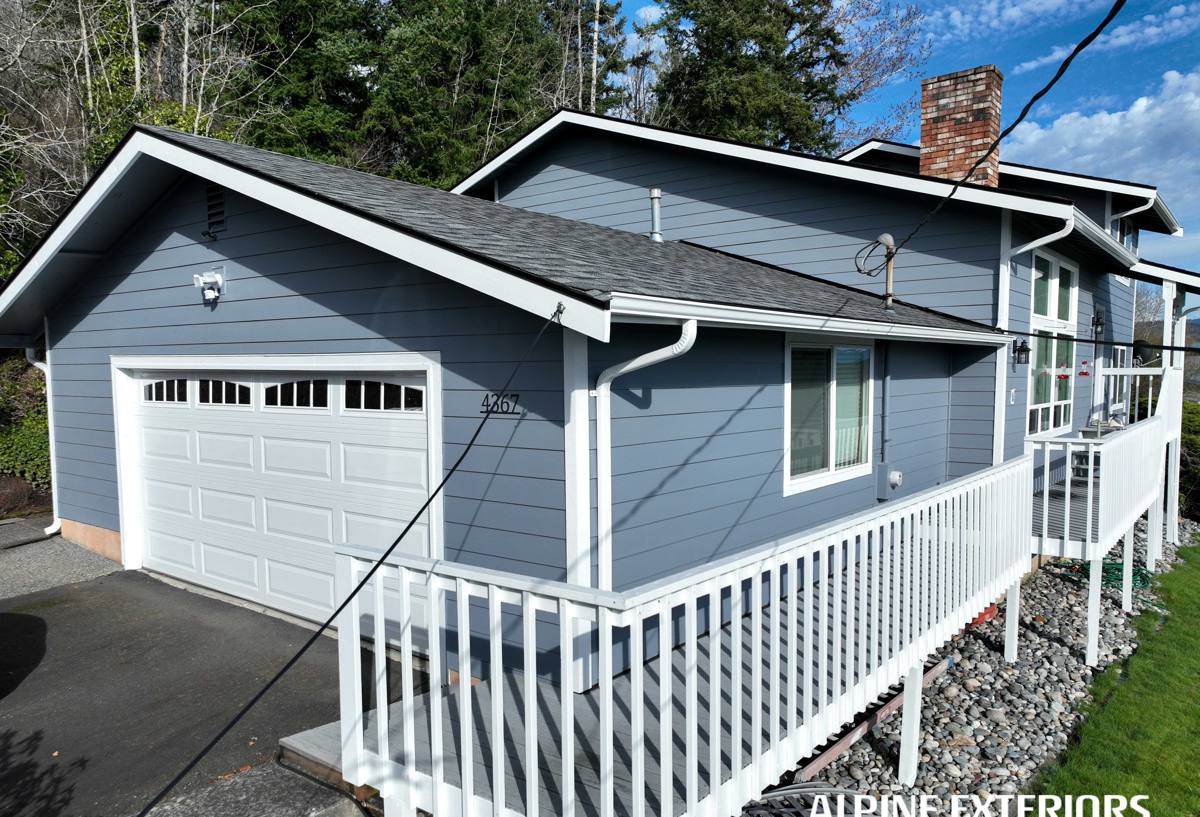
Why the Local Climate Changes the Job
Three things define roofing conditions around Maple Falls: shade, sustained rainfall, and a long moss season. None of them are dramatic on their own, but together they change what "correct installation" actually means.
Heavy Tree Cover and Shade
Homes tucked under fir and cedar canopy stay damp longer after a storm than homes in open sun. That extended dry-down time is exactly what moss, moss, and algae need to establish. Once moss gets a foothold under shingle tabs, it lifts them slightly and holds moisture against the mat, which shortens the life of the shingle regardless of the manufacturer's rated lifespan.
Driving Rain
Storms moving through this part of Whatcom County often come with wind-driven rain rather than straight-down rain. That matters at every edge, valley, and penetration on the roof, because wind-driven water finds its way sideways and upward under improperly lapped materials in a way that calm rain never will.
A Long Moss Season
Between the shade and the moisture, moss doesn't just show up in late winter here — it can be active for most of the year in the shadiest sections of a roof, particularly north-facing slopes and areas near overhanging branches.
What a Correct Installation Looks Like Here
The shingle product itself matters less than the details underneath and around it. We treat the following as non-negotiable on every Maple Falls roof, regardless of budget tier:
- Ice-and-water shield membrane at eaves, valleys, and around penetrations — not just where code requires it, but everywhere sustained moisture is likely to sit
- Synthetic underlayment across the full deck, chosen for water resistance rather than the cheapest code-minimum felt
- Proper starter strip and drip edge at every eave and rake, so wind-driven rain can't get up and under the first course
- Balanced intake and exhaust ventilation, sized to the actual attic, not a generic ridge vent dropped on without checking soffit intake
- Step flashing and counter-flashing at every wall intersection and chimney, replaced rather than reused
- Nail placement and count that meets or exceeds manufacturer specification for the wind zone
Skipping any one of these doesn't usually cause an immediate leak. It shows up two, five, or ten years later as premature granule loss, soft decking, or a slow leak that's already done interior damage by the time it's noticed. That delayed timeline is exactly why it pays to get it right the first time rather than treat these as optional upgrades.
Ventilation: The Detail Most Often Skipped
Shaded, moist properties need attic ventilation more than sunny ones, not less — trapped heat and humidity in the attic accelerate shingle aging from underneath, which is invisible from the ground and easy to miss during a quick inspection. We check soffit intake and ridge or gable exhaust as part of every estimate, because a beautiful new shingle roof over a poorly ventilated attic will underperform its warranty regardless of how well the top layer was installed.
How We Handle Moss, Debris, and Overhanging Trees
We can't control the tree canopy on a Maple Falls lot, and honestly, we wouldn't want to — it's part of what makes the area what it is. What we can control is how the roof is built and maintained to live with it:
- Wider, properly lapped valley metal in shaded valleys where debris and moss tend to collect
- Recommendations on gutter and debris clearing frequency based on how much overhang a specific roof deals with
- Honest guidance on moss treatment options that won't strip granules or void shingle warranties
- Flagging branches that overhang closely enough to cause abrasion damage over time, so the homeowner can decide on trimming
Moss Removal: What We Recommend and What We Avoid
Pressure washing a shingle roof is one of the fastest ways to strip granules and shorten its life, and we won't do it or recommend it. Zinc or copper strips near the ridge, combined with gentle brushing and low-pressure rinsing on a schedule, are the standard we hold ourselves to for moss control on shaded roofs like the ones common in Maple Falls.
Our Process, Start to Finish
- On-site inspection — we get on the roof, check the decking, flashing, ventilation, and shingle condition, and look at how the specific lot's shade and drainage pattern affects the roof
- Written estimate — a clear scope of work and price, with any deck repair or ventilation upgrades called out separately so there are no surprises
- Material selection — we walk through shingle class, color, and warranty options suited to the shade and moisture conditions of the specific property
- Tear-off and deck inspection — old material comes off, decking is inspected and any soft or damaged sheathing is replaced before anything new goes down
- Underlayment and flashing — ice-and-water shield, synthetic underlayment, and new flashing installed to the standards above
- Shingle installation — installed to manufacturer nailing and exposure specs for the local wind zone
- Ventilation check — intake and exhaust balance verified, corrected if needed
- Final walk-through — cleanup, debris haul-away, and a review of the completed work with the homeowner
Cost Factors on a Maple Falls Roof
Every roof is priced on its own specifics, but the factors below are the ones that most often move the number up or down on properties in this area:
| Factor | Why It Affects Price |
|---|---|
| Roof pitch and access | Steeper roofs and limited driveway/equipment access take more labor time and safety setup |
| Existing layers | Tear-off of multiple old layers costs more than a single-layer tear-off |
| Deck condition | Rot or soft sheathing found under old shingles requires replacement before new roofing goes down |
| Valley and penetration count | More valleys, skylights, and vent penetrations mean more flashing labor and material |
| Ventilation upgrades | Adding or correcting intake/exhaust venting is a smaller add-on cost that pays off in shingle life |
| Shingle class chosen | Standard three-tab, architectural, and impact-rated shingles carry different material costs and warranty lengths |
Signs a Maple Falls Roof Needs Attention
A few things we watch for that tend to show up earlier here than in drier parts of the county:
- Moss growth concentrated on north-facing or heavily shaded slopes
- Granules collecting in gutters or at downspout outlets
- Curling or lifted shingle tabs, especially near valleys
- Dark streaking or staining that doesn't wash off with rain
- Soft spots or slight sag felt when walking the roof
- Interior ceiling stains that appear only during heavy, wind-driven storms
Catching any of these early is almost always cheaper than waiting for a leak to show up inside the house.
Why a Local Crew Matters for This Job
We work throughout Lynden and the surrounding Whatcom County communities, including Maple Falls, on a regular basis. That means we've seen how roofs in this specific setting age over time, not just how they look brand new. It also means if something needs a follow-up visit — a flashing detail to recheck after the first hard rain of the season, a gutter that needs clearing before winter — we're not making a special trip from across the county to get to you.
Roofing is also a licensed, permitted trade in Washington for good reason: it's the single biggest weatherproofing system on a house, and a poor install is expensive to unwind. When you're vetting any contractor for this kind of work, confirm active licensing and insurance, ask for a written scope of work, and get clarity on what warranty covers workmanship versus what the manufacturer covers on materials. Those three things tell you more about a contractor than any sales pitch will.
Get a Straight Answer on Your Roof
If you're dealing with moss buildup, curling shingles, or just want an honest read on how much life is left in a Maple Falls roof, we're happy to take a look. We'll give you a clear, no-pressure estimate and tell you what we'd actually do if it were our own house — request a free estimate using the form below.