 Lynden Siding
 Deck Repair in Aldergrove, BC
Aldergrove sits in that stretch of the Pacific Northwest where a deck rarely fails because of one big problem. It fails because of a dozen small ones that nobody dealt with for a few years running. Damp air off the coast, long stretches of driving rain, and a moss season that seems to start earlier every fall all work on wood and fasteners the same way, slowly and quietly, until a board flexes underfoot or a railing post wiggles more than it should. We repair decks in Aldergrove and the surrounding Fraser Valley on a regular basis, and the patterns we see are consistent enough that we can usually tell you what's wrong before we pull a single board.
This page is about deck repair specifically, not full rebuilds and not new construction. Most decks we're called out to see don't need to be torn out. They need the right sections replaced, the structure underneath checked and corrected, and the fasteners and flashing brought up to a standard that will actually hold against this region's weather instead of just looking fine for another season.
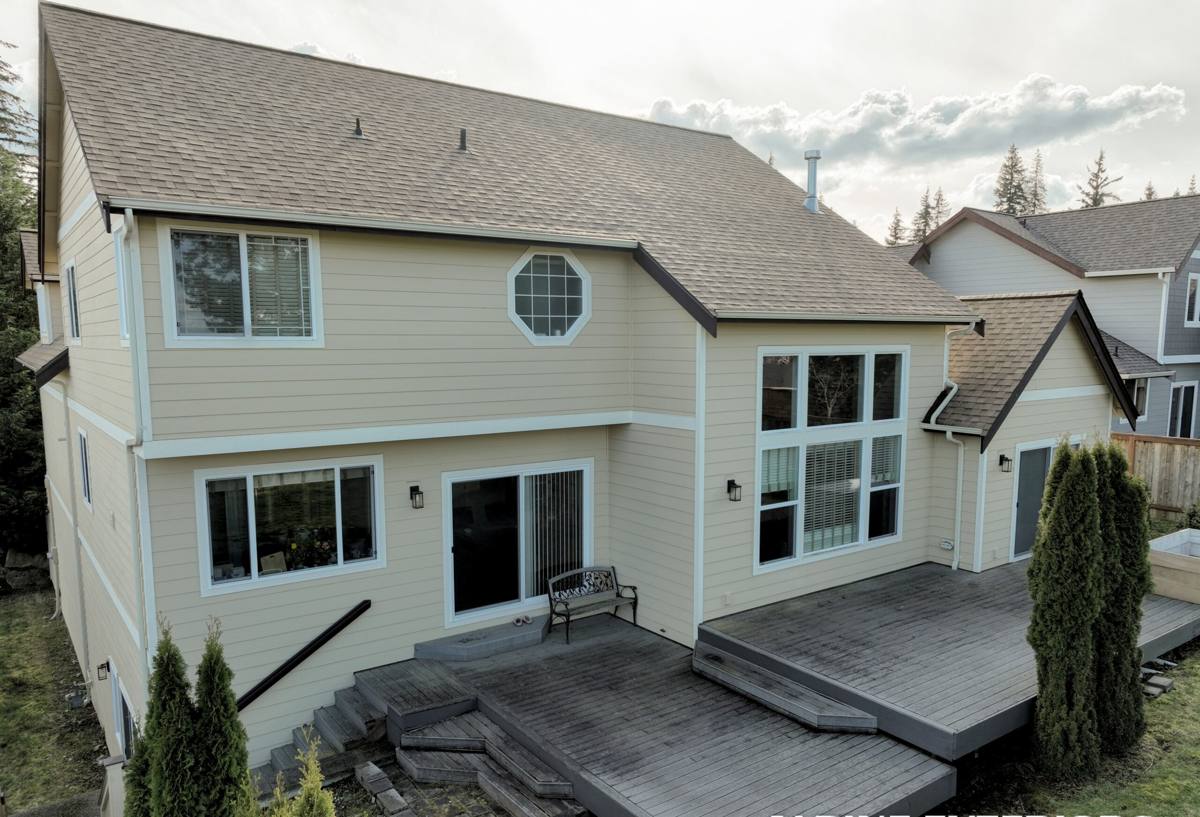
What This Climate Actually Does to a Deck
Moss and Algae
Shaded decks, north-facing decks, and anything under overhanging trees stay damp for days after a rain in this climate. Moss and algae take hold on the decking surface first, but the real damage happens underneath — trapped moisture sits against the wood fibers and keeps them wet far longer than the surface suggests. By the time moss is visible, the board underneath it has often been holding water for a full season already.
Driving Rain and the Ledger Board
Wind-driven rain doesn't fall straight down here, it gets pushed sideways into ledger connections, stair stringers, and any spot where the deck meets the house. The ledger board — where the deck attaches to the structure — is the single most important connection on the whole deck, and it's also the one most likely to be hiding rot because it's the hardest to inspect without pulling siding or decking back.
Freeze-Thaw Cycling
Whatcom County and the Fraser Valley don't get brutal winters, but they get enough freeze-thaw swings to matter. Water that's worked its way into a crack, a screw hole, or a joint will expand when it freezes and widen that opening a little more each time. Over a few winters, a hairline crack becomes a split board.
Signs Your Deck Needs Repair
Most homeowners call us after noticing one of these. Any single item on its own might be minor — several together usually means it's time for an inspection.
- Boards that feel spongy, springy, or noticeably softer underfoot in one area
- Railings or posts that move or wobble when pushed
- Visible gaps, cupping, or cracking in the decking boards
- Dark staining or a persistent musty smell near the ledger or under the deck
- Moss or algae that keeps coming back within weeks of cleaning
- Fasteners that are rusted, popped up, or stripped out
- Stairs that feel less solid than the deck surface itself
- Visible daylight or gaps where the deck meets the house
What a Correct Repair Actually Involves
A repair that's done right starts below the decking, not on top of it. Replacing worn boards without checking what's underneath just resets the clock on the same problem.
Structure First
We check joists, beams, and posts for soft spots, splitting, and any sign of moisture trapped against the wood. Joists near the ledger and along the outer rim take the worst of it in this climate, since they collect runoff other parts of the deck shed off.
The Ledger Connection
If there's any question about the ledger board or its flashing, we pull back enough decking or siding to actually look at it rather than guessing. A ledger that's failing is a safety issue, not a cosmetic one, and it's not something to patch around.
Fasteners and Hardware
Old nails and undersized screws are one of the most common failure points we find. We use corrosion-resistant structural screws and connectors rated for exterior, treated-lumber contact — hardware that matches what's already there is only acceptable if what's already there was correct to begin with.
Decking and Railings
Individual boards get replaced to match the existing material where that makes sense, or we'll talk through swapping a chronically damp section to a different board type if wood-on-wood moss buildup has been a repeat problem. Railings get the same structural check as the deck itself — a post that's rotted at the base is a repair, not a cosmetic touch-up.
Repair vs. Replacement: How We Make That Call
| Factor | Usually a Repair | Usually Points to Rebuild |
|---|---|---|
| Structural framing | Solid, isolated soft spots | Rot at multiple joists or the ledger itself |
| Age of deck | Under 15–20 years | Original construction predates current code |
| Extent of damage | Localized to one area or side | Spread across most of the surface |
| Railings/stairs | Solid, just loose hardware | Posts rotted at the base, undersized originally |
| Cost to fix | Well under half of rebuild cost | Approaching rebuild cost anyway |
We'll always tell you honestly which side of that table your deck falls on. A deck that's 80% sound doesn't need to come down because one section is bad — but a deck that's rotted through in three unrelated spots is telling you something about how it was built, and throwing more patches at it isn't a good use of your money.
Our Process
- Inspection: We walk the whole deck, get underneath it where possible, and check the ledger, framing, fasteners, and surface condition together — not just the part you called about.
- Honest scope and quote: You get a clear breakdown of what's actually wrong, what's optional, and what isn't. No pressure to upsize into a full rebuild if the deck doesn't need one.
- Repair work: Structural fixes happen first, then decking, then railings and finish details. We match materials where it makes sense and flag anything we think should be upgraded instead of matched.
- Cleanup and check-in: Site cleaned up, hardware double-checked, and we'll walk you through anything that needs seasonal upkeep going forward.
Materials and Standards We Hold To
Pressure-treated lumber is still the standard for framing in this climate, and we won't cut corners on the grade or the fastener compatibility that treated lumber requires — using the wrong hardware against treated wood accelerates corrosion, which defeats the point of using treated lumber in the first place. For decking surfaces, wood and composite each come with real trade-offs worth knowing:
- Wood decking: Lower upfront cost, natural look, but needs regular cleaning and refinishing to resist the moss and moisture this area produces
- Composite decking: Higher upfront cost, resists moss staining and rot better, but isn't immune to poor drainage or improper fastening underneath
- Hardware: Stainless or coated structural screws and connectors rated for treated lumber contact — not standard interior-grade fasteners
Whichever material a homeowner chooses, the repair only holds up if the structure underneath is sound and properly fastened. Good decking on a weak frame is still a weak deck.
Why It Matters That We Already Work Aldergrove
Aldergrove sits close enough to the border that a fair number of properties here deal with contractors on both sides of it, and scheduling can get complicated fast if a crew isn't already set up to work the area regularly. We know the drive, we know what deck framing typically looks like in homes built across the different eras common to this part of the Fraser Valley and Whatcom County borderlands, and we're not learning the local climate patterns on your project. A crew that already works Aldergrove shows up with the right materials the first time, understands why a deck built here weathers differently than one thirty minutes inland, and isn't guessing at what your moss problem or your ledger connection is going to look like before they even get there.
After the Repair: Keeping It From Coming Back
A repaired deck still needs a little seasonal attention in this climate, especially anywhere shaded or slow to dry.
- Clear leaves and debris from between boards before they trap moisture through the wet months
- Rinse or lightly scrub moss and algae buildup before it re-establishes each fall
- Check railings and stair connections for movement once a year
- Keep gutters and downspouts near the deck clear so runoff isn't draining onto or under it
- Re-seal or refinish wood decking on the schedule the product actually calls for, not just when it looks faded
If you're seeing soft boards, a wobbly railing, or moss that won't quit coming back on a deck in Aldergrove, we're happy to take a look and give you a straight answer about what it needs. There's no pressure and no obligation — just fill out the form below for a free estimate.