 Lynden Siding
 Deck Replacement for Abbotsford Homes
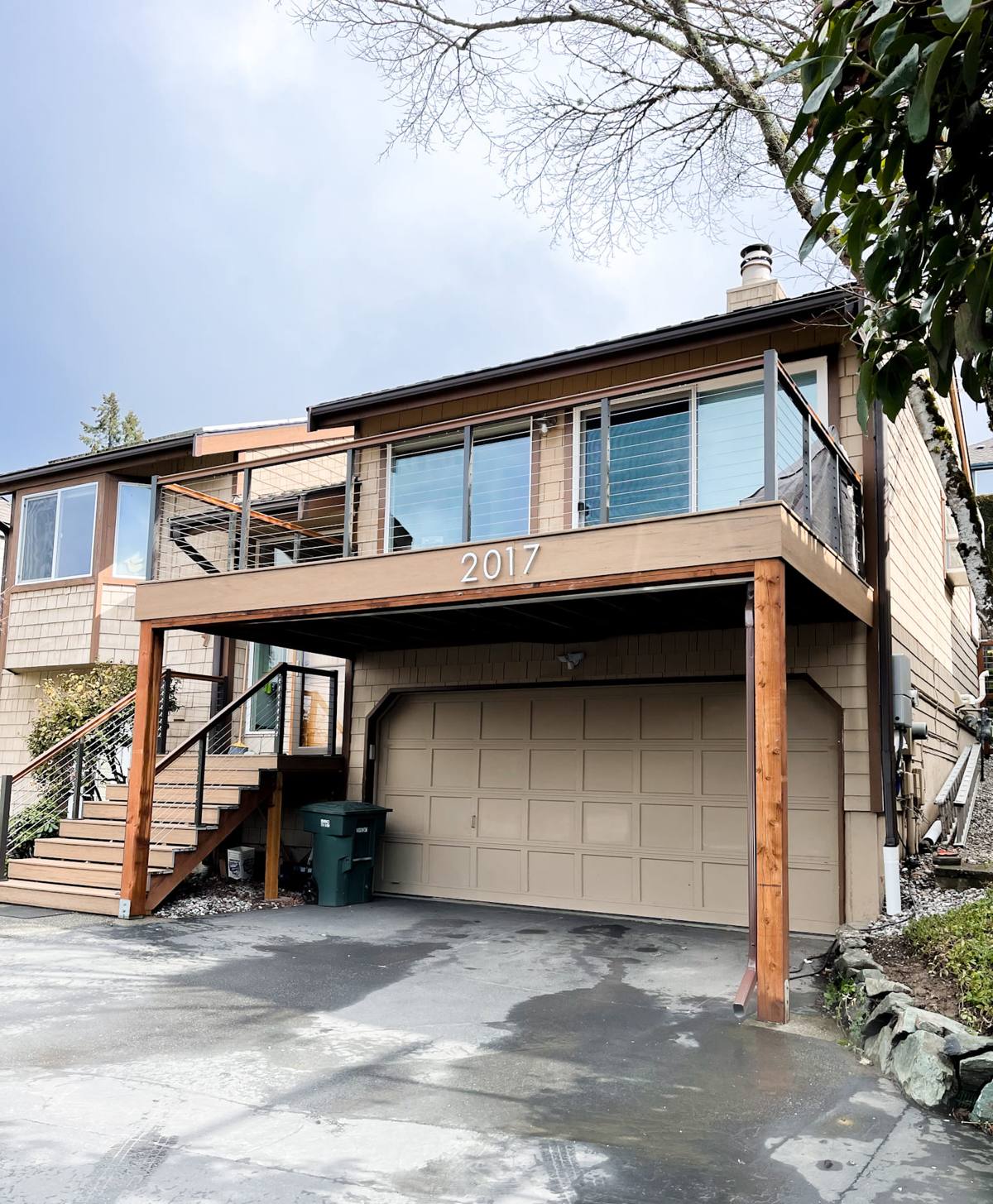
Abbotsford sits in the Fraser Valley just north of the Washington border, close enough to Lynden and the rest of Whatcom County that homes on both sides of the line deal with the same weather system — salt-tinged air moving in off the Strait of Georgia and Boundary Bay, driving rain that comes through fall and winter more sideways than straight down, and a moss season that runs long enough to feel like it never fully stops. A deck takes the brunt of that weather more than almost any other part of a house, because it has no roof overhead and no siding to shed water down and away. It sits flat, exposed, and often shaded, which is exactly the combination that ages a deck fastest.
Deck replacement is different work from deck repair. Repair patches specific problems on a structure that's still sound underneath. Replacement means the framing, ledger connection, or decking itself has reached a point where patching individual boards or joists no longer makes sense, and starting over correctly is the more honest recommendation. This page covers what a deck replacement should actually involve for a home in Abbotsford's climate, and why a crew that already works this part of the border region — not just the drier interior — matters for getting it right.
What This Climate Does to a Deck Over Time
Salt Air and Corrosion
Homes closer to open water pick up more salt-laden air than those further inland, and that air settles on every exposed surface of a deck, including fasteners, brackets, post bases, and railing hardware. Corrosion in those metal components doesn't announce itself the way a stained board does — a fastener can be losing holding strength well before it looks obviously rusted, and on a structure people walk and stand on, that's a real safety consideration, not just an appearance issue.
Driving Rain and Wind-Driven Water
Storms coming through the valley don't just fall straight down onto a deck surface; wind pushes rain sideways and drives it up under railings, into the ledger board where the deck meets the house, and between decking boards that aren't gapped correctly for drainage. A deck built for calm, dry conditions can look fine on a still day and still trap moisture the moment wind gets involved — which, in this region, is most of the time from fall through spring.
A Long Moss Season
Mild temperatures and near-constant dampness give moss and mildew a growing season that runs most of the year here, and a horizontal deck surface is one of the first places it takes hold, because it holds water longer than a vertical wall and stays damp between rain events. Shaded decks and north-facing surfaces usually show it first, and any decking material with even a little surface porosity gives moss something to grip into.
Signs a Deck Needs Replacing, Not Just Repair
Some problems are worth fixing individually. Others are a sign the whole structure has reached the end of its useful life. Before assuming a deck just needs a few boards swapped, it's worth checking for the following:
- Soft, spongy, or spring-feeling boards in more than one or two isolated spots
- Visible rot, splitting, or dark staining at the ledger board where the deck attaches to the house
- Rusted, loose, or corroded fasteners and hardware, especially on railing posts and joist hangers
- A railing that flexes or feels loose when pushed on — a structural concern, not a cosmetic one
- Persistent moss or algae that returns quickly after cleaning, suggesting the wood or fiber core underneath is holding moisture
- Framing or footings that were never properly sized or set for the current deck's load in the first place
Any one of these on its own might be repairable. Several together, especially involving the framing or ledger connection, usually mean replacement is the more honest call than continuing to patch a structure that's compromised underneath.
What a Correct Deck Replacement Involves
Framing, Footings, and the Ledger Connection
The parts of a deck nobody sees after the job is done are the parts that determine whether it lasts. Footings need to be sized and set to the actual load and soil conditions on the property, framing lumber needs to be rated for exterior structural use, and the ledger board — where the deck ties into the house — needs proper flashing so water is directed away from the house framing rather than trapped behind the connection. In a climate with this much sustained rain, a poorly flashed ledger is one of the most common places hidden rot starts, often long before it shows on the surface.
Fasteners and Hardware
Given the salt air and moisture this region sees, fastener and hardware grade matters more here than it would in a drier inland climate. Corrosion-resistant fasteners, brackets, and post hardware cost more upfront but hold their strength far longer, which matters on a structure that carries real weight and sees full weather exposure year-round.
Decking Material
The decking surface itself is what a homeowner sees and touches every day, and the right choice depends on budget, maintenance tolerance, and how much sun and moisture exposure the deck actually gets.
| Material | Moisture & Salt Air Performance | Moss Resistance | Upkeep |
|---|---|---|---|
| Pressure-treated or cedar wood | Needs regular sealing or staining to hold up against sustained moisture | Lowest — porous surface gives moss an easy grip | Annual sealing or staining |
| Capped composite | Strong — cap layer resists moisture absorption and staining | Good on most product lines | Occasional washing |
| Cellular PVC | Excellent — no wood fiber to absorb moisture, even at cut edges | Strong, smooth non-porous surface | Occasional washing |
Wood costs the least upfront but demands the most ongoing maintenance to keep ahead of this climate. Capped composite is a strong middle ground for most homeowners. Cellular PVC costs more but holds up especially well on decks that stay shaded or sit close to moisture most of the year. There isn't a single right answer for every property — it comes down to how much upkeep a homeowner actually wants to commit to versus what they're willing to pay upfront.
Permits and Structural Sign-Off
A deck replacement that involves new framing, changed footings, or a different structure than what's there now typically requires a building permit and inspection, whether the property is on the Washington side of the border or in Abbotsford. That's not a formality to skip past — it's confirmation that the footings, framing, and ledger connection meet code for the loads and conditions the structure actually needs to handle. Part of a correct deck replacement is handling that permitting and inspection process as part of the job, not leaving it for the homeowner to sort out separately or skipping it because a simple resurfacing job wouldn't have required it.
How Our Deck Replacement Process Works
- We walk the existing deck with you, assess the framing, footings, and ledger connection, and give an honest read on whether repair or full replacement is the right call
- We talk through decking material options against your budget and how much maintenance you actually want to take on long-term
- We handle the permit and inspection process for the new structure
- We remove the old deck, correct any framing, footing, or flashing issues found underneath, and rebuild to current structural standards
- We walk the finished deck with you and go over basic maintenance before we consider the job done
Every step matters more in a climate that doesn't give a poorly built deck much time to show its problems — issues here tend to surface within a season or two rather than years down the road.
Maintaining a New Deck in This Climate
Even a well-built deck with the right materials benefits from some routine attention, especially given how long the wet, mossy stretch of the year runs here:
- Rinse or wash the deck surface periodically to clear salt residue, pollen, and organic buildup before it works into the material
- Keep gaps between boards clear of leaves and debris so water and airflow can move through as designed
- Check railing posts and hardware once a year for early corrosion or loosening, ideally before the wet season sets in
- Trim back overhanging branches or plants that hold moisture against the deck or block sun and airflow across the surface
- Address any soft framing or standing water underneath right away — that's a structural issue, and it doesn't improve on its own
Why Hiring a Crew That Already Works This Area Matters
A crew that mostly builds decks in a drier, more sheltered climate can still put one together competently, but Abbotsford and the surrounding border region see a specific combination of conditions — salt-influenced air, sustained driving rain, and a moss season that runs longer than it does further inland — that changes what fastener grade, framing detail, and decking material actually make sense. Working this region regularly, on both sides of the border, means we've seen which decking lines genuinely hold up against this specific mix of weather and which framing and flashing details are worth the extra time rather than an upsell.
That familiarity also shows up in smaller judgment calls — how to orient a deck for the wind and sun exposure a particular lot actually gets, or giving a straightforward answer about what a deck here realistically needs to last versus what's just an extra line item on an invoice.
Get an Honest Look at Your Deck
Whether your current deck is showing its age, you're not sure if it needs repair or full replacement, or you want a straight answer on materials and cost factors for your Abbotsford property, we're glad to walk the site with you and lay out the options plainly. Reach out below for a free, no-pressure estimate.