 Lynden Siding
 Building Decks for Abbotsford, BC's Marine Climate
Abbotsford sits in the Fraser Valley, close enough to the Salish Sea and the Lynden/Whatcom County border that homes here deal with the same weather pattern year-round: long stretches of drizzle, occasional heavy driving rain off the coast, damp air carrying salt, and short summers that don't dry things out as much as homeowners expect. A deck built to a generic spec sheet doesn't hold up well under that combination. A deck built for this specific climate does.
We work custom decks in and around Abbotsford, BC as part of our regular service area alongside Lynden and the rest of Whatcom County. That matters because deck failures in this region tend to follow the same handful of patterns — and once you've seen them repeat across dozens of jobs, you stop guessing and start building around them from day one.
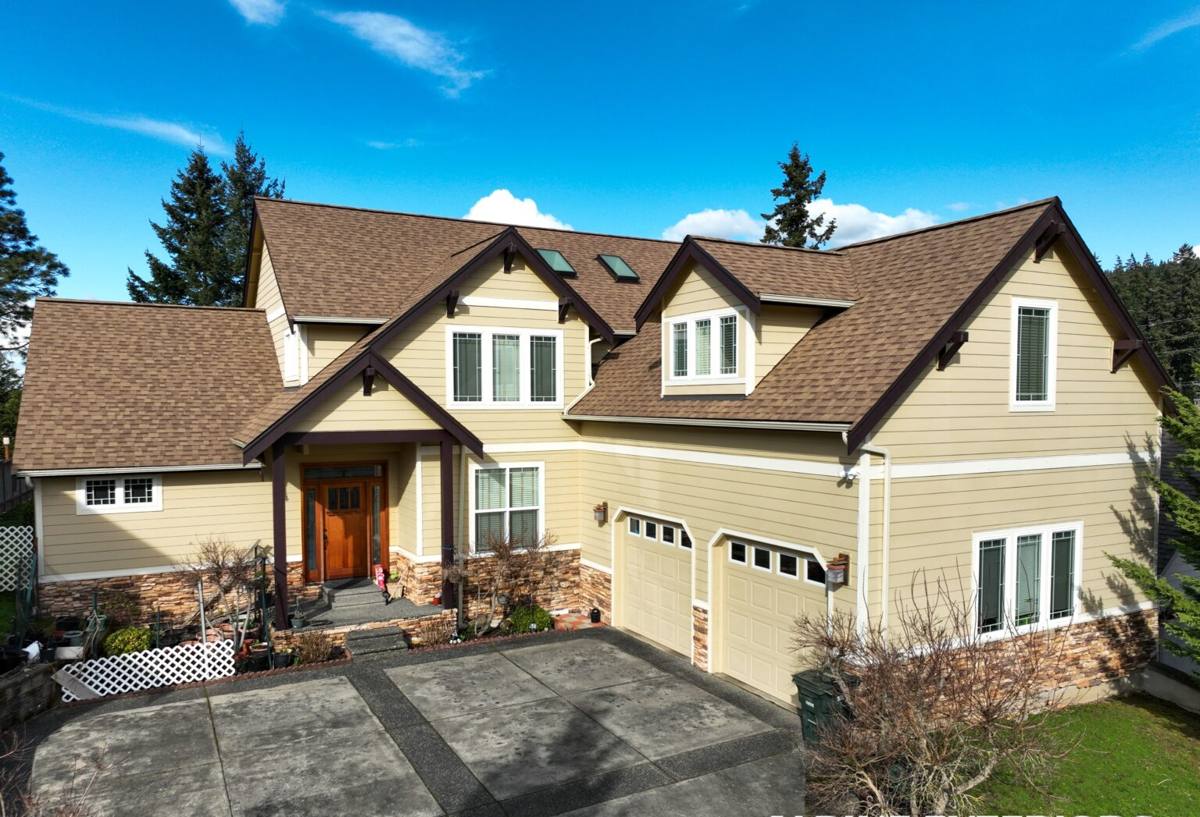
What Salt Air, Driving Rain, and Moss Actually Do to a Deck
Each of these factors attacks a deck differently, and a good build has to account for all three at once, not just one.
Salt Air
Even well inland from open water, salt-laden air carried through the valley accelerates corrosion on any exposed metal — fasteners, joist hangers, railing brackets, screws. Standard hardware that's fine in a dry inland climate will streak, weaken, and eventually fail years earlier here. This shows up as rust stains bleeding through decking boards long before the structure itself is actually in danger, which is usually the first warning sign homeowners notice.
Driving Rain
Rain that comes in at an angle, pushed by wind off the valley, gets up under railings, into end grain, and behind ledger boards in ways straight-down rain never would. Any gap in flashing or any board installed without a drainage plan becomes a place where water sits instead of shedding off.
Long Moss Season
Shade, moisture, and mild temperatures mean moss and algae have a long growing season here — often nine months or more depending on the year. On decking, moss isn't just cosmetic. It holds moisture against the board surface, and on wood decking that moisture cycle (wet, slightly dry, wet again) is what drives rot and fastener corrosion faster than steady dampness alone would.
Where Deck Failures Actually Start
Most deck problems we get called out for in this region aren't cosmetic issues — they're structural issues that started small and got ignored. The pattern is consistent enough to lay out plainly.
| Failure Point | Why It Happens Here | How We Build Around It |
|---|---|---|
| Ledger board attachment | Rain wicks behind the ledger where it meets the house, rotting the rim joist from the inside out | Proper flashing, waterproof membrane, and a gap for drainage behind the ledger — not just caulk |
| Fasteners and hardware | Salt air corrodes standard coated screws and hangers within a few seasons | Stainless steel or heavy hot-dip galvanized hardware rated for coastal/marine exposure |
| Post bases | Wood posts set in or near concrete stay damp at the base, which is where rot starts | Elevated post bases that keep wood off wet concrete and let water drain away from end grain |
| Board spacing | Tight-fit boards trap moisture and hold moss/algae longer | Correct gapping for airflow and drainage, plus material choice matched to the site's shade level |
| Structural framing | Undersized joists or wide spans sag over time under repeated wet-dry cycling | Framing sized to span and load, not just to code minimums |
Choosing the Right Decking Material for This Region
There's no single "best" decking material — there's a best material for a given budget, sun exposure, and how much upkeep a homeowner actually wants to do. In a climate with this much moss and rain, the honest tradeoffs matter more than the marketing.
| Material | Upfront Cost | Upkeep in This Climate | Honest Notes |
|---|---|---|---|
| Pressure-treated wood | Lowest | Annual cleaning/sealing recommended | Most affordable, but needs consistent maintenance to resist moss and rot in shaded yards |
| Cedar | Mid | Periodic sealing, regular cleaning | Naturally rot-resistant and handsome, but still organic material — it needs care, not neglect |
| Composite decking | Higher | Occasional washing, no sealing/staining | Resists moisture damage well, though it can still grow surface moss in heavy shade if never cleaned |
| PVC decking | Highest | Lowest — occasional rinse | Fully synthetic, doesn't absorb moisture, best fit for shaded or heavily rain-exposed sites |
For a shaded lot near mature trees — common on many Abbotsford, BC properties — we'll usually steer homeowners toward composite or PVC unless there's a strong preference for real wood. It's not that wood is a bad choice; it's that wood in constant shade with this much rainfall needs a maintenance commitment a lot of homeowners underestimate when they're pricing the project.
Framing and Substructure: The Part Nobody Sees
The decking boards are what a homeowner looks at, but the framing underneath is what determines whether the deck is still solid in fifteen years. This is also where corner-cutting is easiest to hide and hardest to catch after the fact.
- Joists sized for the actual span and load, not the bare code minimum
- Ledger flashing and membrane installed correctly at the house connection, with a drainage gap behind it
- Post bases that keep wood off wet concrete or soil contact
- Corrosion-resistant hardware rated for coastal/marine exposure throughout — hangers, screws, bolts
- Beam and footing sizing that accounts for our soil and frost conditions, not a one-size-fits-all chart
- Proper board spacing for drainage and airflow underneath the deck surface
None of this is visible once the deck is finished. It's exactly why it's worth asking a contractor direct questions about it before work starts, rather than assuming it's handled.
Railings, Stairs, and Hardware Details
Railings and stairs take more direct weather exposure than the deck surface itself, since they're vertical and catch driving rain at more angles. We match railing material to the same logic as decking: metal components need to be corrosion-resistant, wood railings need the same sealing discipline as wood decking, and any post-to-frame connection needs to be built so water sheds away instead of pooling at the joint. Stair stringers in particular are a common weak point — end grain exposed at the base of a stringer is one of the fastest places for rot to start if it's not detailed correctly.
Our Custom Deck Process
Every custom deck we build goes through the same sequence, adjusted for the specific site:
- On-site assessment — we look at sun exposure, drainage, existing structure (if replacing a deck), and how the space will actually be used before talking materials.
- Design and material selection — sizing, layout, and material recommendations based on your budget, shade level, and how much upkeep you want long-term.
- Permitting — we handle the permit and inspection process required for the jurisdiction the property sits in.
- Demolition (if replacing) — old decking and framing removed and hauled off, with the substructure inspected before anything new goes up.
- Framing and structural work — ledger, posts, beams, and joists built to span and load, not just minimums, with corrosion-resistant hardware throughout.
- Decking, railings, and finish work — surface material installed with correct spacing and fastening for drainage and long-term stability.
- Final walkthrough — we go over the finished deck with you, including what maintenance (if any) the material you chose will need.
Permits and Local Considerations
Deck projects generally require a permit once they exceed a certain height or size, and requirements differ depending on which side of the border a property sits on and which local jurisdiction it falls under. We sort out what's required for your specific property and handle the permit process as part of the job, so it's not something you have to chase down separately.
Keeping a Deck Solid for the Long Term
Whatever material you choose, a little seasonal attention goes a long way in this climate. Here's what actually matters:
- Sweep leaves and debris off regularly — trapped organic matter is what feeds moss growth
- Rinse or wash the surface a few times a year, more often in heavily shaded areas
- Check wood decking annually for soft spots, especially near the ledger and stair stringers
- Reseal or restain wood decking on the schedule the product actually calls for, not "whenever it looks dull"
- Inspect hardware and railing connections yearly for rust streaks or looseness
- Keep gutters and downspouts near the deck clear so runoff isn't draining directly onto the structure
Why It Matters to Hire a Crew That Already Works This Area
A deck built to a generic national spec will hold up fine in a dry climate and struggle here. A crew that regularly builds and repairs decks around Abbotsford, BC and Lynden already knows which hardware corrodes too fast, which framing details actually stop rot at the ledger, and which materials handle shade and moss without turning into a maintenance chore. That local repetition is what separates a deck that looks good for one season from one that's still solid in fifteen years.
If you're planning a custom deck in Abbotsford, BC and want a straightforward look at your options — materials, layout, and what the project will actually involve — we're happy to walk the site with you. Reach out for a free, no-pressure estimate using the form below.